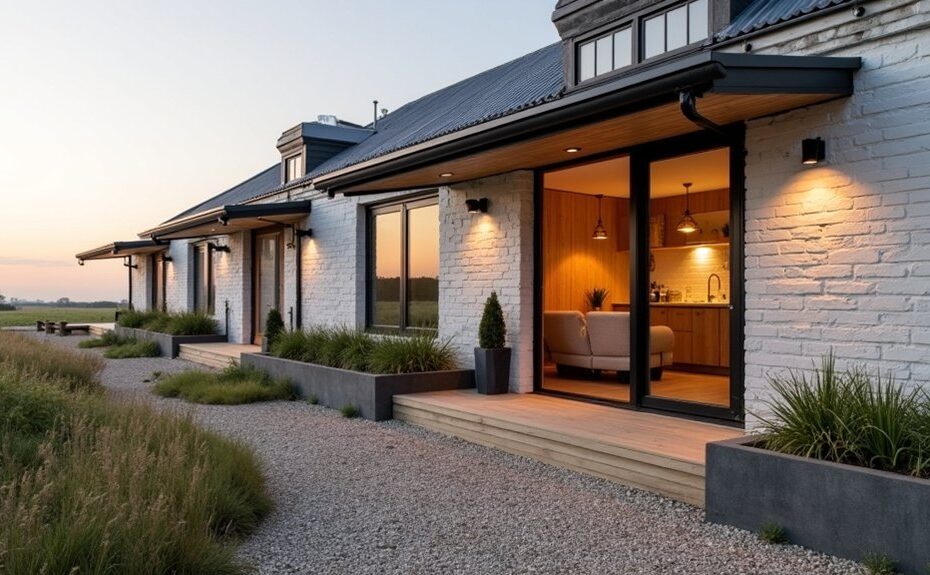
You can turn an old pig shed into a compact, stylish holiday let by checking structure, rot, damp, and hygiene first, then deep-cleaning and repointing brick with breathable lime. You’ll need to confirm change-of-use planning and meet Building Regs for fire safety, insulation, ventilation, glazing, and sound. Put the wet core on one wall to shorten pipes, route services neatly, and add an insulated floor to stop cold bridging. Next, you’ll see space-smart layouts and finishes.
Key Takeaways
- Survey structure, damp, rot, and odours early; plan deep cleaning, breathable finishes, and repairs using low-embodied-carbon materials.
- Confirm permissions and Building Regulations for change of use, access, parking, fire safety, insulation, ventilation, glazing, and sound separation.
- Plan services first: cluster kitchenette and bathroom on one wall, set drainage falls with rodding access, and pre-run power and broadband ducting.
- Prevent damp and heat loss with lime repointing, gutters and ground levels, airtight junctions, and insulated slab or suspended floor to avoid cold bridging.
- Design a tight layout: sliding bathroom door, built-in storage, a functional spine to the view, simple timber finishes, and a small patio with screened landscaping.
Can Your Pig Shed Become a Holiday Let?

If you’ve got a pig shed sitting idle, you can often turn it into a holiday let—as long as the structure’s sound and the rules line up. Start by reading the building like a tool: check walls for movement, roof timbers for rot, and floors for damp.
If it once housed a farm animal, you’ll also want to assess lingering odours and hygiene risks, then plan deep cleaning and breathable finishes.
Next, map a tight layout that respects the existing footprint: a single wet core, built-in storage, and sliding doors to save inches. Let the shell stay honest—repoint brick, oil timber, reuse corrugated sheets where safe.
With a careful shed renovation, you’ll keep embodied carbon low and charm high, while making it guest-ready and durable.
Pig Shed Conversion Rules: Planning and Building Regs
Before you price up insulation or pick out cladding, pin down what planning permission and Building Regulations will demand of your pig shed conversion. Start with the council: is it a change of use, a listed setting, or in a protected landscape? Check whether prior approval applies, then confirm parking, access, and any tourism restrictions in local policy.
Next, design for legal compliance without losing Pig shed aesthetics. You’ll need sign-off on structure, fire safety, insulation values, ventilation, glazing, and sound separation—especially if you’re creating a compact sleeping nook.
Prove moisture control with breathable build-ups, specify durable, low-tox finishes, and detail thermal bridging at junctions. Keep drawings tight, materials honest, and the footprint efficient so the inspector sees a safe, well-resolved micro-stay.
Services First: Water, Power, Drainage, Broadband
Once you’ve nailed the permissions, map your services early—water, power, drainage, and broadband—because they dictate where you can place the bathroom pod, kitchenette run, and any plant cupboard without chewing up your floor space.
Keep all “wet” points on one wall to shorten pipe runs, reduce digging, and simplify maintenance. If mains water’s distant, price a metered connection versus a compact treated supply tank.
Route electrics in surface-mounted conduit or a shallow service batten so you don’t chase old masonry.
Plan drainage falls before you pour any slab, and add rodding access where bends hide.
Broadband needs a clear path too: run ducting now for fibre or a roofline antenna, then hide routers inside a timber box that suits your Interior decor using Sustainable materials.
Keep It Warm and Dry: Insulation and Damp Fixes
With your service routes pinned down, turn to the building fabric—because a pig shed won’t hold heat or shrug off moisture unless you fix the envelope first. Start by stripping back suspect linings, checking brickwork, and repointing with breathable lime where needed.
Raise external ground levels away from walls, add gutters, and keep splashback off the base. For damp prevention, install a DPM or vapour control layer in the right place, then detail junctions tightly.
Choose insulation that suits the substrate: wood fibre or mineral wool for breathable walls, PIR where thickness is tight, and insulated slab or suspended floor build-ups to stop cold bridging.
You’ll feel the insulation benefits immediately: steadier temperatures, lower bills, fewer condensation patches, and a quieter, calmer interior year-round.
Pig Shed Conversion Layouts for Small Footprints
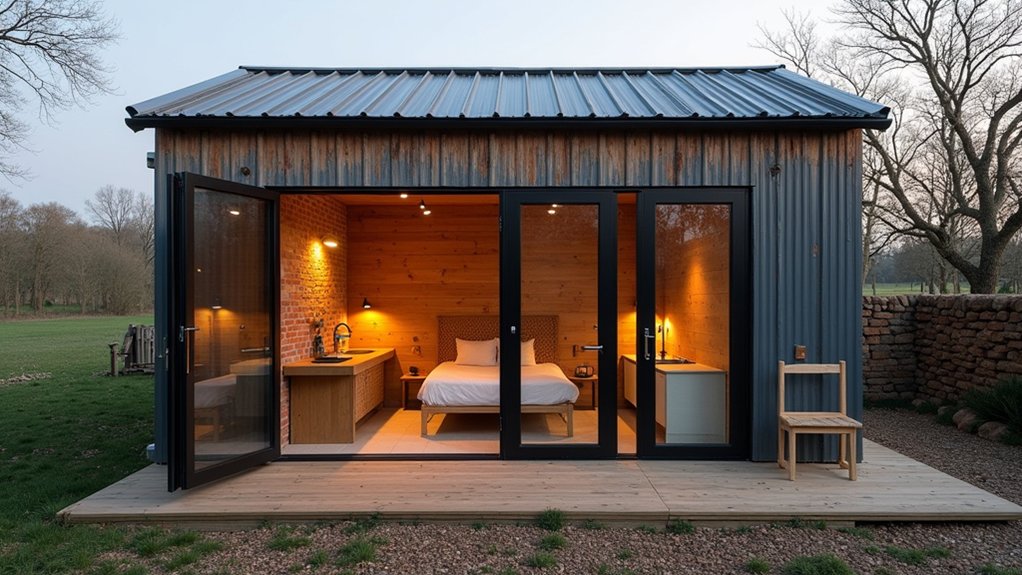
Although pig sheds often come in tight, linear bays, you can still pull off a holiday-let layout that feels generous by keeping circulation to a minimum and letting each zone do double duty.
Run a single “spine” from door to view, then tuck storage, kitchenette, and a fold-down table along one wall. Put the bed at the quiet end and use a half-height divider or curtain to separate sleeping from sitting without stealing light.
Shape the bathroom as a compact box near existing services, with a sliding door to save swing space.
Mirror the plan outside: align French doors with garden landscaping so the patio becomes your dining room.
Keep interior decor pared back—timber shelves, black hardware, and built-ins that hide clutter. Use movable pieces for flexible stays.
Rustic Feel, Modern Comfort: Heating, Glazing, Finishes
Even if you keep the original corrugated skin and timber posts on show, you can make a pig shed feel warm and airtight by pairing simple finishes with modern performance. Specify high-density insulation between rafters, then tape and membrane the lining so draughts don’t steal comfort.
Add low-temperature underfloor heating or a compact air-to-air heat pump; both suit tiny plans and quick turnarounds. Choose slim, high-performance glazing with warm-edge spacers so the interior stays calm and condensation-free without losing the rugged look.
Finish walls in limewash or clay paint, and use eco-friendly materials like reclaimed boards, cork, and sheep’s wool where they work hardest. Install energy-efficient appliances, and you’ll reduce running costs without sacrificing the cosy, barn-like vibe.
Exterior for Bookings: Doors, Windows, Patio, Parking
Because first impressions sell the stay, treat the pig shed’s exterior like a booking tool: anchor the façade with a solid, well-sealed door, add well-placed windows for light and privacy, and extend the room outdoors with a compact patio that feels deliberate rather than leftover.
Choose slim, thermally broken frames and deep sills that read agricultural yet refined. Add a small overhang to keep thresholds dry and guests happy.
Make the patio multiuse: a built-in bench, fold-down table, and gravel or brick pavers to reduce concrete. Use garden landscaping to screen bins and soften edges without stealing space—think grasses, herbs, and one statement tree.
Install warm, low-glare outdoor lighting along paths and the parking bay. Keep parking simple: one permeable spot, clear signage, and turning room.
Frequently Asked Questions
How Do I Set Competitive Nightly Rates for a Converted Pig Shed?
Set nightly rates like hammer and nail: fast, firm, fitting. Use market research on nearby stays, then apply pricing strategies—weekday discounts, weekend premiums, seasonal lifts. Factor utility-efficient features and reclaimed finishes so you’re priced fairly, competitively.
Do I Need Specialist Holiday-Let Insurance or Standard Landlord Cover?
You’ll need Holiday let insurance, not standard Landlord coverage, because you host short-stay guests. It covers public liability, guest damage, and turnover risks. Add contents and loss-of-income cover to protect your compact, crafted space.
What Furnishings and Kitchen Equipment Do Guests Expect as Standard?
Like a well-packed rucksack, you’ll need comfy bed, sofa, dining set, quality linens, Interior decor touches, and Storage solutions. You should stock hob, oven/microwave, fridge, kettle, toaster, cookware, knives, crockery, glassware, and basics.
How Can I Manage Cleaning, Laundry, and Key Handover Remotely?
You’ll manage it with remote check in via smart lock, a local cleaner on rotating cleaning schedules, and a linen service. You’ll store spare sets in slim cedar cabinets, track tasks in an app.
Which Booking Platforms Work Best for Marketing Niche Rural Stays?
You’ll market niche rural stays best on Airbnb, Vrbo, and Booking.com; then amplify via Canopy & Stars or Hipcamp—list smart, price seasonally, message fast. Keep photos clean, copy lean, and materials honest to attract.