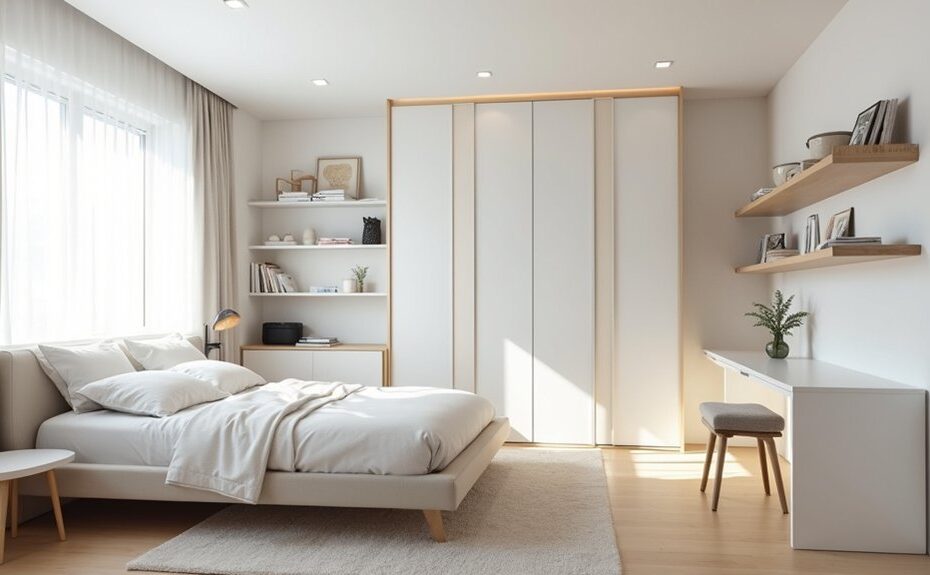
If your room feels tight, you don’t need a full remodel—you need smarter moves. Start by shifting furniture to create clear walkways and defined zones, then keep sightlines open with slim, multi-use pieces and closed storage. Light paint on walls, trim, and ceiling lifts the whole space, especially when you layer lighting and add one well-placed mirror. Hang curtains high and wide, and you’ll notice what changes next…
Key Takeaways
- Clear 30–36 inch walkways by pushing bulky furniture to walls and zoning the room into sleep, work, lounge, and storage areas.
- Choose slim, multi-use pieces—armless chairs, drop-leaf tables, storage ottomans, and beds with drawers—to free floor space.
- Paint in low-contrast light tones; keep trim close to wall color and ceilings slightly lighter to extend sightlines.
- Layer lighting with low-profile ambient fixtures, targeted task lights, and dimmers; aim light at walls to bounce brightness and reduce shadows.
- Hang curtains high and wide and add a large mirror near windows; use tall shelves and closed storage to cut visual clutter.
Rework Your Small Room Layout (Clear Paths)
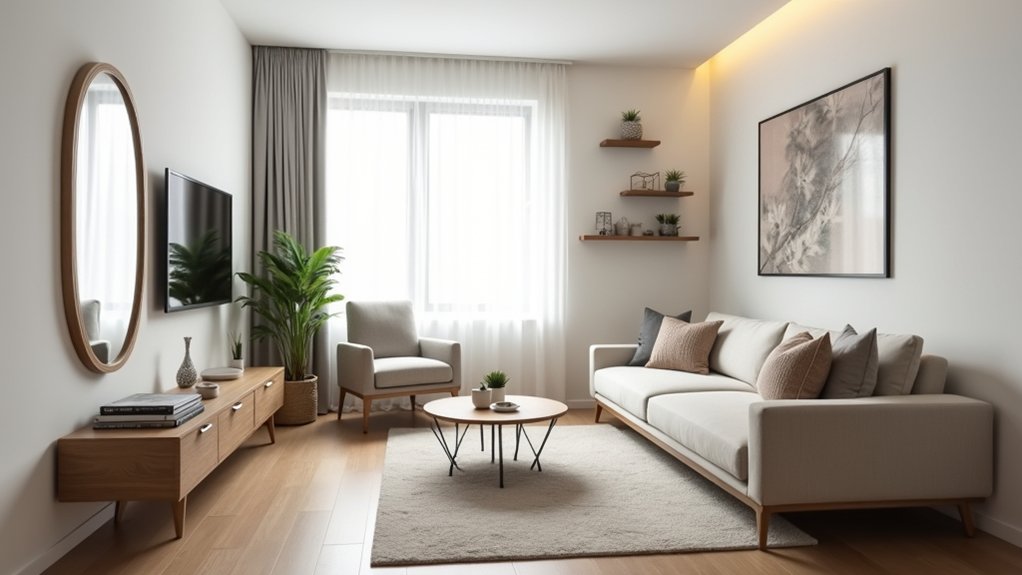
If your small room feels tight, start by reworking the layout around clear walking paths. Map your main route from door to window, closet, or seating, then keep that line open at 30–36 inches.
Pull bulky pieces off the path and park them against one wall to reduce pinch points and improve traffic flow.
Use space zoning to give each function a defined footprint: sleep, work, lounge, storage. Anchor zones with a rug edge, a slim console, or a small side table, not extra furniture.
Float a chair in a corner, rotate the bed, or swap a wide nightstand for a wall shelf.
Keep frequently used items closest to their zone to prevent clutter creep.
Use Light Paint Colors (Walls, Trim, Ceiling)
Although furniture placement matters, light paint colors do the fastest heavy lifting in a small room by bouncing daylight and lamp light deeper into the space. Choose soft whites, warm greiges, pale taupes, or airy pastels with low contrast to blur edges and stretch sightlines.
Keep color consistency: run one hue across walls and trim, or shift trim just one shade lighter so boundaries don’t chop the room into blocks. Paint the ceiling a half-step lighter than the walls to lift it without a stark line.
Pick the right paint finish: use eggshell or matte on walls to hide imperfections, then satin on trim for wipeability and crisp detail. In tiny rooms, avoid high-gloss everywhere; it spotlights texture and reads busy.
Layer Lighting to Brighten a Small Room
Layer your lighting so the room reads brighter and bigger without adding clutter. Start with clean ambient light, then add targeted task lighting where you work or read. Finish with a few accent sources to lift corners and highlight texture.
Install dimmers so you can tune the mix from crisp daytime brightness to a softer evening glow.
Combine Ambient Task Lighting
Because one ceiling fixture can’t do it all, combine ambient and task lighting to make a small room feel brighter, taller, and more flexible. Start with even ambient lighting that fills corners: a slim flush-mount, low-profile track, or wall-mounted uplight keeps the ceiling visually clean while spreading light.
Then add task lighting exactly where you work. Clamp a pivoting sconce at your desk, tuck an LED strip under a shelf, or use a narrow floor lamp beside a reading chair. Aim beams at surfaces, not your eyes, so the light bounces and softens shadows.
Keep fixtures compact, match finishes to your hardware for a streamlined look, and choose warm-neutral LEDs for flattering clarity. Place switches where you’ll reach them fast.
Add Accent And Dimmers
Once you’ve nailed ambient and task lighting, add a third pass with accents and dimmers to fine-tune the room’s mood and perceived size.
Use Accent lighting to push depth: aim a slim picture light at art, tuck an LED strip under floating shelves, or place a tiny uplight behind a plant to lift the ceiling line. Keep fixtures low-profile and warm-neutral (2700–3000K) so corners glow without glare.
Install Dimmer switches on overheads and key accents, then set scenes: brighter for cleaning, mid-level for daily living, low for wind-down. Dimming reduces harsh contrast, making walls read farther away.
Choose smart dimmers if you want schedules and voice control without extra hardware clutter.
Choose Slim, Multi-Use Furniture for Small Spaces
Keep your layout airy by choosing furniture with slim profiles—think narrow arms, open legs, and wall-hugging depths. You’ll get more function per square foot with multi-use pieces like storage ottomans, sleeper sofas, and drop-leaf tables that flex with your day.
Lock in the clean look by using built-in storage, from bench seating with hidden compartments to headboards and shelves that replace bulky cabinets.
Prioritize Slim Profiles
When every inch matters, slim-profile furniture lets you reclaim floor space without sacrificing function. Pick pieces with thin legs, open bases, and tight silhouettes so sightlines stay clear and the room reads larger.
Measure depths: a 14–18 inch console, a 10–12 inch shoe cabinet, or a 24–30 inch café table keeps pathways comfortable.
Choose armless chairs, low-back sofas, and wall-hugging headboards that won’t crowd circulation, especially near narrow doorways.
Match visual lightness to your architecture by echoing slim window frames with narrow table tops and slender metal or tapered wood supports.
Keep surfaces tidy and edges rounded to reduce bumps in tight runs.
Finally, scale everything to your room’s width, not your wish list.
Select Multi-Functional Pieces
Where can one piece do double duty without bulking up your layout? Start by swapping single-purpose items for versatile furniture that earns its footprint.
Choose a narrow console that works as a desk, entry drop zone, or bar, then tuck a stool beneath it. Opt for nesting side tables you can split when guests arrive and stack when they leave. Pick an ottoman with a firm top that serves as coffee table, extra seat, and footrest.
A sleeper sofa with a streamlined arm keeps your living room usable by day and guest-ready at night. Look for armless chairs, flip-top trays, and C-tables that slide under seating.
These space saving solutions keep traffic paths open and your room feeling larger.
Use Built-In Storage
Multi-functional pieces earn their keep, but built-in storage goes a step further by turning “dead” surfaces into organized zones. Treat walls, window bays, and stair voids like square footage you’re reclaiming.
Add a shallow media ledge with hidden drawers, or run a bench under a window with lift-up seats for linens and chargers. In a bedroom, flank the headboard with recessed niches and integrated sconces so nightstands can shrink or disappear.
In kitchens, go vertical: ceiling-height uppers, toe-kick drawers, and pull-out pantry columns keep counters clear. Choose flush fronts, matching paint, and minimal pulls to reduce visual noise.
This Built-in storage approach boosts space optimization while keeping your room sleek, tailored, and current.
Hang Curtains High and Wide to “Stretch” Walls
Although your window might be modest, you can make the entire wall feel taller and wider by mounting curtains high and extending the rod well past the frame. Place the rod 4–8 inches below the ceiling or crown to visually boost ceiling height, and add 8–12 inches of width on each side so panels stack off glass, not on it.
Choose floor-length drapes that just kiss the floor for a tailored, modern line, or go a half-inch above to avoid puddling in high-traffic spots. Pick lightweight linen blends or sheers to keep daylight flowing, and use blackout liners only when you need sleep.
With these window treatments, you’ll hide awkward trim, simplify the wall, and make a tight room read calmer and larger.
Use Mirrors to Bounce Light and Add Depth
Once your curtains frame the window higher and wider, amplify that light with mirrors that push it deeper into the room. Place a large mirror opposite or adjacent to the window to double daylight and soften harsh shadows. Angle it slightly to aim brightness toward the darkest corner, not straight back at the glass.
Swap bulky frames for slim profiles or frameless edges to keep sightlines clean. Try a tall leaner mirror to suggest higher ceilings, or a horizontal piece to “widen” a narrow wall—instant visual illusions without construction.
Layer reflective surfaces: a mirrored tray, glossy lacquer, or chrome accents that echo light without feeling flashy. For a trend-forward look, choose bronze-tinted or smoked glass; it adds depth while staying calm and modern.
Hide Clutter With Closed Storage + Vertical Shelving
If your small room feels busy even when it’s “clean,” you need storage that hides visual noise and uses height, not floor space. Swap open bins for closed cabinets, ottomans, or a bed frame with drawers so everyday items disappear behind clean lines. Choose pieces with Hidden compartments for chargers, remotes, and paper clutter.
Then build upward: add tall bookcases, wall-mounted shelves, and over-door racks to keep surfaces clear. Use Vertical organizers inside closets and cabinets—stackable risers, pull-out baskets, and labeled boxes—to prevent messy piles. Keep the palette streamlined (matte white, light oak, or soft gray) and match hardware for a calmer look.
Aim for one “landing zone” shelf and everything else behind doors. Your room reads larger instantly.
Frequently Asked Questions
How Can I Make a Small Room Feel Bigger on a Tight Budget?
Choose light color schemes, keep walls cohesive, and add one mirror to bounce light. Optimize furniture arrangement: float pieces, use legs, and tuck storage under. Declutter surfaces, swap bulky curtains for sheers, and downsize decor.
What Flooring Choices Help a Small Room Look More Spacious?
Pick pale planks, polished pale tile, or seamless sheet vinyl; run boards lengthwise and match grout. You’ll stretch sightlines. Keep color schemes light, use consistent finishes, and pair with smart lighting techniques to erase edges.
Do Rugs Make Small Rooms Feel Larger or Smaller?
Rugs can make small rooms feel larger if you choose the right area rugs. Use light, low-contrast color schemes, keep borders minimal, and size them big so furniture legs sit on them. Avoid tiny mats.
How Can I Reduce Echo and Improve Acoustics in a Small Room?
Cut echo by adding Acoustic panels at first-reflection points, thick curtains, and a dense rug. Use Soundproofing techniques like door sweeps, weatherstripping, and bookshelf diffusion. Keep surfaces layered, minimal, and modular for style.
Which Decor Styles Work Best for Making Tiny Rooms Feel Open?
You’ll find Scandinavian, Japandi, and modern minimalism most flattering in compact rooms, as they streamline clutter. You’ll use light colors, airy textiles, and open shelving to keep sightlines clean, storage smart, and the vibe current.