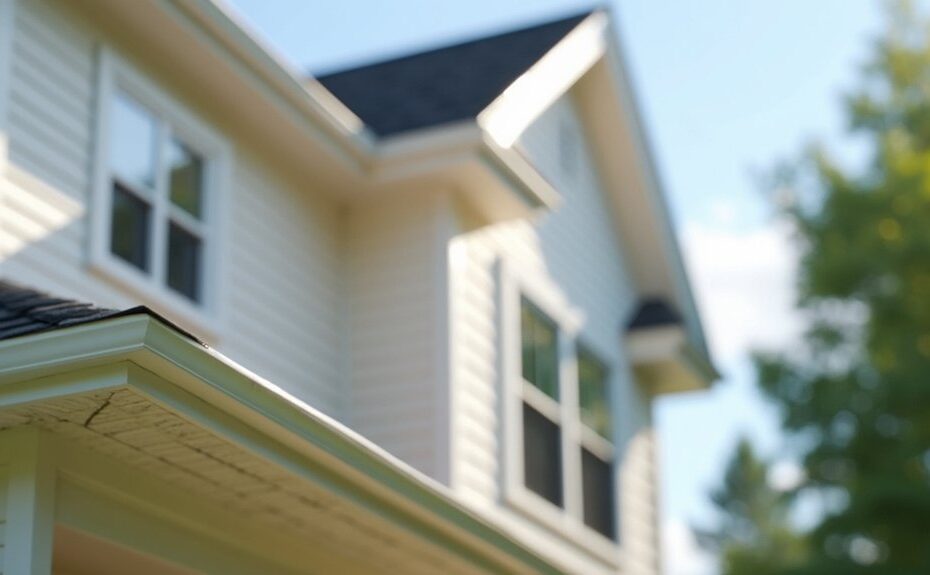
On a wet February callout, you might find a fascia that’s softened like cardboard, and the gutter’s pulling down with it. You can’t treat roofline parts as trim; they’re load paths and weather seals. Fascias cap rafter ends and carry gutters, soffits close the eaves and manage airflow, and bargeboards protect gable edges from wind-driven rain. Miss one weakness, and the next issue won’t wait…
Key Takeaways
- Fascias support gutters and cap rafter ends, soffits close eaves for ventilation and pest control, and bargeboards protect gable verges.
- Common materials are uPVC, timber, and aluminium; choose based on rot resistance, stability, maintenance needs, and matching existing period details.
- Prioritise repairs when fascia feels spongy, soffit vents warp or dampen, bargeboards crack or pull away, or gutters sag and overflow.
- Typical causes include blocked gutters, failed flashing, poor loft ventilation condensation, and pest entry through gaps around the roof edge.
- Repair options range from patch splicing to cap-over cladding or full replacement; ensure correct fixing, sealing, and reinstated ventilation.
Roofline Repairs: Fascias, Soffits and Bargeboards Explained
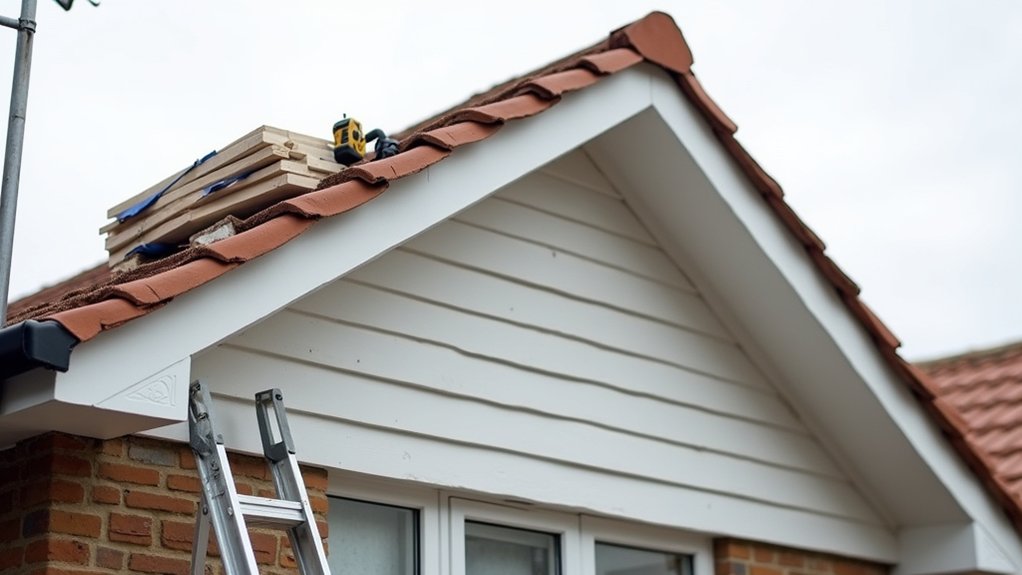
While your roof covering keeps rain out, your roofline components manage water run-off, airflow, and edge protection. You rely on fascias to provide a straight, load-bearing fixing for gutters and to cap rafter ends.
You use soffits to close the underside of the eaves, control intake ventilation, and deter pests while maintaining airflow to the roof void.
You fit bargeboards along gable verges to shield exposed timbers and to support the verge finish.
When you specify profiles for Historical architecture, you match depth, moulding, and joint lines to existing details.
You choose Eco friendly materials such as FSC timber, recycled-content uPVC, or aluminium with low-VOC coatings.
You also seal end grain, flash interfaces, and allow thermal movement for durability.
Why Roofline Repairs Stop Damp, Rot and Sagging Gutters
When you repair fascias, soffits, and bargeboards, you close off gaps that let wind-driven rain and condensate reach the roof edge, which cuts down damp and timber rot.
You also restore a straight, load-bearing fixing line for gutter brackets, so water weight can’t pull the run out of level.
With sound roofline boards and secure fixings, you’ll shed water where it belongs and stop gutters from sagging and overflowing.
Block Moisture And Rot
How does a small gap at the roofline turn into damp patches, rotten timber, and sagging gutters? Wind-driven rain and capillary action pull water behind tired fascias and cracked soffits, where it can’t dry. You’ll often see staining, blistered paint, and a musty loft edge before timber softens.
You stop the cycle by restoring continuous Moisture barriers: sound drip edges, sealed joints, and correctly lapped membranes that discharge water into the gutter line, not behind it. Replace decayed boards and specify treated timber or uPVC with ventilated soffit systems to control condensation.
Keep fixings stainless or coated, and prime all cut ends before painting. This Rot prevention approach limits wetting time, reduces fungal growth conditions, and protects rafter tails and roof deck edges.
Prevent Gutter Sagging
Because roofline joints guide both water load and fixing strength, even a slight fascia bow or softened rafter tail can tip a gutter out of line and start a sag. You prevent this by restoring a straight, rigid fixing line: replace any decayed fascia sections, splice sound timber with treated extensions, and refix brackets into solid rafter ends, not softened board.
Set bracket spacing to manufacturer limits and reestablish fall using a string line for accurate Gutter alignment. Check unions and outlets so the load doesn’t concentrate at one point.
Add soffit Ventilation improvements to dry rafter tails and reduce seasonal movement that loosens fixings. Finally, clear debris and test with a hose; water should run freely without pooling or bounce-back.
Roofline Repair Warning Signs (and How Urgent They Are)
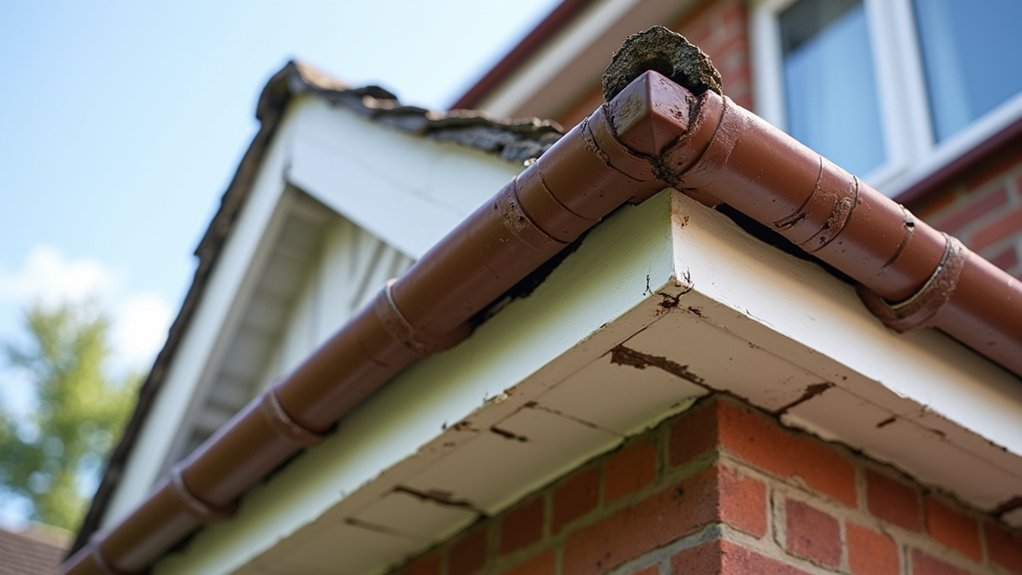
Even if your roof shingles still look intact, the roofline can develop early structural and moisture failures that escalate quickly if you don’t catch them. Check for fascia boards that feel spongy, blistered paint, or dark staining at joints; treat these as urgent and schedule repair within weeks.
If soffit vents warp, split, or show persistent dampness, act within days because airflow disruption can spread damage. Look for bargeboards that cup, crack, or pull away from the verge; same-week attention prevents wind-driven loosening.
Sagging gutters or uneven drip lines signal loss of fixing strength; repair promptly. In older homes, match profiles and coatings for Vintage styles and guarantee aesthetic integration while you replace damaged sections.
Document movement with photos and compare monthly.
What Causes Roofline Damage: Leaks, Condensation and Pests
While your roof covering sheds most rain, water and air still move through the roofline, and that’s where damage usually starts. Leaks often begin at failed flashing, cracked felt, or blocked gutters that drive water behind fascias and into soffit voids, saturating timber and fixings.
Condensation follows when loft ventilation is restricted; warm, moist air hits cold roofline surfaces, wets boards, and accelerates rot and corrosion.
Pests exploit gaps at eaves and verges: birds dislodge soffit panels, rodents chew edges, and insects tunnel damp wood, worsening structural weakness.
Tight Roof maintenance limits these triggers: keep gutters clear, check sealant lines, and maintain drip edges.
Apply Weatherproofing techniques such as breathable membranes, intact vents, and correctly lapped underlay to control moisture movement.
Roofline Repair Options: Patch, Cap-Over or Full Replacement
Once you’ve identified the source of roofline damage, you’ll choose between patch repairs, a cap-over system, or full replacement based on the extent of rot, moisture history, and structural integrity.
Patch repairs restore localized sections fast and at lower cost, but they can fail if you don’t eliminate hidden decay and correct the underlying leak or ventilation issue.
Cap-over systems encapsulate existing fascia/soffit for a clean finish with less tear-off.
Full replacement becomes necessary when damage is widespread, fasteners won’t hold, or framing alignment has shifted.
Patch Repairs: Pros, Cons
Because roofline damage often starts as a small failure point, patch repairs focus on isolating and correcting a limited section of fascia, soffit, or trim without disturbing the surrounding assembly. You’ll cut out rot, replace short runs, splice joints, and resecure fixings, then prime and seal end grain to prevent moisture wicking.
Pros: you keep labour and material costs down, preserve original profiles, and limit disruption to gutters and paint lines. If you match coatings, you can maintain paint durability and retain existing color options without repainting full elevations.
Cons: you may miss hidden decay beyond the visible edge, and new-to-old joints can telegraph through finishes. Repeated patches can stack tolerances, leaving uneven reveals, soft spots, or recurring staining around fasteners and seams.
Cap-Over Systems Explained
Instead of cutting out sections like a patch repair, a cap-over system wraps your existing fascia or soffit with a formed aluminium or PVC skin that fastens through to sound framing and then gets sealed at seams, corners, and drip edges. You’ll get a clean, uniform finish while keeping the original boards in place, but only if they’re dry, straight, and firmly fixed.
Your installer should probe for softness, resecure loose edges, and replace isolated rotten backing before cladding. Specify corrosion-resistant fixings, pre-formed corners, and compatible sealant to prevent water tracking behind the skin.
Pay attention to fascia ventilation: keep existing vents open, add vent strips where needed, and avoid blocking eave airflow with over-tight wraps. Cap over systems suit cosmetic upgrades and minor deterioration, not hidden damage.
Full Replacement Considerations
Cap-over cladding can only perform as well as the boards and framing beneath it, so when you find widespread rot, chronic moisture staining, sagging runs, or loose fasteners that won’t hold, plan on full replacement.
You’ll strip fascia, soffit, and bargeboards back to sound rafters, then correct the cause: failed drip edge, blocked ventilation, leaking gutters, or missing kick-out flashing.
You should replace compromised sub-fascia, tails, and lookouts, and re-establish straight lines with a stringline before refitting.
Specify treated timber or PVC/alu systems with compatible fixings, and reinstate vents to meet airflow requirements.
For Historical restoration, match profiles, returns, and shadow lines; for aesthetic enhancement, you can upgrade to deeper fascia, crisp joints, and concealed fixings.
Prime cut ends and seal joints.
Best Roofline Materials: uPVC vs Timber vs Aluminium
When you’re choosing roofline materials, uPVC, timber, and aluminium each behave differently under moisture, UV exposure, and long-term loading. So the “best” option depends on the performance you need and how much maintenance you’re willing to take on.
uPVC won’t rot and resists insects, but it can expand with heat and may fade. Check ventilation paths and clean annually as basic Maintenance tips.
Timber carries load well and matches period detailing, yet it absorbs water and needs paint-film integrity. Seal end grain and recoat on schedule.
Aluminium stays dimensionally stable, handles UV well, and won’t warp, but it needs corrosion-resistant coatings near coastal air and careful isolation from dissimilar metals.
For Color options, uPVC offers factory foils, timber takes any paint, aluminium comes in powder-coat finishes.
DIY Roofline Repairs vs Hiring a Roofer: What’s Realistic
Material choice sets the baseline, but your next decision is whether the fault you’re seeing is a safe, contained DIY job or a roofline repair that needs a roofer.
You can realistically handle cleaning gutters, resealing small joints, refixing loose soffit vents, and touching up paint where timber’s sound. Work from a stable platform, keep tools tethered, and don’t disturb lead or asbestos cement.
Call a roofer if you see sagging fascias, rotten rafter tails, cracked bargeboards at fixings, persistent damp behind boards, or missing drip edges. They’ll inspect structure, reinstate correct fall and ventilation, and replace fixings without splitting boards.
If you’re in a conservation area, pros help preserve Roofline aesthetics and historical accuracy, matching profiles and finishes and avoiding non-compliant uPVC substitutions.
Frequently Asked Questions
Can Roofline Repairs Improve My Home’s Energy Efficiency or Reduce Heating Bills?
Yes, roofline repairs can cut heating bills—stop warm air escaping, not money. You’ll seal gaps, prevent draughts, and protect insulation benefits through moisture control, keeping insulation dry and effective, reducing heat loss year-round.
Do I Need Planning Permission for Replacing Fascias, Soffits, or Bargeboards?
You usually don’t need planning permission; replacing like-for-like fascias, soffits, or bargeboards falls under permitted development. Check building regulations for structural changes, insulation upgrades, or drainage alterations, and ask your local authority if listed.
How Long Do Roofline Repairs Typically Take From Start to Finish?
You’ll usually finish roofline repairs in 1–3 days—don’t worry about big disruption. You’ll speed project scheduling with clear access and dry weather; you’ll extend material durability by allowing proper curing and precise alignment.
Will Roofline Replacement Affect My Home Insurance or Warranty Coverage?
It can affect coverage if you don’t notify your insurer or follow policy conditions. Check Insurance implications and warranty considerations: use licensed contractors, keep permits and invoices, and confirm materials meet manufacturer requirements to avoid claim disputes.
What Maintenance Is Required After New Fascias, Soffits, and Bargeboards Are Installed?
Like a sentry on duty, you’ll keep them sound with annual visual inspections, prompt washdowns, and sealant touch-ups. Schedule Gutter maintenance twice yearly, clear debris, check joints, and enforce Pest prevention by sealing gaps and vents.