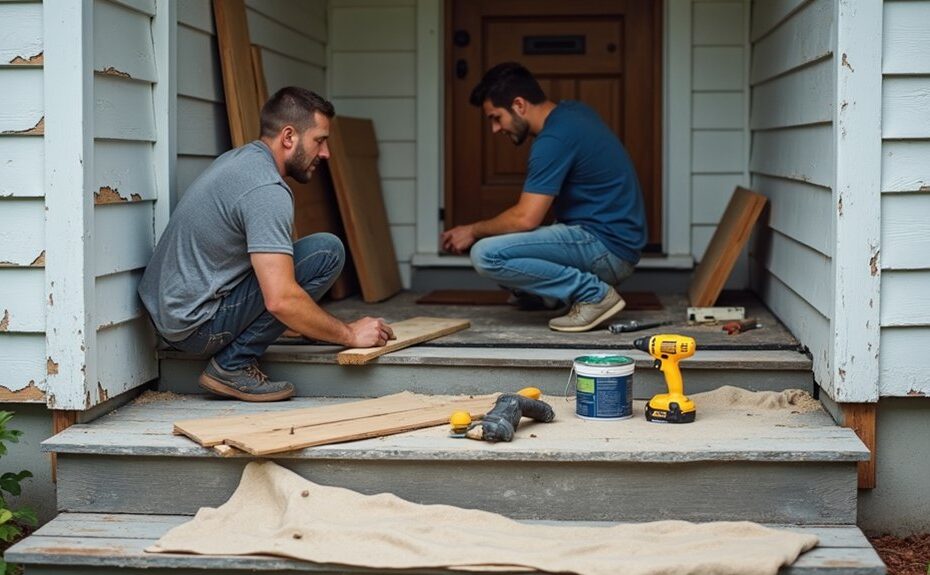
You can’t restore a weather-damaged porch by patching what you see. Start with a methodical inspection so you can rank issues by safety, structure, and water entry. You’ll confirm the ledger connection, probe for rot at posts and stair stringers, and document flashing gaps and failed joints. Then you’ll stop the moisture path with continuous flashing, proper slope, and drainage control before you replace framing or finishes. Next comes the part that determines whether the repair lasts…
Key Takeaways
- Inspect from roofline down, probing for rot and corrosion, and flag life-safety hazards like loose guards, unstable stairs, or leaning posts.
- Stop water entry with continuous metal flashing, kickout/drip edges, and clear gutters; use sealant only as secondary protection.
- Improve drainage by extending downspouts, adding splash blocks, and regrading soil to slope away, ensuring all surfaces shed outward.
- Replace or reinforce damaged framing: reattach ledgers with code-rated bolts, sister weakened joists, and use treated wood with stainless or hot-dipped fasteners.
- Restore stairs, landings, and railings to code, then apply appropriate exterior finishes only after wood is dry and prep is complete.
Inspect Your Weather-Damaged Porch (and Triage Repairs)
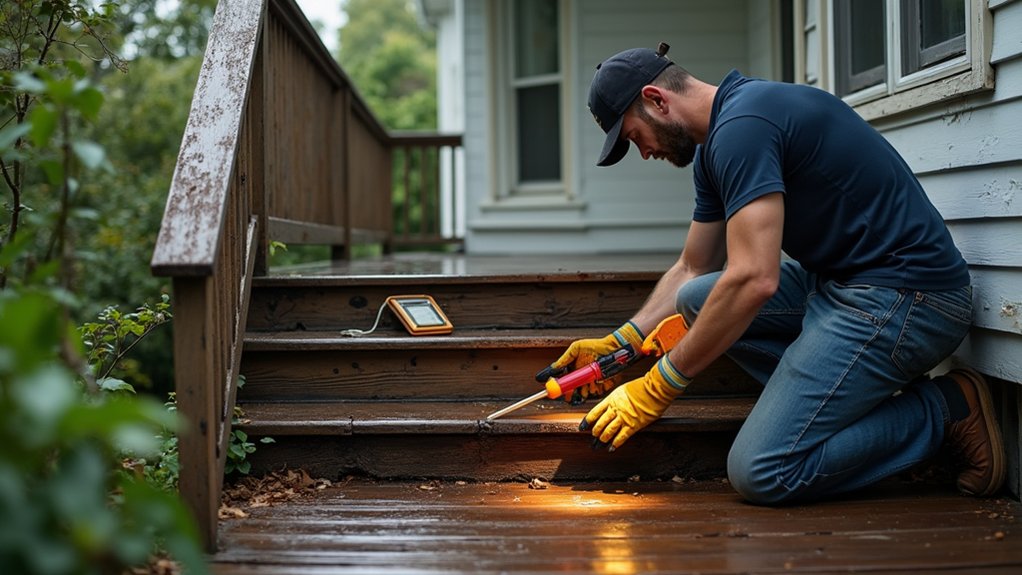
Before you pick up a pry bar or order materials, do a systematic inspection and sort what you find into “stabilize now” versus “repair later.” Start at the roofline and work down—flashing, header, posts, rails, decking, and the connection to the house—so you don’t miss hidden water paths.
Tag any life-safety issues for immediate action: loose guards, wobbly stairs, soft tread nosings, or posts out of plumb. Probe wood with an awl, note rot depth, and map any spread into framing. Verify fasteners aren’t corroded, check ledger bolts and hold-downs, and confirm guard height and baluster spacing meet code.
Document deflection, settlement, and uplift risks. Then set your scope: structural stabilization first, finish work later. Use porch aesthetic goals to guide material selection without compromising rated connectors or durability.
Stop Leaks With Porch Flashing, Caulk, and Drainage
Although rot and paint failure grab your attention, most porch damage starts with water entry at a few predictable joints—roof-to-wall intersections, ledger connections, post bases, and stair landings—so you’ll stop the deterioration fastest by fixing the leak paths first.
Install continuous metal flashing with a proper drip edge and kickout flashing where roof runoff meets the wall; don’t rely on caulk as the primary barrier. Use compatible sealants only as a secondary seal at laps, fastener heads, and trim-to-siding joints, and maintain required clearances so siding doesn’t wick water.
Improve drainage: extend downspouts, add splash blocks, and regrade soil to slope away. Keep stormproof roofing intact and prioritize gutter maintenance so overflow can’t soak the porch assembly. Verify water sheds outward throughout.
Repair Weather-Damaged Porch Posts, Ledger, and Framing
Once you’ve controlled the water entry points, inspect the posts, ledger, and primary framing for rot, insect damage, and fastener corrosion, because you can’t safely “patch” a structural load path.
Probe with an awl, verify bearing at footings, and confirm plumb. If decay exceeds 10% section loss or crush at ends, replace the member.
For a ledger, remove finishes, verify continuous flashing, and reattach with code-approved structural screws or through-bolts into sound rim joist; don’t rely on nails.
Sister compromised joists with equal-depth, pressure-treated lumber, full bearing, and approved hangers.
During porch material selection, use ground-contact rated posts, stainless or hot-dipped fasteners, and isolate wood from concrete with post bases.
Reinstall only lightweight decorative porch accents.
Fix Weather-Damaged Porch Steps, Landing, and Railings
With the posts, ledger, and framing confirmed sound, move to the access components that take the most weather exposure: steps, the landing, and railings.
Probe treads and stringers with an awl; replace any punky wood and resecure stringers to code-approved hangers or bearing points. Reset tread-to-riser joints tight, and keep tread overhang consistent for a clean Porch aesthetic.
On the landing, remove cupped boards, restore slope away from the house, and fasten with exterior-rated screws at proper spacing.
For railings, verify height, baluster spacing, and graspable handrail requirements; tighten loose posts with through-bolts and approved blocking, not nails.
Seal end-grain cuts and schedule seasonal maintenance checks after storms and freeze-thaw cycles.
Choose Porch Paint or Sealer for Long-Lasting Protection
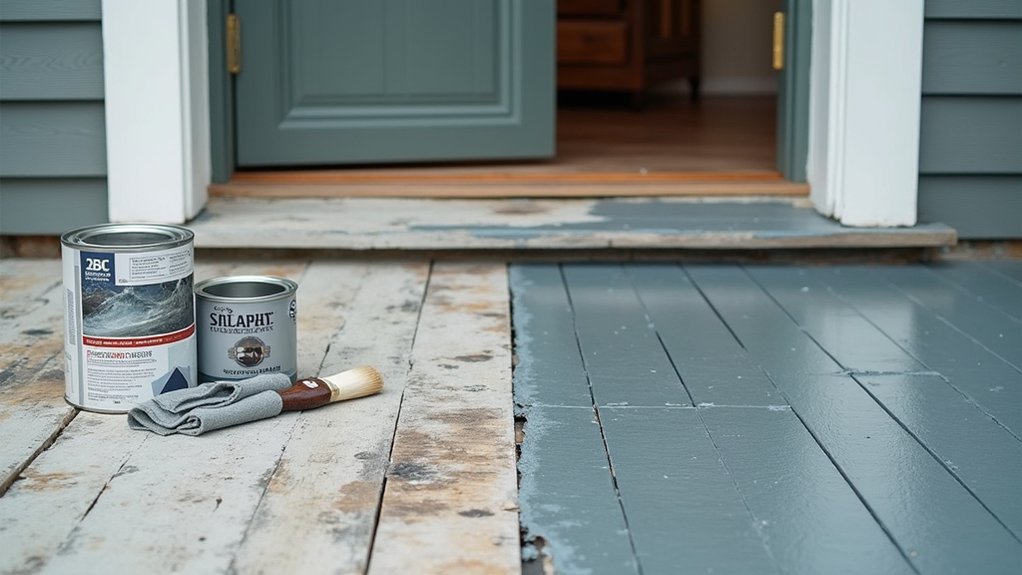
Before you coat anything, match the porch finish to the surface condition, moisture exposure, and traffic level so the protection actually lasts.
For bare or heavily checked wood, use a penetrating exterior deck sealer or semi-transparent stain; it moves with seasonal swelling and sheds water.
For sound, previously painted surfaces, choose a porch and floor enamel rated for exterior horizontal use and UV resistance.
Don’t trap moisture: verify the wood reads dry, address drainage, and maintain required clearances to soil and siding.
Follow paint preparation: wash, degloss, sand feathered edges, and spot-prime exposed wood and fastener heads with a bonding primer.
For Color matching, confirm undertone in daylight and record manufacturer, sheen, and batch to support future touch-ups and inspections.
Frequently Asked Questions
Do I Need a Permit to Rebuild or Modify My Porch Structure?
You’ll likely need a building permit if you rebuild or modify structural elements, change footprint, height, stairs, or railings. Check zoning regulations for setbacks and coverage. Confirm with your local building department before starting work.
How Much Does Professional Porch Restoration Typically Cost per Square Foot?
You’ll typically pay $25–$80 per square foot; like rebuilding a bridge, costs shift with Porch material and Restoration techniques. You’ll scope demolition, structural repairs, finishes, and code-required flashing, fasteners, and inspections.
What Are Signs My Porch Damage Is Covered by Homeowners Insurance?
You’ll likely have coverage if sudden, accidental events caused damage and you document it: dated photos, receipts, and a prompt claim. Include impacted porch furniture, decorative elements, and excluded wear/rot; verify limits, deductible.
How Long Should I Wait Before Using the Porch After Repairs?
You shouldn’t use it until the contractor’s cure time passes—typically 24–72 hours, and 7 days for full load. Test the “dry-to-touch” theory. Follow Weatherproofing tips and Seasonal maintenance; verify fasteners, sealants, adhesion.
Can I Restore a Historic Porch Without Violating Preservation Guidelines?
Yes, you can, if you follow local standards and document existing conditions. You’ll match profiles, keep original fabric, and use approved historic paint. Repair, don’t replace, your porch railing, and get permits.