
You’ll get the most character by keeping what your rural bungalow already does well: exposed beams, thick trim, plank floors, solid wood doors, wavy glass, and that stone hearth. Improve flow without erasing charm by widening a doorway, adding a cased arch, and zoning the entry with a bench, hooks, and a boot-to-sink path. Warm it up with limewash or beadboard, linen and wool layers, and baskets. Add dimmers, lamps, and a little porch lantern glow. There’s plenty more to try.
Key Takeaways
- Preserve original details—beams, trim, plank floors, doors, and wavy glass—by repairing, sanding, and oiling rather than replacing.
- Improve flow with selective openings, shifted doors, and functional zoning, keeping cozy nooks instead of a full open-plan layout.
- Add warmth through natural textures like limewash or beadboard, plus linen, wool, jute, baskets, and stoneware for grounded character.
- Layer lighting with warm dimmable overheads, task lamps, sconces, and hearth glow; use timers or smart plugs for easy evening ambiance.
- Use vintage pieces and antique-style fixtures with updated wiring, keeping patina and choosing items that add function as well as charm.
Keep These Original Rural Bungalow Features
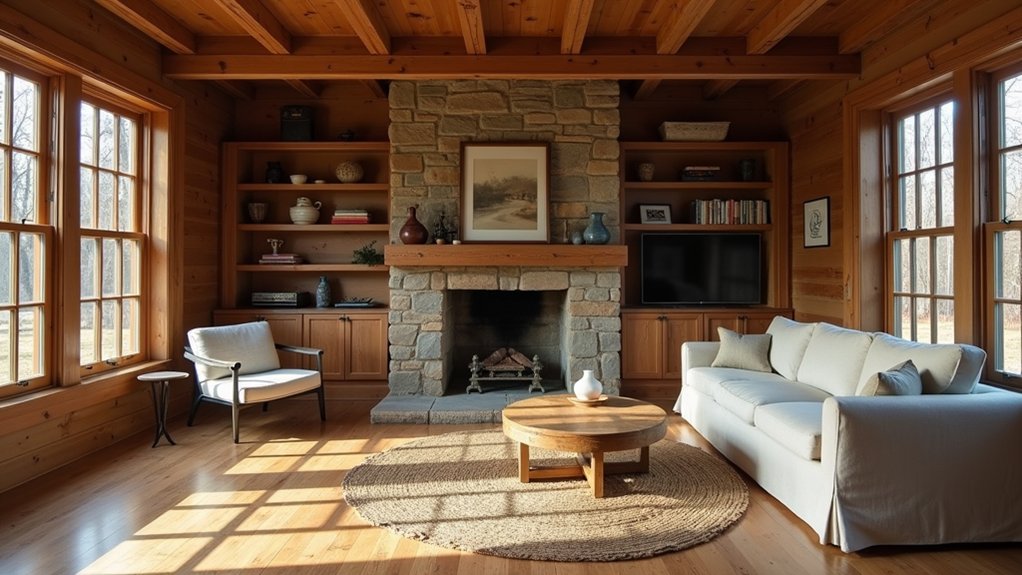
If you’re renovating a rural bungalow, start by looking at what already works: the original features that give the place its quiet charm. Keep exposed beams, thick trim, and old plank floors; you can sand and oil them instead of replacing them. Save solid wood doors, iron latches, and built-in cupboards, then repair squeaks and tighten hinges.
In a Farmhouse kitchen, preserve the deep sink, freestanding pantry, or beadboard, and refinish them with durable paint. Hold onto wavy glass, small casement windows, and stone hearths; they add warmth you can’t buy new.
For Rustic bedroom decor, keep the original headboard wall paneling or picture rails, and freshen them with linen curtains and soft, muted colors.
Plan a Better Layout Without Losing Charm
Although a rural bungalow’s charm often lives in its small rooms and quirky corners, you can still improve the layout without turning it into a blank, modern box. Start by mapping how you actually move through the house—muddy boots to sink, groceries to pantry, laundry to line—and let those paths guide change.
Instead of full open floor plans, try selective openings: widen a doorway, add a cased arch, or borrow sightlines with a half wall. Keep cozy nooks, but shift doors to stop traffic jams and reclaim dead hall space.
Use functional zoning to give each area a job: a bench and hooks by the entry, a compact work spot near daylight, and a dining corner close to the kitchen. You’ll gain flow while keeping the home’s snug rhythm intact.
Warm Up a Rural Bungalow With Natural Texture
Because rural bungalows can feel a bit bare after repairs and layout tweaks, natural texture brings the warmth back fast without fuss. Start with textured wall finishes: limewash for soft movement, clay plaster for depth, or beadboard for that honest cottage rhythm. Keep colors muted so the grain and trowel marks do the talking.
Then add natural fiber textiles where you touch and sit. Swap slick synthetics for linen curtains, a wool throw, jute runners, and cotton ticking on cushions. Mix tight weaves with nubby knits so the room feels lived-in, not styled.
Bring in wood in easy doses—an oak bench, a pine shelf, a cane-front cabinet—then ground it with a stoneware crock or woven basket. You’ll get instant character, steady comfort, and a homey hush.
Layer Lighting for Cozy Country Evenings
How do you make a renovated rural bungalow feel cozy after sundown? You layer light the way you’d stack quilts: base, task, and glow.
Start with warm overhead bulbs on dimmers so the whole room softens without going gloomy. Add table lamps near reading chairs and a small lamp on the kitchen counter to keep work zones bright.
Then sprinkle accent light: Candle sconces on a hallway wall or beside the hearth give flicker and shadow, even when you’re not using the fireplace.
Outside, set Garden lanterns along the porch steps and near the path to the gate so you walk safely and arrive home to a welcoming hush. Keep everything on simple timers or smart plugs.
Add Vintage Details That Still Feel Practical
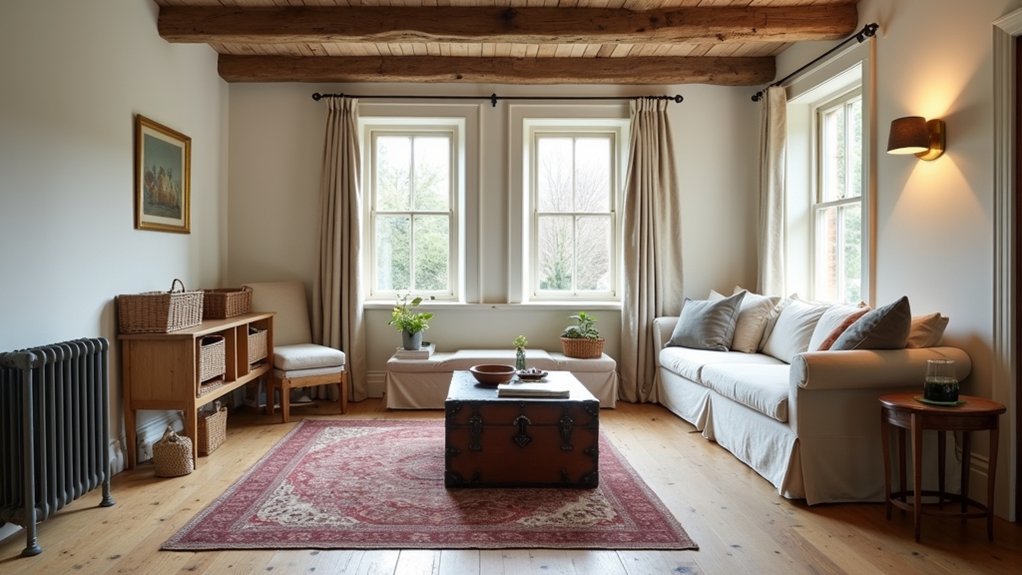
When you weave in vintage details, you can give your renovated rural bungalow that lived-in warmth without turning daily life into a museum tour. Start with one or two hardworking pieces: a solid oak table, a worn bench by the door, or a pie safe that hides clutter. Choose antique fixtures where they matter most—porch lights, a kitchen faucet, or bin pulls—then pair them with modern wiring and dependable valves.
Bring in vintage textiles for comfort and easy upkeep. Layer a washable quilt over the sofa, add ticking-stripe cushions, and hang lined curtains that block drafts. If you refinish, keep patina on edges so it feels earned.
Finally, edit often: let each old find solve a problem, not just fill a corner. That’s how charm stays useful.
Frequently Asked Questions
How Do I Check if Bungalow Renovations Need Planning Permission?
Check your local council’s planning portal, read permitted development rules, and call the planning officer if you’re unsure. Compare your extension, garden landscaping, and interior decor plans against constraints like conservation, height, and use.
What’s the Best Way to Improve Insulation Without Damp Issues?
Choose breathable, bargain-proof insulation: use vapour-open Insulation materials (wood fibre, hemp) with airtightness, then add Thermal curtains. You’ll keep warmth in while letting walls dry, and you won’t trap troublesome moisture.
How Can I Soundproof a Rural Bungalow Against Road or Wind Noise?
You’ll cut road and wind noise by using Soundproofing techniques: add dense curtains, lay thick rugs, and insulate cavities. Prioritize Window sealing with fresh gaskets and caulk, then fit secondary glazing and draft excluders.
What Should I Budget for Rewiring and Updating an Old Fuse Board?
You should budget $3,000–$12,000 for rewiring and a Fuse box upgrade, depending on size, access, and repairs. You’ll pay more for chasing walls, new circuits, permits, and Electrical safety tests. Get three quotes.
How Do I Manage Asbestos Risks During Renovation and Demolition?
You manage asbestos risks by stopping work and testing suspect materials first. You’ll hire licensed Asbestos removal pros, seal off rooms, and follow Safety precautions: wet methods, PPE, proper disposal, and clearance certificates.