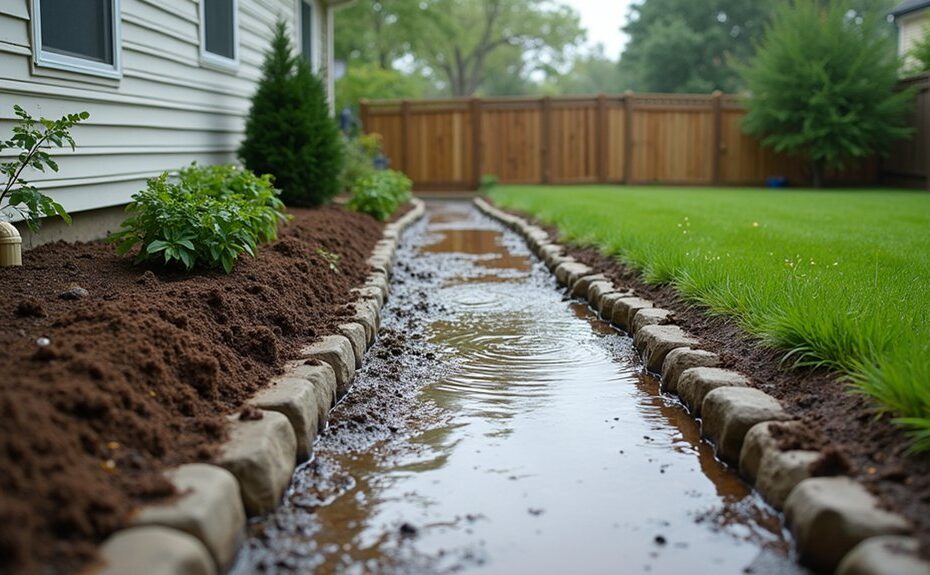
If your yard stays soggy after rain, you’re managing more than a messy lawn—you’re managing runoff paths, soil structure, and risk at the foundation line. Start by mapping where water enters, pools, and exits during a storm, then check gutter discharge points and any low grades within 10 feet of the house. Once you know what’s driving the saturation, you can choose between regrading, swales, or subsurface drains—but first you’ll need one key measurement.
Key Takeaways
- Walk the yard during rain to map ponding, flow paths, and low spots; measure grades to confirm runoff moves away from the foundation.
- Ensure a 5% slope away from the house for the first 10 feet; re-cut edges and topdress settled depressions.
- Fix roof runoff by cleaning gutters, checking downspout discharge, and adding extensions or pop-up emitters to disperse water away from walls.
- Use shallow swales (1–3% fall), catch basins, or French drains to intercept sheet flow and route water to a clear outlet.
- Improve infiltration by aerating compacted soil and topdressing compost; keep mulch thin and 4–6 inches from siding and weep holes.
Diagnose Why Your Yard Is Waterlogged
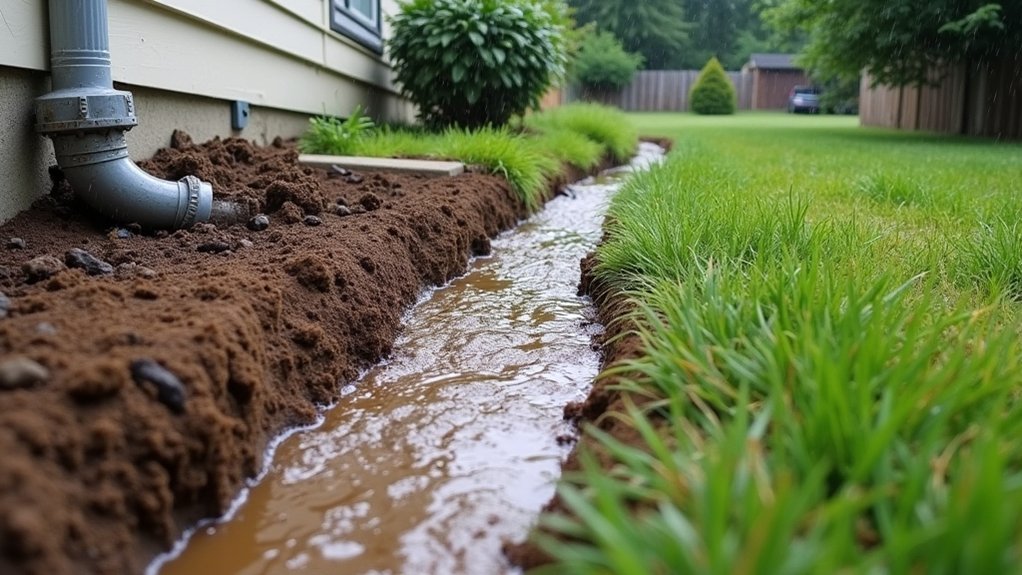
If your yard stays soggy long after a storm, start by treating it like a drainage system that’s failing somewhere in the chain. Walk the site during and after rainfall and map flow paths, ponding zones, and surface sheen.
Check grade with a level: you want consistent fall away from structures and no back-pitched swales. Probe soil with a screwdriver; if you hit dense clay or a compacted layer, infiltration’s bottlenecked.
Run a simple percolation test in several spots to compare infiltration rates across the yard. Note where turf thins or moss dominates; those are saturation markers.
Identify waterlogging causes such as depressions, hardpan, high water table, or blocked subsurface outlets. Document findings to size yard drainage solutions accurately.
Fix Gutter and Downspout Runoff First
Once you’ve mapped where water pools and how it moves across the yard, start upstream at the roofline—gutters and downspouts can dump more water in one spot than the soil can absorb. Verify gutters pitch correctly to outlets, seal leaking joints, and clear debris so flow stays continuous. Consistent Gutter maintenance prevents overflow that erodes beds and saturates perimeter soils.
Next, inspect each downspout discharge point. If it terminates at the foundation line or into a splash block that’s short, you’re concentrating runoff. Add a Downspout extension to carry water to a stable dispersal zone such as a gravel apron, tightline to a pop-up emitter, or a rain barrel with an overflow.
Strap extensions, keep slopes continuous, and test during a hose-run simulation.
Regrade for Better Yard Drainage Away From Home
After you’ve controlled roof runoff, regrade the adjacent yard so surface flow sheds away from the house instead of collecting at the foundation.
Establish a minimum 5% slope (about 6 in. drop over 10 ft) for the first 10 feet, then blend to existing grades to avoid abrupt changeover and mower scalping. Use a laser level or string lines to set target elevations, and keep finish grade 6–8 inches below siding and weep screeds.
Shape shallow swales to intercept sheet flow and direct it to a safe outlet, not toward neighbors. Plan landscape planting on berm shoulders, leaving swales open and stable.
Coordinate irrigation management: relocate heads away from the wall, reduce run time near the foundation, and prevent overspray onto cladding.
Improve Garden Soil Drainage With Compost and Aeration
You’ll improve soil drainage by integrating finished compost, which increases aggregate stability and creates connected pore space for faster infiltration.
You can then aerate with a garden fork, core aerator, or broadfork to break compaction layers without smearing the profile.
When you combine compost topdressing with targeted aeration, you build a resilient soil structure that moves water down and away from planting zones.
Compost Benefits For Drainage
Because drainage problems usually start with soil structure—not the surface—compost gives you a fast, design-friendly way to reengineer how water moves through a bed.
You’re not “loosening soil”; you’re rebuilding the pore network that controls infiltration, storage, and release.
Aeration Methods For Soil
Compost rebuilds the pore network, but aeration opens and reconnects those pores where compaction has pinched them shut.
Start by mapping traffic lines, downspout splash zones, and low points; you’ll target the densest layers first.
Use a hollow-tine core aerator on turf to extract plugs and create vertical macropores that boost soil porosity and infiltration.
In beds, switch to a broadfork: rock it to fracture soil without turning horizons, preserving structure while relieving pan layers.
For tight corners, use hand aeration tools like a garden fork or soil auger to punch relief holes near roots and along swales.
Aerate when soil is moist, not wet, so pores stay open and smearing doesn’t seal them.
Combining Compost And Aeration
Where does drainage improvement actually stick long-term—after you’ve reopened pores with aeration and rebuilt structure with organic matter? It holds when you pair both steps as a single system: create voids, then stabilize them with carbon-rich inputs that resist collapse under traffic and rain.
After core aeration or spiking, topdress 10–20 mm of screened compost and rake it so fines fall into holes without sealing the surface. Keep compost off hardscape edges and grade away from foundations so flow paths stay predictable. Water lightly to settle material, then mulch to limit crusting.
Repeat each season in compacted zones, but spot-treat low areas first. Over time, you’ll increase infiltration, aggregate stability, and Soil health while reducing perched water above dense layers.
Add Swales or Catch Basins for Surface Runoff
If stormwater sheets across your yard during heavy rain, you can intercept it with a shallow swale or a properly sized catch basin before it reaches planting beds or foundations.
For reliable surface water management, survey grades and map flow paths from downspouts, patios, and drive edges. Then set a swale on contour with a 1–3% longitudinal fall to an outlet.
Shape a broad, shallow cross-section so you can mow it, and stabilize it with turf, sedges, or erosion-control matting.
Use a catch basin where space is tight or runoff concentrates. Size the grate to expected flow, set the rim slightly below adjacent grades, and connect it to a solid outlet line or daylight point.
Integrate both features into your landscape design and keep overflow routes defined.
Install a French Drain to Protect Your Foundation
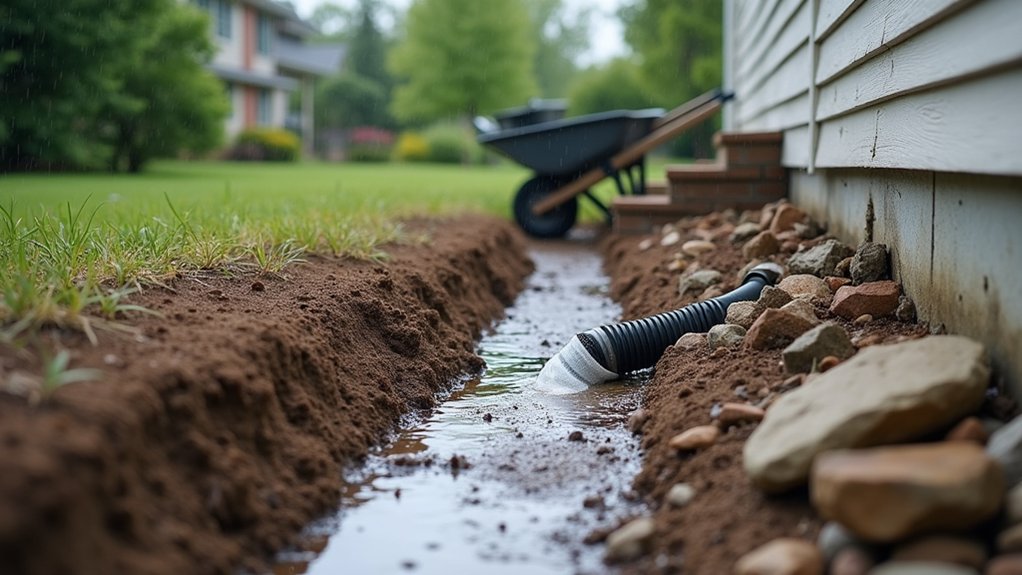
Because foundation backfill often settles and compacts differently than native soil, water can pool and press against your basement wall. A properly designed French drain intercepts that flow and routes it to a controlled discharge point.
Set the drain line at or below the footing elevation where feasible, or at least below the slab edge, so you’re relieving hydrostatic pressure instead of just moving surface water.
For French drain installation, trench along the upslope side, maintain consistent fall (about 1% where possible), and use a perforated pipe with a filter sock in washed stone wrapped with nonwoven geotextile to limit fines migration.
Daylight the outlet or tie into an approved storm system, and include cleanouts at turns.
This layout prioritizes foundation protection without overexcavation.
Maintain Yard Drainage With Seasonal Checkups
After you’ve installed a French drain, you’ll keep the system performing by scheduling seasonal checkups that match site conditions.
In spring, you’ll inspect inlets, cleanouts, and discharge points for sediment, root intrusion, and standing water that signals blocked flow paths.
In fall, you’ll clear leaf debris from swales and grates and verify surface grading still pitches away from structures so runoff stays on the designed drainage routes.
Spring Drainage Inspection
As winter loosens its grip and spring storms ramp up, you should inspect your yard’s drainage system to confirm every flow path still grades correctly and stays unobstructed. Walk the site during a light rain and map where sheet flow concentrates, then verify swales still pitch away from the foundation at a consistent slope.
Check that inlets, catch basins, and channel edges haven’t heaved and that surface runoff doesn’t bypass your Rain garden. Flush each Drainage pipe with a hose to confirm positive flow to its outlet, and listen for gurgling that signals partial blockage or a sag.
Probe downspout connections, cleanouts, and pop-up emitters for separation. Re-seat edging and stone to preserve designed crossfall and prevent rills.
Fall Debris And Grading
Where does runoff go once fall starts packing your swales, grates, and downspout outlets with leaves? It backs up, spreads across low spots, and loads water against your foundation. Schedule leaf cleanup before big storms: clear inlet grates, trench drains, and splash blocks; flush tight elbows; and pull debris from curb cuts so sheet flow can exit the site.
Then verify grading. You’ll want positive slope away from the house (about 5% for the first 10 feet) and smooth transitions into swales and rain-garden basins. Re-cut settled edges, topdress depressions, and keep soil from burying drain inlets.
Finish with mulch application that’s thin near structures, leaving a 4–6 inch clearance to siding and weep holes.
Frequently Asked Questions
How Much Does a Professional Drainage Assessment Typically Cost?
You’ll typically pay $200–$800 for a professional drainage assessment, depending on site size and scope. You’ll get a cost estimate after testing and mapping. Expect service fees to rise with surveys, modeling, and reporting.
Do I Need a Permit to Install a French Drain or Catch Basin?
Like a town crier, you’ll often need a permit, depending on local permit requirements and installation regulations. You should verify setbacks, discharge points, easements, and utility locates; you’ll submit a site plan and details to your authority.
Which Plants Tolerate Waterlogged Soil While Drainage Improvements Are Underway?
Choose sedges, rushes, swamp milkweed, cardinal flower, iris, and red-twig dogwood; they’ll show strong Waterlogging tolerance. You’ll optimize Plant compatibility by grouping moisture zones, specifying native cultivars, and maintaining temporary mulch-free basins.
How Can I Improve Drainage Without Disturbing Established Trees and Roots?
You can improve drainage by coring and adding sand-compost topdressing for Soil aeration, plus shallow French drains outside driplines for Root protection. Like a sponge revived after 3% perforation, your site breathes, keeps trees stable.
What Are Signs of Mold or Indoor Air Issues Caused by Poor Drainage?
You’ll notice indoor moisture as persistent musty odors, condensation on windows, peeling paint, and warped trim. You may spot mold growth on corners, HVAC registers, or basements, plus increased allergies, coughing, and humidity over 60%.