
In a 1998 builder-grade hallway, you can swap hollow-core six-panels for a crisp Shaker profile and instantly sharpen the whole space. You’ll start by deciding whether your existing slabs are worth refinishing or if replacement makes more sense for sound, fit, and style. Then you’ll tighten up the look with flat casing, clean reveals, and modern levers in matte black or satin brass. The real shift happens when you match the details to your architecture, but there’s one step that tends to get missed…
Key Takeaways
- Inspect existing doors for warping, binding, loose hinges, and hollow-core noise; refinish or adjust hardware before committing to replacement.
- Upgrade to modern styles like slab, Shaker, or glass-panel doors, choosing solid-core or MDF for a heavier, premium feel.
- Modernize trim with flat, square-edge casing and tight 1/8″–3/16″ reveals, reusing jambs when possible for a cleaner look.
- Replace builder-grade knobs with contemporary levers, matched hinges, and coordinated finishes; consider magnetic latches for quieter, smoother closing.
- Refinish for a sleek finish: degloss, sand to 220, fill dents, prime with bonding primer, then apply cabinet-grade enamel by spray or microfiber roller.
Refresh vs Replace: What Your Interior Doors Need
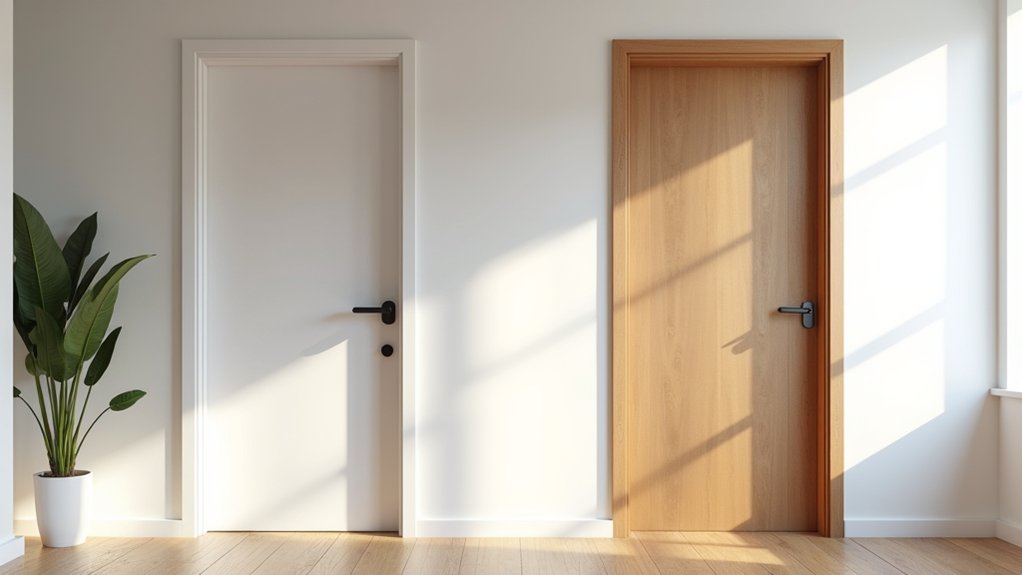
Before you start shopping for new slabs, take a hard look at what your current interior doors are actually telling you—because a smart “refresh” can deliver a high-end, on-trend upgrade without the cost and disruption of a full replacement.
Check for binding, loose hinges, chipped edges, warped panels, and hollow-core “drum” noise when you knock. If the door is square and structurally sound, you can refinish, tighten hardware, adjust strike plates, and add perimeter seals for better door insulation.
Evaluate privacy needs room by room: bedrooms and offices often benefit most from added mass, door bottoms, and soundproofing options like acoustic gaskets or a solid-core swap.
Replace only when you see delamination, severe warping, or repeated latch misalignment.
Choose Modern Interior Door Styles (Slab, Shaker, Glass)
If you want your upgrade to read “intentional” instead of “just new,” start by choosing a modern door style that matches your home’s architecture and the way you use each room.
Slab doors deliver the cleanest, gallery-like plane, ideal for minimalist halls and offices.
Shaker doors keep things contemporary but add subtle shadow lines that suit transitional homes and hide minor wear.
Glass-panel or full-lite doors brighten darker corridors and work best for home offices, gyms, or kitchens where you want borrowed light without losing separation.
Review door material options: solid-core for weighty, quiet performance; MDF for crisp paint; wood veneer for warmth; tempered glass for durability.
Plan installation techniques early—confirm slab vs prehung, hinge locations, swing direction, and latch backset to avoid costly rework.
Modernize Door Trim With Flat Casing and Tight Reveals
While a new door grabs attention, updated trim is what makes the whole opening look architect-designed, and flat casing with tight reveals is the current go-to.
Swap ornate profiles for square-edge casing (typically 2 1/4″ to 3 1/2″) and keep the reveal consistent at about 1/8″–3/16″ around the jamb for crisp shadow lines.
If your walls aren’t perfectly flat, you’ll need shims and careful scribing so gaps don’t telegraph through paint.
Coordinate casing thickness with your door material options—solid core often pairs well with beefier trim, while hollow core benefits from lighter proportions.
For budget considerations, reuse existing jambs when possible and upgrade only casing and stops for a high-impact refresh.
Update Door Hardware: Hinges, Handles, Locks
Once your flat casing and tight reveals create those clean shadow lines, the hardware becomes the next cue that the door is truly upgraded. Swap builder-grade knobs for lever handles with crisp geometry, and match them to a modern backplate or minimalist rose.
Upgrade hinges too: choose squared-corner or concealed hinges for a cleaner edge, and size them correctly so the door swings smoothly without sag.
Unify finishes across the room—matte black, satin brass, and brushed nickel are current favorites—and keep sheen consistent between hinges, handles, and strike plates.
For locks, pick low-profile privacy sets for baths and bedrooms, and consider magnetic latches for a quieter close.
Treat Decorative hardware and Door accessories like jewelry: coordinated, intentional, and comfortable in your hand.
Paint or Refinish Doors for a Factory-Smooth Look
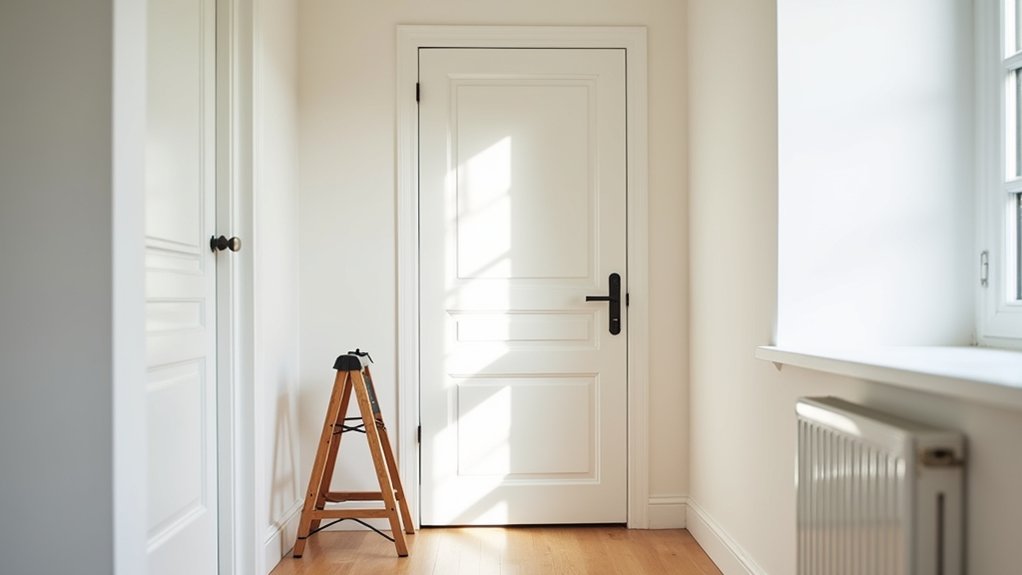
Because fresh paint highlights every ripple and seam, you’ll get the most “new door” impact by refinishing with a factory-smooth mindset instead of a quick wall-paint approach.
Pull the slab, label hinges, and remove hardware so edges coat evenly. Degloss, fill dents, and sand to 220-grit; then vacuum and tack-cloth for zero grit nibs.
Use a bonding primer matched to your door material options—MDF, hollow-core hardboard, solid wood, or fiberglass—so tannins and fibers don’t telegraph.
Spray for the sleekest finish, or use a microfiber mini-roller and tip off with a quality brush.
Choose a durable cabinet-grade enamel in today’s paint color choices: warm whites, greiges, inky charcoal, or muted sage.
Let coats cure fully before rehanging to avoid sticking.
Frequently Asked Questions
How Much Does Upgrading Interior Doors Typically Cost per Room?
You’ll typically spend $250–$1,200 per room, depending on Door material options, labor, and finish level. Add $40–$200 for Decorative hardware. You’ll pay more for solid-core, custom sizes, and trim adjustments.
Do I Need a Permit to Replace Interior Doors in My Home?
You usually don’t need a permit to replace interior doors, like swapping costumes in a quiet play. But if you alter framing, egress, or fire-rated doors, your city may require one. Align home decor, material selection.
Can I Upgrade Doors Without Changing Existing Door Frames or Jambs?
Yes, you can upgrade doors without changing jambs if you confirm door frame compatibility, hinge locations, and slab size. Choose material selection options like solid-core or modern veneers, then adjust hinges, trim, and hardware.
What’s the Best Way to Reduce Noise With New Interior Doors?
You’ll hush your space like pulling a soft curtain by choosing solid-core doors, adding perimeter seals and an automatic door sweep. Use Soundproofing methods and Noise reduction materials like mass-loaded vinyl and acoustic panels.
How Long Does a Professional Interior Door Upgrade Usually Take?
You’ll usually finish a professional interior door upgrade in 2–4 hours per door, same day for most homes. Door material options can extend it; hinge installation tips and precise alignment keep the schedule tight.