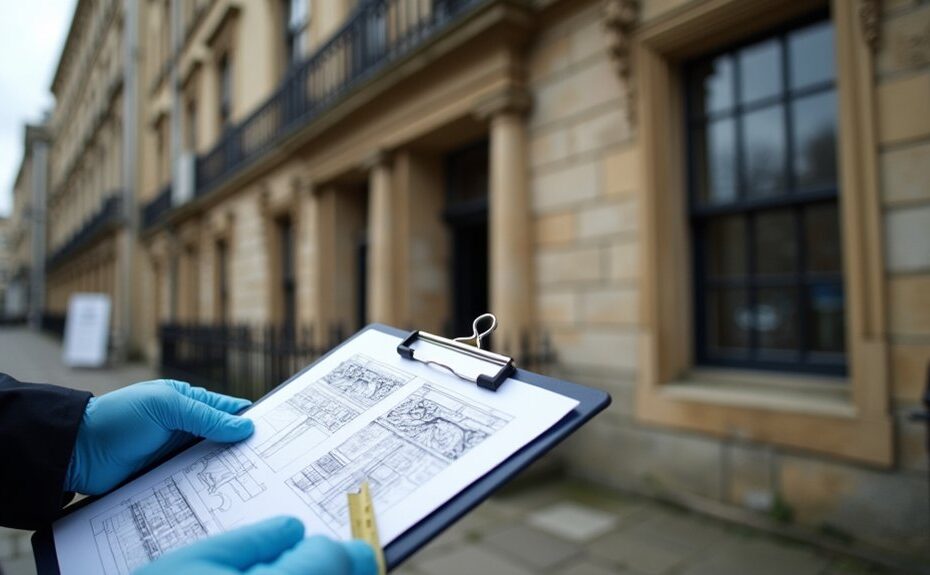
Listed Building Consent (LBC) controls works that affect a listed building’s special architectural or historic interest, so you must justify alterations to fabric, plan form, and features inside and out. Planning permission is separate and tests development impacts like use, scale, siting, access, and external appearance. You often need both for extensions, new openings, roof changes, signage, or boundary works. Apply with coordinated drawings, a heritage statement, and method details; starting without LBC is a criminal offence—next, you’ll see what triggers approval and how decisions are made.
Key Takeaways
- Planning permission controls development impacts like use, scale, siting, access, and external appearance under local planning policies.
- Listed Building Consent (LBC) protects a listed building’s special architectural or historic interest, covering fabric, detailing, interiors, and plan form.
- LBC and planning permission are separate approvals; getting one does not remove the need for the other.
- Many works trigger LBC, including window or roof changes, new openings, internal alterations, and repairs affecting materials, profiles, or detailing.
- Starting work without LBC is a criminal offence; applications rely on detailed drawings and heritage justification, and may require extra consents (trees, highways, ecology).
Listed Building Consent vs Planning Permission

Although they’re often applied for at the same time, listed building consent and planning permission control different risks and follow different legal tests.
You use planning permission to demonstrate that your proposal meets development control policies on use, scale, massing, siting, access, parking, and amenity.
You use listed building consent to demonstrate that your works meet conservation policy expectations and Historic preservation objectives through justified design choices and appropriate methods.
You can’t assume that approval under one regime satisfies the other, so you should coordinate drawings, heritage statements, and schedules to avoid conflicts.
You also still comply with Building regulations: they govern safety, structure, fire, energy, and accessibility, but you’ll need to evidence how compliance solutions remain proportionate to heritage impacts and are technically deliverable.
What Listed Building Consent Protects (Inside and Out)
Listed Building Consent protects the building’s historic fabric, so you can’t remove, alter, or repair elements of special interest without approval. It covers interior features—such as staircases, fireplaces, plasterwork, joinery, and plan form—where changes could harm significance.
It also safeguards external character, controlling works to façades, roofs, windows, doors, and attached structures to guarantee conservation-led compliance.
Protected Historic Fabric
Where does listed building consent draw the line between routine upkeep and controlled change? It turns on whether you affect the building’s protected historic fabric: the materials, structure, and external appearance that convey significance.
You can usually like-for-like repair using matching lime mortar, slate, timber sections, and traditional detailing, provided you don’t alter profile, tooling, or bond. But if you cut new openings, replace original windows with different sections, strip render, re-point in cement, re-roof with altered coverings, or remove structural members, you’re changing fabric and you’ll likely need consent.
Treat every intervention as Architectural restoration with measurable minimum loss, and justify it against Heritage preservation principles: retain, repair, and only replace when proven beyond reasonable repair. Record existing fabric before works commence.
Interior Features Covered
The same “minimum loss” approach applies once you step inside, because listed building consent protects interiors as firmly as façades. You must treat historic layouts and joinery as controlled fabric: staircases, balustrades, panelling, cornices, skirtings, dado rails, shutters, floors, fireplaces, hearths, and chimney pieces.
Plasterwork, lath-and-plaster ceilings, decorative finishes, and historic paint schemes often require like-for-like repair and validated methods.
If your Interior design proposal removes partitions, alters door openings, installs new services, or changes built-in cupboards, you’ll likely need consent, supported by a heritage impact assessment and a method statement.
Even furniture restoration can trigger scrutiny where fittings are fixed, integral, or form part of the building’s special interest. Document significance before you touch anything.
Exterior Character Safeguarded
Even if you’re only working on the outside, listed building consent controls anything that affects a building’s special architectural or historic interest, so you must protect its overall character, materials, and detailing. That means you can’t swap windows, doors, roofing, rainwater goods, or boundary treatments without checking significance and matching profiles, finishes, and fixings.
You’ll need consent for repointing with different mortar, cleaning that alters patina, rendering, cladding, painting, or removing chimneys, plaques, or original joinery.
Modern renovations must demonstrate minimal intervention, reversibility, and like-for-like repair before replacement.
If you’re adding Green energy measures—solar panels, heat pumps, flues, vents, or insulation—you must site and detail them to avoid harm to elevations, rooflines, and historic fabric, and justify any visual change.
Listed Building Consent: What Work Needs Approval
Because listed status protects a building’s special architectural or historic interest, you’ll usually need Listed Building Consent for any works that alter its character—externally or internally—whether you class them as repairs, replacements, or “like-for-like” changes.
Seek approval before changing roof coverings, windows, doors, stonework, render, rainwater goods, or external paint systems where appearance or fabric changes. Inside, consent commonly covers removing partitions, altering staircases, fireplaces, cornices, floor structures, panelling, or historic plaster, and upgrading services where routes or fixings affect significant fabric.
Modern renovation proposals such as secondary glazing, insulation, damp treatments, or new bathrooms must demonstrate reversibility and minimal loss of original material.
For Commercial development, shopfronts, signage fixings, extract ducts, and accessibility alterations require detailed drawings, heritage justification, and method statements.
When You Need Planning Permission as Well as Consent
You’ll often need planning permission alongside listed building consent when you propose external alterations or extensions that affect the building’s setting or appearance.
You may also require a change of use application, and you must align it with heritage constraints so the proposal preserves significance.
You should also check for associated works and any planning conditions, because they can trigger further consents and control materials, methods, and sequencing.
External Alterations And Extensions
Where external works change a listed building’s fabric or alter its appearance, you’ll usually need Listed Building Consent and may also need planning permission. This includes extensions, dormers, roof alterations, new openings, re-pointing, cladding, satellite dishes, external flues, and changes to chimneys or boundary walls.
Even “like-for-like” repairs can trigger consent if they affect historic fabric or detailing.
Planning permission often applies where you increase volume, alter elevations, or work within a conservation area, and permitted development rights may be restricted.
For Modern renovations, you must demonstrate heritage impact, justify design choices, and follow Material restrictions on brick, mortar, glazing, joinery profiles, and paint systems.
You’ll need measured drawings, specifications, and a heritage statement showing minimal intervention and reversibility where practicable.
Change Of Use Applications
When does a listed building change of use trigger planning permission as well as Listed Building Consent? You’ll need planning permission when the proposed use falls outside the lawful use class, materially changes activity levels, or conflicts with local policy, even if you’re not altering the fabric.
Listed Building Consent remains essential where the change of use drives internal or external interventions affecting significance.
For adaptive reuse, test the proposal against the local plan and any zoning regulations, then confirm whether the use is permitted development or requires a full application.
You should document how the new use sustains the building’s heritage values, setting, and long-term viability. Submit aligned statements and drawings so the planning case and conservation case don’t contradict each other.
If either regime refuses, you can’t lawfully proceed.
Associated Works And Conditions
Although Listed Building Consent controls works that affect a building’s special architectural or historic interest, many “associated works” still trigger planning permission because they constitute development—think extensions, external alterations visible in the public domain, new openings, boundary treatments, lighting, signage, plant, access changes, or standalone structures within the curtilage.
You must assess both regimes early, because consent won’t authorise development rights, and permission can’t override heritage harm. Submit coordinated drawings, heritage statement, and method statements to demonstrate Historic preservation and compliance with Conservation guidelines.
Expect conditions: sample panels, mortar mixes, joinery profiles, glazing specifications, paint systems, archaeological recording, and retention of fabric. You’ll also need conditions on timing, noise, construction access, and landscaping to protect setting.
If works affect trees, ecology, highways, or drainage, plan for extra consents and discharge stages.
Listed Building Consent: Steps, Documents, Timescales
Before you start any works that affect a listed building’s character of special architectural or historic interest, you’ll need to follow a defined Listed Building Consent (LBC) process that sets out the application steps, required documents, and decision timescales.
You should begin with pre-application advice, then submit your LBC form with scaled drawings, a design-and-access statement where required, a heritage statement, and a method statement covering materials, joinery, and repairs for Historic preservation.
Include a schedule of works, photographs, and any specialist reports (structural, archaeological, paint analysis). You must show how proposals meet conservation principles and interface with Building regulations without harming significance.
After validation, the authority targets an 8-week decision, but complex schemes may extend by agreement. You can’t start until consent issues.
Who Decides Listed Building Consent (and Who They Consult)
Once you’ve submitted a valid LBC application and the statutory clock starts, the local planning authority (LPA) decides it under the Planning (Listed Buildings and Conservation Areas) Act 1990, typically through a delegated planning officer report or, for contentious or major proposals, a planning committee.
You’ll deal mainly with the case officer, who assesses special architectural or historic interest, significance, and the harm/benefit balance.
The LPA must consult its conservation officer and notify Historic England for specified grades and works, then consider any response.
You may also trigger consultation with building control, highways, archaeology, and amenity societies where relevant.
If your scheme involves Adaptive reuse, the officer tests reversibility, fabric retention, and setting impacts.
Where Heritage tourism is cited, you must evidence public benefits without compromising authenticity or legibility.
Risks of Starting Work Without Listed Building Consent
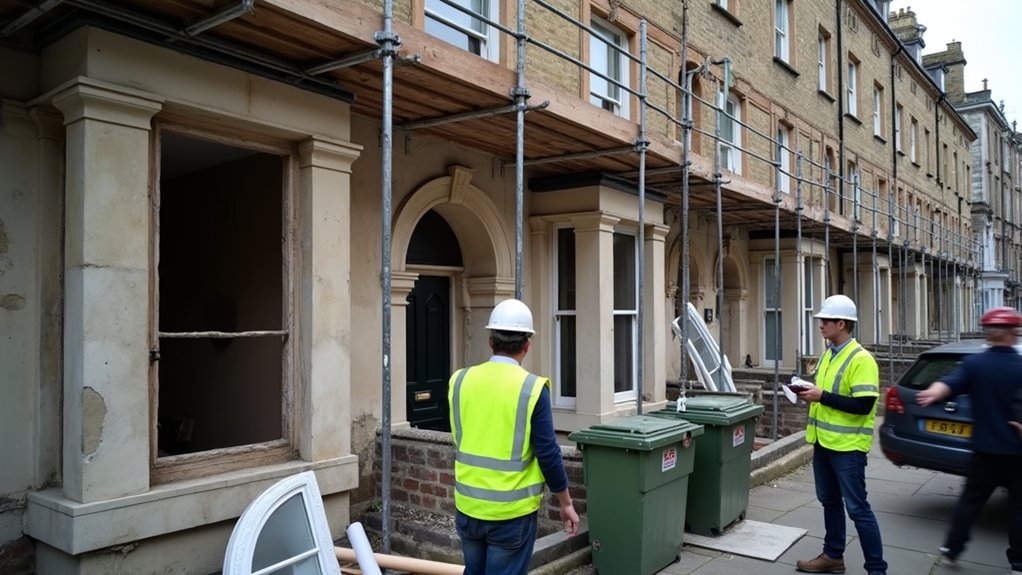
If you start works that affect a listed building’s special architectural or historic interest without Listed Building Consent (LBC), you commit a criminal offence under the Planning (Listed Buildings and Conservation Areas) Act 1990, and the LPA can intervene immediately through enforcement action.
You can face prosecution, unlimited fines, and orders to reinstate fabric, even if the alteration seems minor or aligns with Modern restoration trends. The LPA may issue a Listed Building Enforcement Notice requiring reversal or specified conservation repairs, and you’ll carry the cost and programme risk.
You can’t rely on Building regulations approval as a substitute; compliance doesn’t legitimise unauthorised heritage impact. Your contractors and professionals may also be exposed through evidence, insurance exclusions, and reputational damage.
Delays then escalate as you seek retrospective consent under scrutiny.
Frequently Asked Questions
How Much Does a Listed Building Consent Application Cost?
It’s shockingly low: you usually pay £0 in application fees for listed building consent, but you’ll cover drawings and reports. Historic preservation and Architectural restrictions demand conservation-grade evidence, so professional costs can feel sky-high.
Can I Apply for Consent Retrospectively After Completing the Work?
Yes, you can apply retrospectively, but you’re exposed to enforcement risk and you must justify works against Historical significance and Preservation requirements. You’ll need detailed drawings, heritage statements, and may need reversals.
How Long Does Listed Building Consent Remain Valid Once Granted?
Like a ticking clock, your listed building consent typically expires after 3 years if you don’t start work. You must commence authorised works to protect Historic preservation and safeguard Architectural significance under conservation-led compliance requirements.
Do I Need Consent for Routine Repairs and Like-For-Like Maintenance?
You don’t always need consent for routine repairs; you do if works affect character or fabric. Follow Maintenance guidelines, use like-for-like materials, document methods, and consult conservation officers to satisfy Historic preservation compliance requirements.
Can Neighbours Object to My Listed Building Consent Application?
Yes, your neighbours can object, and their representations form part of community consultation. You must evidence conservation-led design, document heritage impacts, and address Neighbor objections within your statement, so the authority can assess significance.