
If one corner of your home feels a bit “under-celebrated,” you can fix it with a few smart, style-forward moves. Start by stacking light sources—floor lamp, table lamp, even a small accent light—then aim a mirror to catch and toss that glow back into the space. Add metallic or glass decor, switch to a lighter finish nearby, and keep furniture slim so light can travel. The fastest change might surprise you…
Key Takeaways
- Remove light blockers like bulky furniture, tall plants, dark rugs, and clutter to open daylight paths and reduce visual heaviness.
- Paint walls warm off-white or soft greige in eggshell or satin, and use a slightly lighter ceiling to lift the room.
- Layer lighting with a warm floor lamp, slim table lamp, and plug-in sconces or LED strips, keeping bulbs consistent at 2700–3000K.
- Add mirrors and reflective decor, angling them toward windows or lamps to bounce light deeper into the corner.
- Soften and style with light textiles, a low-light plant on a stand, and a few metallic or glass accents for cozy, current polish.
Why Your Dark Corner Looks Dim (Quick Checks)
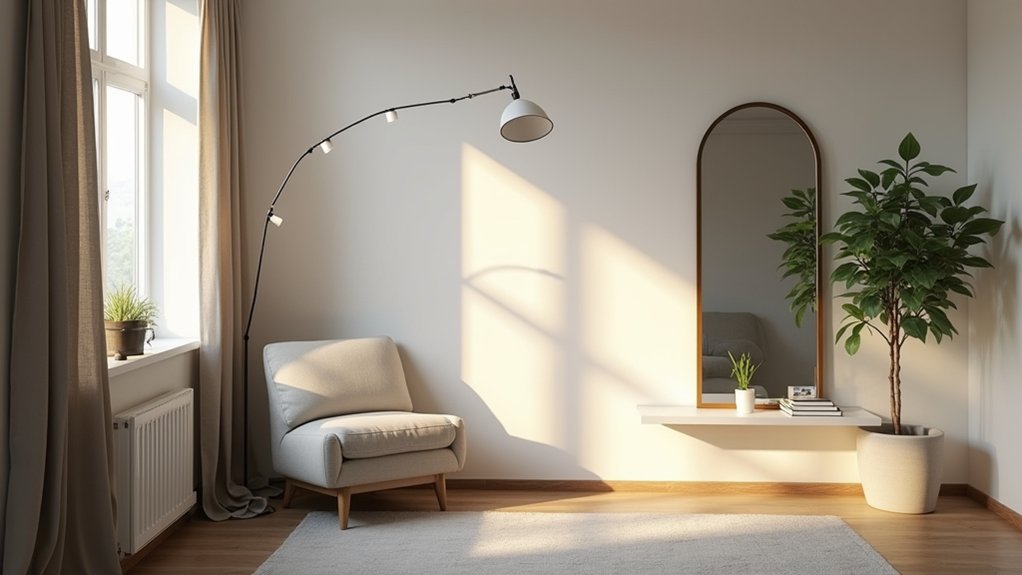
Ever wonder why that one corner stays gloomy no matter what you do? Start with quick checks: is furniture blocking daylight paths, or is a tall plant casting a heavy shadow? Pull pieces a few inches off the wall and open a clear “light lane” with smarter space organization.
Next, scan surfaces: matte charcoal, busy patterns, and dark rugs swallow light, while warm whites and pale woods bounce it. Tighten color coordination—repeat one light neutral on the wall, nearby textiles, and decor so your eye reads the area as larger and cleaner.
Check reflections, too: a blank wall wastes potential, but a glossy frame or glass tabletop can amplify existing brightness. Finally, edit clutter; visual noise makes dimness feel worse fast.
Layer Lighting to Brighten a Dark Corner Fast
Once you’ve cleared the light lane, softened dark surfaces, and trimmed visual clutter, you can make that corner glow by stacking light sources at different heights. Start with a warm floor lamp to wash the wall and set an Ambient glow.
Add a table lamp on a slim pedestal or stool to fill mid-level shadows and make seating feel intentional. Finish with a tiny accent: a plug-in sconce, picture light, or LED strip tucked under a shelf for crisp edge definition.
Choose bulbs in the 2700K–3000K range and match color temperature across fixtures so the light reads smooth, not patchy.
Put everything on dimmers or smart plugs, then build scenes for evening and “daytime” that complements natural illumination coming from nearby windows.
Place Mirrors to Bounce Light Into a Dark Corner
Pick a reflective mirror style—arched, brass-framed, or softly antiqued—to add instant shine and a curated look.
Angle it toward your brightest window or lamp so it throws light straight into the shadowy corner.
For extra depth, layer a smaller mirror in front of a larger one to create a chic, gallery-like glow.
Choose Reflective Mirror Styles
If your corner feels like it swallows light, a well-placed mirror can throw it right back into the room. Start by choosing a finish that reads bright: polished nickel, brass, chrome, or glossy lacquered wood all catch and echo highlights better than matte surfaces.
For character, lean into Vintage frames with gilded edges, carved details, or an antique patina; they add warmth while still reflecting plenty of glow. Prefer modern styles? Go for thin black metal, frameless rectangles, or arched silhouettes—clean lines that visually expand tight spaces.
Consider smoked, bronze, or lightly antiqued glass if you want mood without losing shimmer. A grouped set of small mirrors can mimic a gallery wall and multiply sparkle without needing one oversized piece.
Angle Mirrors Toward Light
Because a mirror only works when it catches a beam, angle it toward your brightest source—an adjacent window, a nearby lamp, or even a ceiling fixture—so it throws light directly into the shadowy corner.
Stand in the corner and scan what the glass “sees”; if you spot the bulb or window, you’ve nailed the placement.
Use a slight tilt, not a flat-on hang, to steer light reflection where you need it most—across a dull wall, onto a plant, or over a reading chair.
For a modern, editorial look, try a large mirror leaned on the floor with a subtle wedge behind it.
At night, rotate the angle mirrors a few degrees to catch your lamp’s glow.
Layer Mirrors For Depth
Once you’ve aimed one mirror to catch the best beam, add a second (or third) to build a brighter, deeper-looking corner. Try staggered heights: hang a tall rectangle, then lean a smaller round mirror slightly in front. This layered mirror placement creates a gallery feel while multiplying light.
For a modern look, mix thin black frames with warm brass, so the contrast reads intentional. Keep at least one mirror angled toward your lamp or window, and aim another to bounce that glow onto a shadowy wall. You’ll get decorative reflections that feel like extra sconces without wiring.
If the corner feels tight, choose one oversized mirror plus a slim accent mirror to avoid clutter. Finish with a glossy vase to echo the shine.
Add Reflective Decor to Lift a Dark Corner
Once you’ve placed a mirror, you can multiply that glow by layering more reflective decor around it. Try metallic accents—brass trays, chrome frames, or a gold-toned lamp—to catch every flicker of light and add a current, polished edge.
Finish with glass (a clear side table, vase, or cloche) so the corner stays airy and bright instead of heavy and shadowy.
Mirrors To Multiply Light
If a corner feels like it swallows daylight, a well-placed mirror can bounce what little light you have and make the whole spot read brighter instantly.
Start with mirror placement: hang it opposite a window, a lamp, or even a doorway so it catches the strongest beam and throws it back into the room. Angle it slightly to aim light where you need it, like onto a plant, art, or a reading chair.
Go oversized for a modern, gallery-like look, or group two smaller mirrors to create rhythm without clutter. Choose a slim frame to keep the vibe airy.
The goal is clean light reflection, not distraction, so keep sightlines simple and let the mirror act like a second source of daylight.
Metallic Accents And Glass
Mirrors do the heavy lifting, but metallic accents and glass add that extra shimmer that keeps a dark corner from looking flat. Start with one statement piece: a brass tray, chrome catchall, or gold-framed art. These metallic accents bounce lamp light outward, giving you that high-end glow without rewiring.
Layer in glass decor to keep the look airy. Try a clear vase with tall stems, a smoked-glass lamp, or a petite acrylic side table that seems to disappear.
If your corner feels heavy, swap matte ceramics for ribbed glass, and choose warm metals for cozy rooms, cool metals for modern spaces. Keep finishes consistent—two tones max—so the sparkle reads intentional, not cluttered. Add a small candleholder, and you’ve got instant lift.
Pick Paint and Finishes That Brighten Dark Corners
While a dark corner can feel like it swallows light, the right paint color and finish will bounce it back into the room. Start with a warm off-white, soft greige, or pale sand to keep the space airy without looking stark.
If you want drama, lean into Color contrast: paint the corner one shade lighter than adjacent walls, or add a crisp trim line to frame it like a vignette.
Next, choose paint sheen strategically. Satin or eggshell reflects more glow than flat, yet still hides wall texture; reserve semi-gloss for trim or a narrow accent panel where you want a clean, light-catching edge.
Try a limewash-inspired matte in a light tone for subtle movement that reads bright, not shiny.
Finish by painting the ceiling a half-step lighter to lift the whole corner.
Choose Slim, Light-Catching Furniture for Dark Corners
Because bulky silhouettes cast heavy shadows, choose furniture with slim profiles and light-catching surfaces to keep a dark corner feeling open. Think armless accent chairs, spindle-leg side tables, or a narrow console that floats on tapered legs.
Prioritize minimalist furniture in pale wood, glossy lacquer, chrome, or glass so available light bounces instead of getting absorbed.
Use color coordination to reduce visual breaks: match the piece to your wall tone or go one shade lighter to blur edges and expand the corner.
If you need storage, pick a tall, shallow cabinet with a reflective door panel or satin hardware that reads like jewelry.
Angle a mirrored tray or metal tabletop toward the room’s brightest source, and keep the top styled spare so the corner looks airy.
Warm Up Dark Corners With Plants and Textiles
Once you’ve kept the silhouette light and reflective, soften that dark corner with texture and a hit of green. Start with Indoor greenery that thrives in lower light, like a ZZ plant, pothos, or cast-iron plant. Cluster two sizes to create depth, then lift one on a stand so the leaves catch any spill of light and look intentional, not forgotten.
Next, layer Textile textures to add warmth without adding bulk. Drape a boucle throw over a slim chair, tuck a woven basket beside it, and anchor everything with a flatweave or vintage-style rug.
Add a linen curtain panel on a tension rod to frame the nook, and finish with a textured cushion in a warm neutral. Your corner will feel styled, cozy, and current.
Frequently Asked Questions
How Do I Brighten a Dark Corner if I’M Renting?
Use plug-in sconces or a slim floor lamp to layer warm light, then add Wall mounted mirrors to bounce it. Finish with Decorative plantings in bright pots and peel-and-stick accents—you’ll transform it fast.
What’s the Best Way to Brighten a Corner Without Using Electricity?
Use daylight and reflection: hang a mirror opposite your window, paint light tones, and add wall mounted sconces with candles. Style decorative lanterns on a stool for layered glow, cozy vibes, and shadows.
Which Light Bulb Color Temperature Reduces Eye Strain in Dim Corners?
Choose a warm-neutral 3000–3500K color temperature to boost eye comfort and cut strain in dim corners. You’ll get a soft, modern glow—pair it with a matte shade and diffused bulb for even light.
How Can I Hide Ugly Cords When Adding Corner Lighting?
Like vines on a trellis, you’ll guide cords behind furniture, then use cord concealment raceways along baseboards. Snap on decorative covers or fabric sleeves, and tuck slack into baskets or cable boxes for a clean, modern glow.
How Do I Brighten a Dark Corner With a Very Low Ceiling?
You’ll brighten a low-ceiling dark corner by skipping tall fixtures and installing wall mounted lamps that wash light upward. Add reflective surfaces like a mirror or metallic tray, keep furniture low, and choose pale tones.