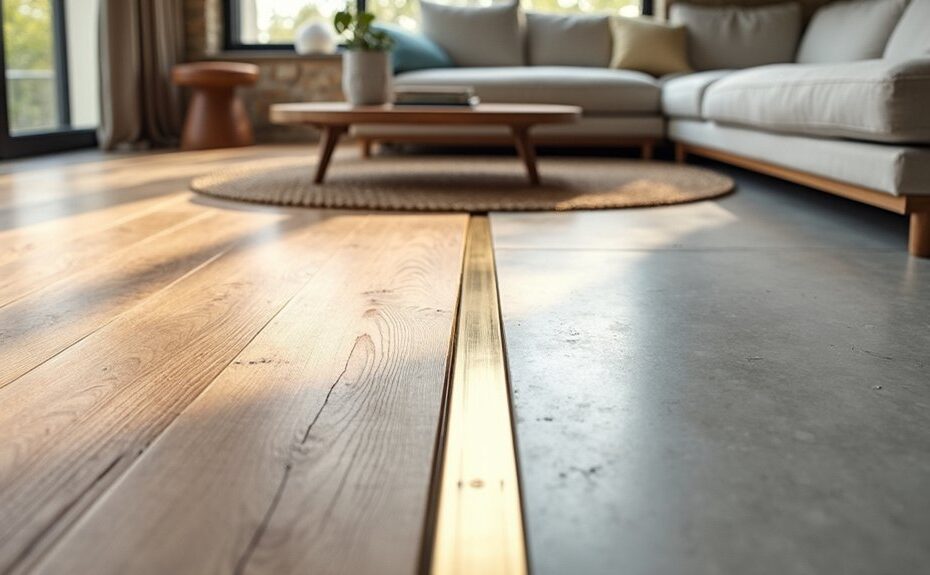
Choosing living room flooring can feel like you’re picking something that has to survive a stampede every day. You want a finish that looks curated but doesn’t panic at spills, grit, or moving furniture. LVP and engineered hardwood are trending because they nail the wood look with better wear, while tile and carpet swing hard toward durability or comfort. But your best option depends on how you actually live, starting with…
Key Takeaways
- Set a per-square-foot budget including underlayment, trims, and installation, then balance wear resistance with expected living-room traffic.
- Choose engineered hardwood for timeless style with better scratch resistance, using harder species and low-sheen finishes to hide wear.
- Pick LVP for a high-end wood look with waterproof performance, tight seams, and a 12–20 mil wear layer for busy homes.
- Use porcelain or ceramic tile for maximum durability and easy cleaning, then add rugs or radiant heat to offset coldness and hardness.
- For softness and quiet, choose solution-dyed nylon carpet with stain treatment and medium pile, and avoid high-pile carpet and soft pine.
How to Pick Living Room Flooring (Price, Wear, Water)
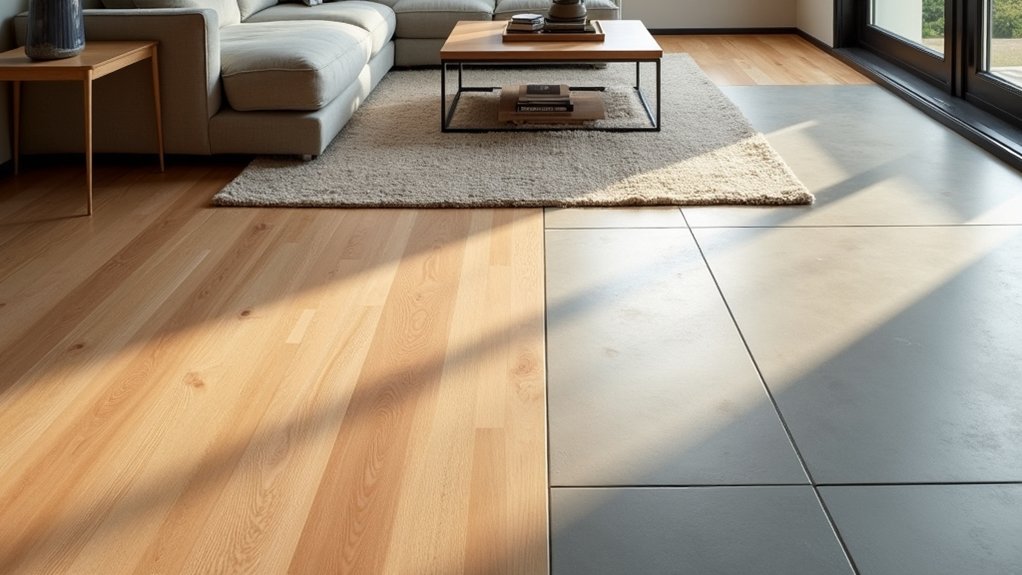
Because your living room has to look good *and* hold up to real life, pick flooring by balancing three variables: price, wear, and water tolerance.
Start with budget: set a per-square-foot target that includes underlayment, trims, and install, then shortlist cost effective options that still deliver a premium look (wide-plank visuals, low-sheen finishes).
Next, match wear to your traffic: choose tough topcoats, thicker wear layers, or dense surfaces if you’ve got kids, pets, or frequent entertaining; lighter textures hide scuffs better than glossy.
Finally, think spills: if drinks, plants, or wet boots happen, prioritize waterproof cores, sealed seams, and stable constructions.
For sustainability, look for eco friendly materials, low-VOC certifications, and recycled content.
Hardwood Living Room Flooring: Beautiful, Scratch-Prone
If you want a living room that instantly reads warm, elevated, and on-trend, hardwood’s timeless grain and natural color variation deliver.
You’ll need to plan for real-life wear—think pet claws, chair legs, and grit—because even hard species and matte finishes can show scratches.
You can keep it looking sharp with area rugs, felt pads, and a finish choice that hides scuffs instead of spotlighting them.
Timeless Hardwood Aesthetic
Few flooring materials deliver the same lived-in luxury as hardwood in a living room: it reads warm, upscale, and design-forward while letting grain, tone, and plank width set the mood—white oak for modern minimalism, walnut for rich contrast, or a matte finish for that current “quiet luxury” look.
You’ll get instant Vintage charm from character grades, subtle knots, and heritage stains that pair well with layered rugs and collected décor.
For Modern elegance, choose long, wide planks, clean rift/quarter-sawn oak, and low-sheen finishes that make walls and furnishings feel curated, not busy.
You can steer the vibe with layout, too—straight-lay for calm, herringbone for boutique-hotel energy, or chevron for a tailored, architectural edge.
Use thresholds and matching vents to keep the look seamless.
Managing Scratches And Wear
While hardwood instantly elevates a living room, it also telegraphs every chair drag, pet sprint, and grit-under-shoes moment, so plan for wear upfront. Choose harder species like white oak or hickory, and lean into matte, wire-brushed, or hand-scraped finishes that disguise micro-scratches better than glossy coats.
Add felt pads, swap casters for soft rubber, and place a low-profile entry mat to trap grit.
For Maintenance tips, vacuum with a bare-floor head, damp-mop sparingly, and refresh high-traffic lanes with a screen-and-recoat before damage hits the stain. Treat dents with a damp cloth and iron, then spot-seal.
For aesthetic enhancements, layer vintage-inspired rugs, tone-on-tone runners, and mixed-metal furniture feet to make inevitable wear read as intentional patina.
Luxury Vinyl Plank (LVP): Waterproof Living Room Floors
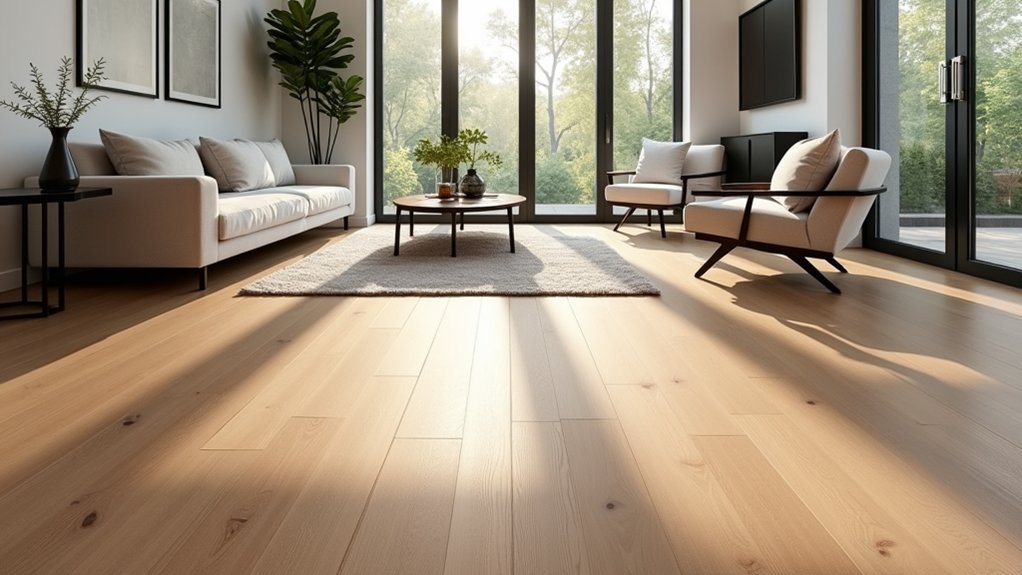
As open-concept layouts and busy households demand floors that look polished but don’t panic at spills, luxury vinyl plank (LVP) has become a go-to living room upgrade. You get the warm, grained look of oak or walnut visuals, plus click-lock installation that floats over many subfloors with minimal downtime.
Today’s luxury vinyl pairs high-definition prints with embossed-in-register texture, so the boards don’t read “plastic” under daylight.
For true waterproof flooring, choose a rigid-core LVP with a fully waterproof core and tight seams; it shrugs off pet water bowls and drink splashes. You’ll also want a thick wear layer (12–20 mil) and an attached pad for quieter footsteps.
Keep connections neat, and you’ll nail a seamless, modern flow.
Laminate Living Room Flooring: Cheap Lookalike, Moisture Risk
Laminate offers the same wide-plank, wood-look vibe that’s driving LVP popularity, often at a lower price point and with a crisp, matte finish that reads surprisingly upscale. You’ll find hyper-real graining, beveled edges, and on-trend tones like greige oak or smoked walnut that photograph well in bright living rooms.
For cost comparison, laminate typically undercuts LVP and engineered wood, but you’ll want to budget for premium underlayment and new base shoe. Installation complexities stay manageable with click-lock planks, yet you’ve got to prep a flat subfloor and leave precise expansion gaps.
The tradeoff is moisture: spills can seep at seams, swell the core, and telegraph edges. Choose tighter joints, waxed bevels, and fast cleanup habits, especially near entry doors and pet bowls.
Tile Living Room Flooring: Hardest-Wearing, Cold Underfoot
If you want a living room floor that shrugs off sand, chair drag, and high-traffic chaos, tile delivers the most bulletproof performance of the bunch. Porcelain leads for dent resistance and low porosity; glazed ceramic works for lighter use, while through-body porcelain hides chips.
You’ll feel the tradeoff fast: tile runs cold and hard, so plan for radiant heat, thicker underlayment where possible, or strategically placed rugs.
Style is having a moment—think large-format slabs, matte concrete-look, terrazzo visuals, and wood-look planks with tight grout lines. Pattern options go big with checkerboard, herringbone mosaics, or graphic encaustic-style prints.
For maintenance tips, seal cement grout, choose stain-resistant grout, and mop with pH-neutral cleaner weekly.
Carpet for Living Rooms: Warm Feel, Stain Tradeoffs
If you want instant cozy comfort, carpet gives your living room that warm, cushioned underfoot feel that hard surfaces can’t match.
You’ll need to balance that softness with stain performance—think solution-dyed fibers, low-pile textures, and built-in stain treatments that suit your household.
Choose the right construction and padding, and you’ll get lounge-ready comfort without signing up for constant spot-cleaning.
Cozy Comfort Underfoot
Nothing beats carpet when you want a living room that feels instantly warmer, quieter, and more lounge-ready underfoot. You’ll notice the comfort first: plush fibers cushion every step, and the pile softens the whole space’s ambient acoustics, cutting echo and adding a calm, cocooned vibe.
To keep it trend-forward, choose loop or cut-and-loop textures in heathered neutrals, then layer with a flatweave rug for intentional textural contrast.
Go for wool if you want breathable warmth and a tailored look; pick solution-dyed nylon when you need a sleeker, family-proof feel without looking “builder basic.”
A medium pile hits the sweet spot for sink-in comfort while still letting furniture legs sit stable. Finish with a quality pad to boost loft and longevity.
Stain Resistance Considerations
That cozy, sink-in softness comes with a real-world question: how well will your carpet handle spills, pets, and everyday traffic without looking tired.
For better stain resistance, look past color and focus on fiber. Solution-dyed nylon stays on-trend and shrugs off wine and coffee better than bargain polyester.
If you love plush, choose a textured cut-and-loop or heathered pattern; it disguises crumbs and footprints while still feeling luxe.
Ask for a built-in stain blocker (not just a topical spray) and pair it with a dense, high-twist pile for fewer snagged loops.
Smart cleaning tips: blot, don’t rub; use cold water first; vacuum weekly with a beater bar set correctly; and schedule hot-water extraction annually.
Best Living Room Flooring for Pets, Kids, and Spills
While your living room has to look pulled-together, it also needs to survive muddy paws, toy avalanches, and the inevitable juice spill, so durability can’t be an afterthought. Start with Pet friendly options like luxury vinyl plank (LVP): it’s waterproof, dent-resistant, and now comes in matte, oak-look prints with embossed grain that reads high-end.
For kid safe materials, choose cork with a tough waterborne sealant; it cushions falls, quiets footsteps, and still feels design-forward in warm neutrals. If you love real wood, go engineered hardwood with a factory-applied aluminum-oxide finish, plus a satin sheen to hide scratches.
Skip soft pine and high-pile carpet. Add washable rugs and felt pads, and you’ll keep style intact without babying the floor.
Frequently Asked Questions
Does Underfloor Heating Work With Every Living Room Flooring Type?
No—you can’t use underfloor heating with every living room flooring type; you must check heating compatibility. Engineered wood, tile, and vinyl perform best. You’ll adjust flooring installation for thickness, underlay, and thermal resistance.
How Do Different Floors Affect Indoor Air Quality and Allergies?
Like a hidden filter underfoot, your floor can lift or choke air quality and allergy risk. You’ll breathe easiest with low-VOC hardwood, tile, or polished concrete; carpets trap dander, while some laminates off-gas.
Which Flooring Is Best for Soundproofing Apartments or Upstairs Living Rooms?
You’ll get the best soundproofing with carpet plus dense pad, or cork/rubber underlayment under engineered wood or LVP. Use Soundproofing materials like MLV and acoustic mats—today’s Acoustic flooring options tame footfall and bass.
Can Living Room Flooring Be Installed Over Existing Flooring Without Removal?
Yes, you can often do Installation over existing flooring without floor removal if it’s flat, dry, and stable. You’ll use luxury vinyl, laminate, or engineered wood with underlayment, but you’ll adjust doors and trim.
What Maintenance Schedule Keeps Living Room Floors Looking New Long-Term?
You’ll keep floors looking “fresh” by vacuuming daily, damp-mopping weekly, and deep-cleaning seasonally. Rotate rugs monthly, refresh felt pads quarterly, and reseal annually if needed. Nail Cleaning routines, prioritize stain prevention, and wipe spills instantly.