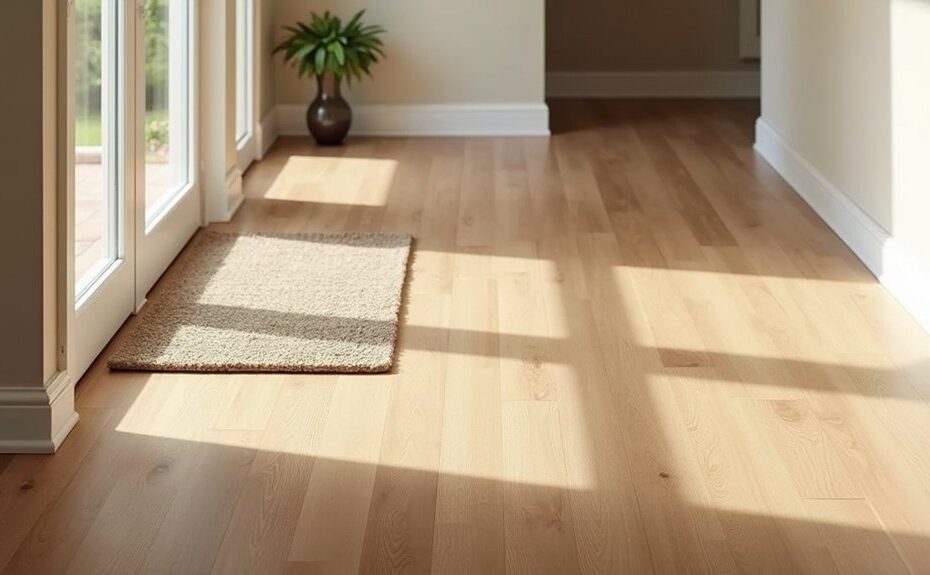
Your hallway takes more daily abuse than a factory floor. You need flooring that won’t scratch, dent, or swell under constant traffic, and it has to stay slip-resistant when grit and moisture get tracked in. Porcelain tile, LVP, and high-grade laminate top the list because their wear layers and low-porosity surfaces hold up with minimal upkeep. But performance hinges on texture, underlayment, and seam placement—get those wrong, and the edges fail first…
Key Takeaways
- Choose LVP with a 20–28 mil wear layer for waterproof, scratch-resistant durability and easy maintenance in busy hallways.
- Use matte or textured porcelain tile with high slip resistance (DCOF) for maximum abrasion, moisture, and pet-claw resistance.
- Pick AC4 or AC5 laminate with sealed edges and quality underlayment for budget-friendly wear resistance and reduced impact noise.
- Consider engineered wood with a tough factory finish and stable core; use durable species like oak or hickory to resist dents.
- Prioritize proper installation: flat subfloor, tight seams, expansion gaps, and durable transitions or nosings to prevent edge damage and moisture intrusion.
High-Traffic Hallway Flooring: What to Prioritize
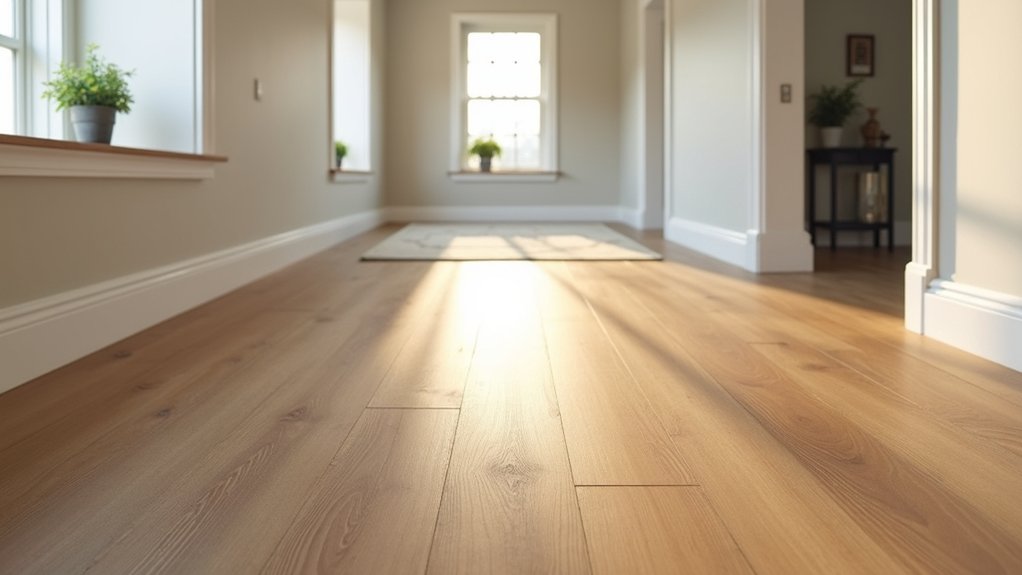
Because hallways take constant foot traffic, rolling loads, and grit tracked in from outside, you should prioritize flooring that resists abrasion, denting, and moisture while staying safe underfoot. Choose a tough wear layer or finish, and verify the manufacturer’s rating for commercial or heavy-residential use.
Favor surfaces with moderate texture or matte coatings to reduce slip risk without trapping dirt, and insist on tight seams to block moisture intrusion. Evaluate subfloor flatness, since high spots telegraph through rigid products and cause edge damage.
Plan for expansion gaps and transition strips at doorways to prevent buckling. Consider design aesthetics, but don’t sacrifice performance: consistent plank patterns can hide scuffs.
Address installation challenges early by selecting compatible underlayment and moisture barriers.
Best Hallway Flooring Quick Picks (Pets, Kids, Budget)
Whether you’re planning for muddy paws, toy-dragging kids, or a tight remodel budget, you can narrow hallway flooring fast by matching the surface to the kind of abuse it’ll see most.
For pets, choose Pet friendly materials like porcelain tile or sealed concrete; they resist claws, don’t absorb accidents, and clean with neutral pH detergents.
If kids rule the corridor, use dense, low-pile solution-dyed carpet tiles or commercial sheet vinyl; both cushion falls and hide scuffs, and you can replace damaged sections.
For budget friendly options, consider mid-grade laminate with an AC4 wear rating or basic ceramic tile; prioritize thick wear layers, tight locking systems, and compatible underlayment to cut hollow sound.
Whatever you pick, demand slip resistance, stain resistance, and a durable finish.
Luxury Vinyl Plank: Best All-Around Hallway Flooring
If you need hallway flooring that won’t buckle under daily foot traffic, luxury vinyl plank (LVP) gives you a tough wear layer and stable core that hold up. You’ll also get waterproof performance and strong scratch resistance, so mud, spills, and pet claws don’t ruin the surface.
You can install it fast with click-lock or glue-down systems, and you’ll keep it looking sharp with simple sweeping and damp mopping.
Durability Under Heavy Traffic
While busy hallways grind in grit and see constant heel-and-toe pressure, luxury vinyl plank (LVP) holds up better than most thanks to a tough wear layer and a resilient core that resist abrasion, dents, and scuffs.
Choose a 20–28 mil wear layer for truly punishing traffic, and you’ll slow down finish burnishing and edge wear from repeated pivoting.
A rigid core (SPC/WPC) helps you prevent telegraphing from minor subfloor flaws and keeps planks from deforming under point loads like high heels, strollers, and rolling bags.
Use full-spread adhesive or a quality locking system to reduce joint movement and peak-stress gaps.
You can still prioritize Eco friendly materials and aesthetic customization by selecting low-VOC options with varied visuals.
Waterproof And Scratch Resistant
Heavy traffic doesn’t just wear a hallway down—it also drives moisture and grit into every seam, so waterproofing and scratch resistance matter as much as impact strength.
With luxury vinyl plank, you get a sealed surface that blocks spills, wet boots, and pet accidents from soaking into the core or subfloor. Look for a Waterproof coating over a rigid or waterproof core so edges don’t swell when water sits.
For abrasion, prioritize a thick wear layer (20+ mil for busy corridors) topped with a Scratch resistant finish to reduce scuffs from sand, grit, and dragging bags. Choose UV-cured urethane or ceramic-bead enhanced topcoats for higher micro-scratch resistance.
In hallways, this combo keeps the finish intact and prevents moisture-driven buckling.
Easy Installation And Care
How fast can you upgrade a hallway without shutting the house down for days? With luxury vinyl plank, you can float most click-lock systems right over sound underlayment or smooth existing floors, so you’ll skip messy adhesives and long cure times.
You’ll cut planks with a utility knife, keep joints tight, and leave expansion gaps for stability under daily traffic.
Care stays simple: you’ll sweep grit often to prevent micro-abrasion, damp-mop with a pH-neutral cleaner, and avoid steam that can stress seams.
Use felt pads and entry mats to limit point loads and tracked debris.
If a plank gets damaged, you can unlock and replace sections without refinishing.
You’ll also find Eco friendly options and customizable finishes that match trim and lighting.
Porcelain Tile: Waterproof, Scratchproof Hallway Flooring
If your hallway sees constant foot traffic, porcelain tile gives you a hard, low-porosity surface that resists water intrusion and daily abrasion. You’ll get excellent scratch resistance from its dense, fired body, so grit and pet nails won’t gouge it easily. Choose through-body or full-body porcelain for better wear masking in high-use corridors.
For slip control, you should specify a matte or textured finish with an appropriate DCOF rating, especially near exterior doors. Tight grout joints and a high-performance grout improve stain resistance and reduce maintenance.
Porcelain also handles temperature swings and wet mopping without swelling or cupping. For Home decor flexibility, you can match stone, concrete, or wood looks with many color options while keeping a durable, waterproof surface.
Laminate: Budget-Friendly Hallway Flooring That Lasts
If you need a tough hallway floor on a tight budget, laminate earns its keep with a hard wear layer that resists scuffs, grit abrasion, and everyday foot traffic.
You’ll get better long-term performance when you choose thicker, high-AC-rated surfaces and tighter locking systems that reduce edge wear.
For hallways that see wet shoes or spills, you can spec moisture-resistant laminate with sealed edges and water-repellent cores to limit swelling and joint failure.
Durable Wear Layers
Because hallway floors take constant heel strikes, grit, and rolling loads, laminate earns its “budget-friendly but tough” reputation mainly through its wear layer. You’ll want a high-pressure melamine overlay with aluminum-oxide or ceramic particulates; it raises abrasion resistance and slows micro-scratching from tracked sand.
Check the AC rating: AC4 handles most residential hallways, while AC5 fits heavier, commercial-style traffic. Look for Protective coatings that boost stain and scuff resistance and prevent burnishing where traffic funnels.
You should also verify edge durability: a thicker overlay and balanced core reduce chipping at plank ends under rolling bags. Pair the planks with underlayment that adds Acoustic insulation, so impact noise doesn’t telegraph through the corridor over time.
Moisture-Resistant Options
Why worry about moisture in a hallway laminate install when you’re not mopping it like a kitchen? Because tracked-in rain, snow melt, pet water, and humid basements drive edge swelling and joint failure.
You’ll want laminate with a high-density fiberboard core treated to slow moisture absorption, plus a tight click-lock profile that limits capillary wicking.
Choose planks rated “water-resistant” with sealed bevels and an attached underlayment that won’t hold water.
Install a 6-mil vapor barrier over concrete and keep expansion gaps clear so boards don’t buckle as humidity shifts.
For mold resistance, avoid felt-backed pads in damp zones and seal perimeter gaps at exterior doors.
Fast cleanup still matters—wipe puddles before they seep.
Engineered Wood: Real-Wood Hallway Flooring With Stability
While solid hardwood can swell, cup, or gap under constant foot traffic and humidity swings, engineered wood gives you real-wood hallway flooring with a more stable core. Its plywood or HDF base resists seasonal movement, so boards stay flatter under repeated impacts.
You still get an authentic grain pattern because the top layer is real veneer, not a print film.
For durability, check wear-layer thickness: thicker veneer handles more refinishing and longer service life. Choose tougher wood species like oak, hickory, or maple for better dent resistance, and look for a hard, factory-applied finish (aluminum-oxide or ceramic-reinforced).
Verify core density and edge milling quality to reduce crushed tongues from traffic. Keep humidity controlled, and clean grit often to limit abrasive scratching.
Install Hallway Flooring to Prevent Seams and Edge Wear
Even the toughest hallway flooring—engineered wood included—fails early if the install lets boards shift, flex, or trap grit at the edges. Start by flattening the subfloor to spec (typically within 3/16 inch over 10 feet) and vacuuming before every row.
Use the right underlayment to control deflection, and choose full-spread glue or a tight-click system rated for heavy traffic.
Stagger end joints, keep expansion gaps consistent, and roll or tap boards to eliminate micro-gaps that become seam wear.
Plan Seamless progressions at doorways with flush reducers, not raised thresholds that chip.
Add Edge protection with metal or high-density nosings at turns, stairs, and outside corners.
Recheck lock integrity at every cut.
Frequently Asked Questions
How Often Should Hallway Flooring Be Replaced in High-Traffic Homes?
Like a workhorse, you’ll replace hallway flooring every 10–20 years, sooner if Durability concerns show dents or wear-through. Follow Maintenance tips: clean grit weekly, refinish as needed, and fix seams fast to extend lifespan.
What’s the Best Flooring Choice for Upstairs Hallways to Reduce Noise?
Choose cork or carpet tile over a premium acoustic underlayment; you’ll cut impact noise best upstairs. Use Soundproofing methods like decoupling pads and sealed seams. Do Flooring material comparisons for wear layers, dent resistance.
Can I Install New Hallway Flooring Over Existing Tile or Hardwood?
Yes, you can install new hallway flooring over existing tile or hardwood if the surface is flat, stable, and dry. For DIY installation, use underlayment; otherwise apply tile removal techniques to prevent movement, cracking, and premature wear.
Which Hallway Flooring Options Are Safest for People With Allergies?
You’ll want hard, nonporous Hypoallergenic flooring options: sealed hardwood, ceramic/porcelain tile, luxury vinyl plank, or polished concrete. These Allergy friendly materials don’t trap dander, resist moisture, and clean easily; avoid carpet and unsealed grout.
How Do I Prevent Hallway Rugs From Slipping and Damaging Floors?
Stop your rug from skating like it’s training for the Olympics: use non slip mats under it, add dense rug padding, choose grippy backings, tape edges, and clean grit often to prevent abrasion.