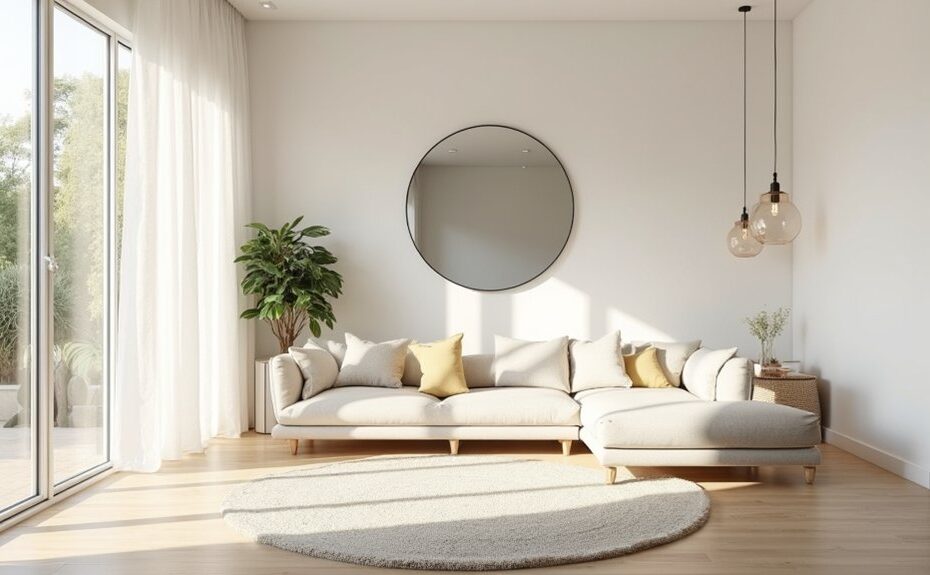
Even if you can’t add new windows, you can still make your rooms feel brighter with a few precise design moves. Start by spotting what’s stealing daylight—heavy treatments, bulky furniture, dark paint, even overgrown landscaping outside—then swap in light-reflective finishes, sheer layers, and well-placed mirrors that push sun farther into the plan. The key is keeping sightlines clean and choosing barriers wisely, because one small change can open the next.
Key Takeaways
- Remove light blockers by trimming outdoor greenery, clearing window-adjacent clutter, and rearranging tall furniture that blocks daylight paths.
- Clean windows and screens regularly; even light grime noticeably reduces brightness, contrast, and how far daylight reaches.
- Use light-reflective finishes: pale wall colors, a slightly lighter ceiling, crisp trim, and eggshell or satin paint for gentle bounce.
- Optimize window treatments with sheers or solar shades, and mount rods higher and wider to expose more glass and sky.
- Place large mirrors opposite or beside windows to reflect the brightest view and push daylight deeper into darker areas.
Find What Blocks Natural Light Indoors (Inside + Outside)
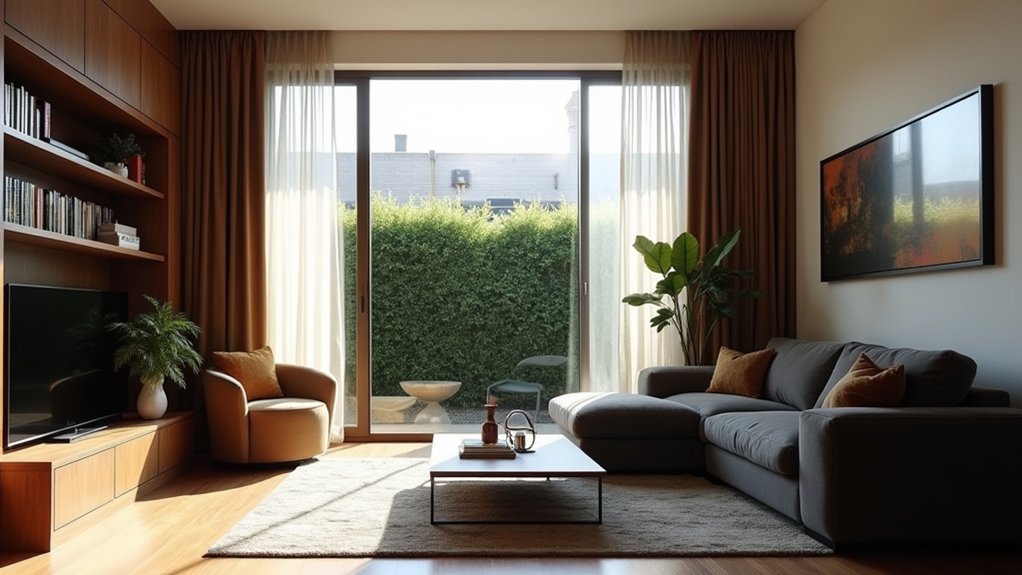
Before you buy new fixtures or repaint a room, take a clear-eyed look at what’s stealing daylight in the first place. Stand where you actually live—sofa, desk, kitchen prep—and track how light enters across the day. Note which windows stay flat or gray even at noon.
Outside, scan for outdoor obstructions: overgrown shrubs, low-hanging branches, fences, awnings, or a neighbor’s structure casting hard shade. Clean glass and screens, then reassess; grime can mute a room’s contrast.
Inside, identify interior clutter that interrupts the light path: tall bookcases beside windows, stacked décor on sills, heavy drapery pooling at the jamb, or a dark rug absorbing bounce. Lower, relocate, or streamline pieces so daylight travels deeper and feels intentional.
Paint Lighter to Spread Natural Light Indoors
Why does one room glow while another feels dim, even with the same window size? Your wall color is a light multiplier. Choose soft whites, warm ivories, pale greiges, or misty pastels to bounce daylight deeper into the room and reduce harsh contrast.
Use Color psychology to steer the mood: cool tints feel airy and calm, while warm off-whites feel cozy without absorbing light.
Don’t stop at walls—paint ceilings a step lighter to lift the plane and brighten corners, and keep trim crisp to outline architecture.
Pay attention to paint sheen: eggshell or satin subtly reflects light and wipes clean, while flat finishes can dull brightness.
Test large swatches at morning and late afternoon before committing.
Pick Window Treatments That Let in Daylight
Although your windows set the daylight potential, your window treatments decide how much of that light actually reaches the room. Choose fabrics and hardware that prioritize daylight entry without sacrificing privacy. Swap heavy drapes for sheers, light-filtering linen, or solar shades that soften glare while keeping the view.
If you need blackout at night, layer: install a translucent roller shade close to the glass, then add side panels you can pull back fully. Mount rods wider and higher than the frame so the stackback clears the glazing and exposes more sky.
Pick pale, matte colors to avoid dulling the light, and keep valances minimal. Use simple tiebacks or holdbacks so you can shape light deliberately throughout the day.
Use Mirrors to Bounce Natural Light Indoors
Place mirrors where they can catch direct window light—opposite or adjacent to the glazing—to bounce brightness deeper into the room and lift shadowy corners.
Choose a mirror size that matches the wall and the light you want to amplify; larger panes read cleaner and spread daylight more evenly.
Let the shape refine the look: tall rectangles stretch light along hallways, while round or arched mirrors soften hard lines without dulling the glow.
Strategic Mirror Placement
One well-placed mirror can double the impact of a sunny window by catching daylight and pushing it deeper into the room. Position it opposite or adjacent to the glass so it reflects the brightest view, not a dim hallway. Angle it slightly to aim light toward seating areas, worktops, or circulation paths, and keep it clear of heavy drapery that casts shadows.
Use Mirror placement techniques like lining a mirror behind a console in the entry, above a mantel across from sidelights, or on a perpendicular wall to wash a darker corner.
Coordinate Decorative frame options with your finishes: warm brass to echo hardware, pale oak to blend with floors, or slim black to sharpen modern lines. Place it at eye level for balanced reflections.
Mirror Size And Shape
When you match mirror size and shape to the window’s light pattern, you’ll bounce daylight farther without creating glare or visual clutter. Choose a mirror that roughly equals the window’s width if you want an even wash of light across the wall.
Go taller when you need brightness to reach deeper into the room, especially in narrow halls.
Use horizontal rectangles to widen compact spaces, and vertical ovals to lift low ceilings while softening harsh angles.
If your room already has strong lines, keep the reflection clean with minimalist shapes and thin edges.
If the space feels plain, add character with ornate framing, but keep the frame light-toned so it doesn’t absorb brightness.
Avoid tiny mirrors; they fragment light and look busy.
Open Sightlines So Sunlight Travels Farther
Although your windows do the hard work, sunlight won’t reach deep into a room if furniture and walls stop it short. Create clean sightlines from each window to the room’s darkest zones by lowering tall pieces and keeping circulation paths open. Pull sofas and consoles a few inches off the glass to prevent shadows and let light spill around edges.
Check for structural obstructions like bulky columns, deep soffits, or thick door casings that interrupt the beam; rearrange key seating and work surfaces so they don’t sit in those dim pockets.
Outside, trim outdoor greenery that blocks the upper portion of the glazing, especially near corners. Inside, keep window-adjacent surfaces calm and uncluttered so daylight reads as intentional, not chaotic, across walls and floors.
Replace Solid Barriers With Glass and Open Shelves
If a wall, cabinet bank, or bulky bookcase blocks your line of sight, it also blocks your daylight. Swap opaque dividers for Glass partitions to keep rooms defined while letting sun move through. Choose clear, low-iron glass for the brightest look, or use reeded and fluted panels when you want privacy without sacrificing glow.
Replace upper cabinets with open shelving so light from windows can wash across the wall and bounce deeper into the space. Keep shelves shallow, align them with window mullions, and limit tall objects to the ends so you don’t create new shadows.
Use light-toned back panels, matte finishes, and minimal brackets to maintain an airy, gallery-like feel. Your rooms stay functional, yet brighter.
Use Layered Lighting When Natural Light Fades
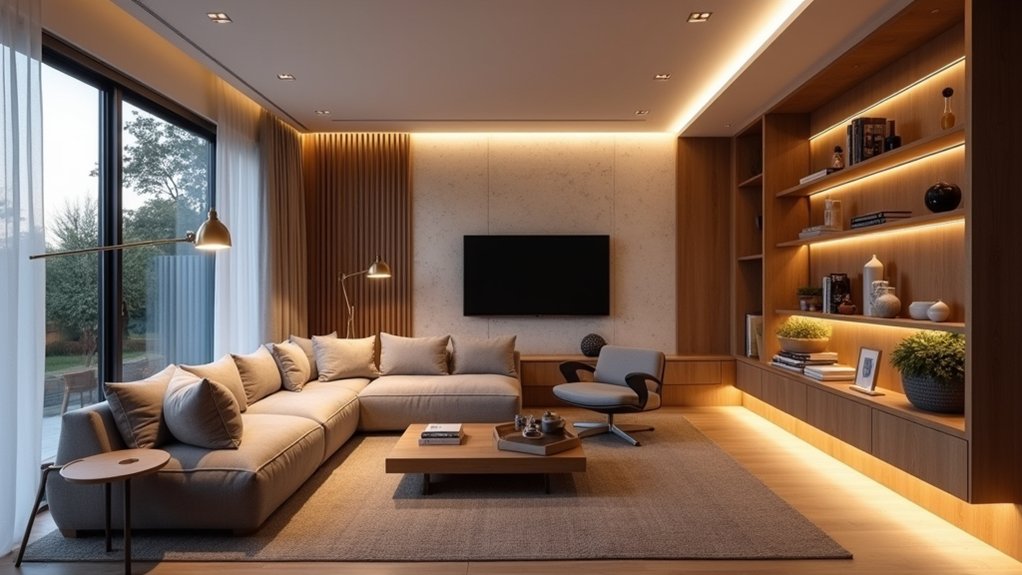
Glass partitions and open shelves help daylight travel farther, but the room still needs a plan once the sun drops or clouds roll in. Use layered lighting so your space keeps its airy feel after dusk.
Start with soft ambient light: dimmable ceiling fixtures or a cove wash that mimics the sky’s spread. Add task lights where you read, cook, or work—under-cabinet LEDs, a focused desk lamp, or a swing-arm sconce.
Finish with accents to preserve depth: picture lights, toe-kick strips, or a slim uplight behind plants. For daylight balancing, choose bulbs around 2700–3000K in living areas and 3000–3500K in kitchens.
Put everything on separate switches, then tune brightness by time and mood.
Add Skylights or Solar Tubes for Dark Rooms
When a room sits far from exterior walls, skylights and solar tubes pull daylight in from above and change the space’s tone instantly. You’ll brighten hallways, bathrooms, and stairwells without sacrificing privacy or wall space, and the light reads clean and natural on finishes.
Plan skylight installation around roof framing, orientation, and glare control. North-facing units give even illumination; south-facing ones need shades or low-E glazing to soften heat. Keep the shaft walls smooth and painted a high-LRV white to bounce light deeper.
For tight roofs or small rooms, prioritize solar tube placement between rafters and aim it toward the room’s darkest zone. Choose a diffused ceiling lens to avoid hotspots and maintain a calm, gallery-like glow.
Frequently Asked Questions
Do North-Facing Rooms Need Different Strategies to Maximize Daylight?
Yes—you’ll need different moves: cool, even light versus bright, direct sun. With north facing orientation, prioritize daylight optimization using high-LRV paint, glossy trims, sheer layers, mirrors opposite windows, and minimal mullions.
How Can Renters Increase Natural Light Without Permanent Changes?
You can boost daylight by using sheer curtains, reflective mirrors, and light-toned rugs. Add Lighting accessories like plug-in sconces. Optimize Window positioning with slim furniture, clean sills, and adjustable tension-rod treatments for brightness.
What Window Upgrades Boost Daylight Without Increasing Heat Gain?
Choose energy efficient glazing like low‑E, spectrally selective double panes; you’ll flood rooms with daylight while cutting solar heat. Add window treatment options—light-filtering shades, reflective films, or sheer drapes—to soften glare and maintain airy aesthetics.
Which Plants Thrive in Bright Rooms Without Blocking the Windows?
You’ll want snake plants, ZZ plants, pothos, and upright succulents—they thrive in bright rooms without staging a leafy coup. Keep Indoor greenery slim near glass, and pair pots with Light reflecting surfaces for glow.
How Do I Improve Daylight While Maintaining Privacy From Neighbors?
Use sheer Window coverings that filter glare, not light, and mount them high and wide. Add slim Privacy screens or frosted film at eye level. You’ll keep sightlines soft while daylight stays bright.