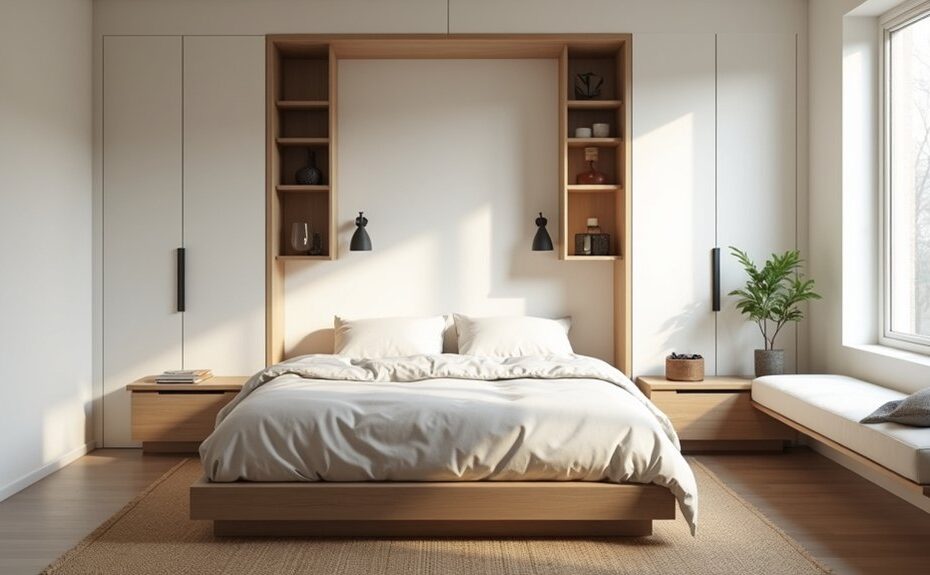
You can add storage in a small bedroom without making it feel packed by adjusting what you already have and using every vertical and hidden zone. Start by tightening the layout so walkways stay clear, then turn the under-bed area into a planned storage bay with bins or drawers. Add floating shelves, hooks, or a peg rail to get items off surfaces. Choose double-duty pieces with concealed compartments, and streamline your closet with slim, stackable systems—but the key detail most people miss is…
Key Takeaways
- Pull the bed slightly from walls and align nightstands to create usable surfaces without blocking drawers, doors, or walkways.
- Add lidded, labeled under-bed bins or rolling drawers; use risers if needed to maintain consistent clearance and easy access.
- Install narrow floating shelves and rail hooks above nightstands or near the door to move essentials off surfaces and into vertical zones.
- Swap wide dressers for tall, narrow drawer towers or rotate furniture to open pathways while increasing vertical storage capacity.
- Choose multi-functional pieces like storage ottoman benches, lift-top nightstands, or headboards with hidden compartments to store items without visual clutter.
Fix Your Layout to Free Up Storage Space
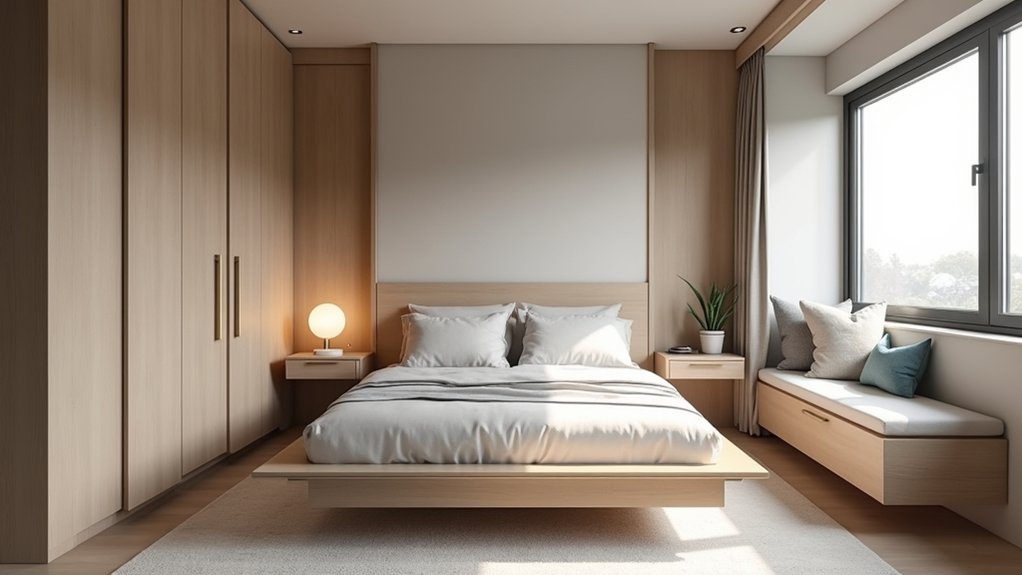
If your small bedroom feels short on storage, start by fixing the layout, because a few inches of clearance can free up space you already have. Pull the bed away from walls just enough to open doors and drawers fully, then shift nightstands to align with the mattress edge so surfaces stay usable.
Swap a wide dresser for a tall, narrow one and rotate it to keep a straight walkway to the closet. Mount shelves above the headboard or door swing, and keep hooks on the wall near where you actually drop bags.
Use Color schemes with light, consistent tones to reduce visual clutter and make storage zones feel intentional. Choose lighting options like wall sconces or swing-arm lamps to clear tabletop space.
Upgrade Under-Bed Storage (Bins, Drawers, Risers)
Because the footprint under your bed already exists, upgrading that zone gives you high-capacity storage without adding a single visible surface.
Start by measuring clearance, then choose low-profile bins for soft goods, divided organizers for accessories, or rolling drawers for daily items. If you’re short on height, add risers that match your frame and keep the gap consistent for smooth pullout.
Use lidded, labeled containers so dust stays out and retrieval stays fast. Pair storage with Bedding enhancements: a slimmer duvet or vacuum bags reduces bulk so everything fits.
Add Under bed lighting on a motion sensor to find bins without turning on overheads. Keep a simple map—left for linens, right for off-season clothes—to prevent churn.
Add Wall Storage With Shelves, Hooks, and Rails
While floor space stays scarce in a small bedroom, your walls can carry a surprising amount without making the room feel busier. Start with one narrow floating shelf above the nightstand for a lamp, glasses, and a catchall tray, then add a second shelf higher for seldom-used items.
Install a rail system along the dresser wall and hang hooks for bags, headphones, and tomorrow’s outfit to keep chairs clear. Use a door-side row of pegs for robes and belts.
For a cleaner look, group storage into zones and align edges. Mix function with style by pairing baskets with Decorative wall art.
Add Vertical plant displays on a slim wall grid to bring life without taking surfaces. Keep spacing even, and edit weekly.
Pick Double-Duty Furniture With Hidden Storage
When every inch has to earn its keep, choose furniture that hides storage inside its footprint instead of adding another bin on the floor. Start with a lift-up storage bed or drawers under the frame so linens and off-season clothes disappear without stealing aisle space.
Swap a basic nightstand for a small chest with soft-close drawers, or pick a headboard with concealed compartments for books, chargers, and glasses. Use an ottoman bench at the bed’s foot: it seats you, stages tomorrow’s outfit, and swallows blankets.
Consider a nesting side table or a desk that folds down, then stores supplies behind the panel. The best multi-purpose furniture keeps surfaces clear, cords contained, and daily grab items reachable, not scattered.
Organize Your Closet With Slim, Stackable Systems
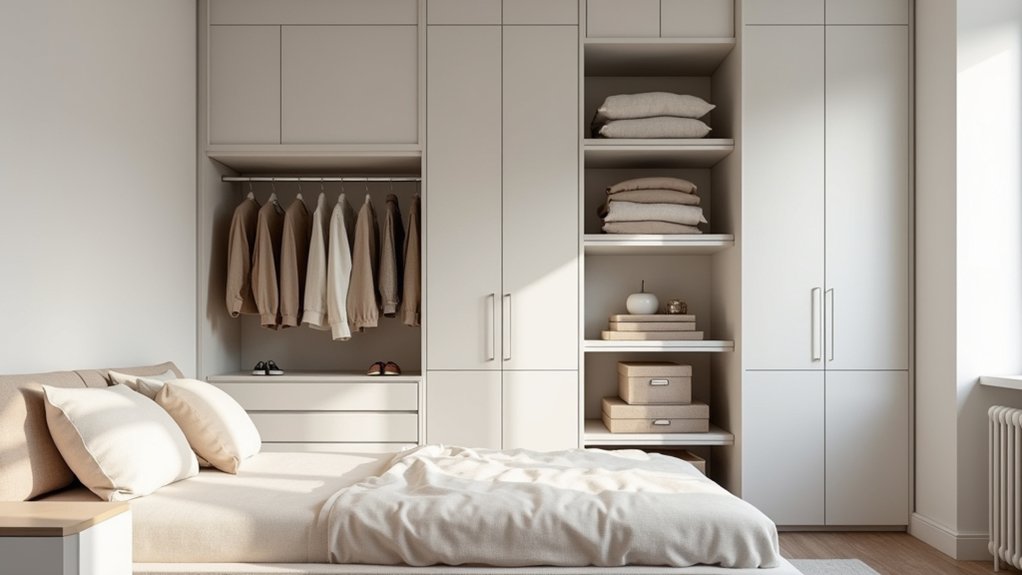
Hidden-storage furniture clears the floor, but a slim, stackable closet system keeps the rest of your stuff from creeping back out. Start by measuring your closet’s width, depth, and rod height, then choose modular cubes or narrow drawer towers that fit without blocking doors. Stack upward to use dead vertical space, and anchor units so they won’t tip when you pull bins.
For better Closet organization, group by category and frequency: daily tops at eye level, occasional items up high, heavy shoes down low. Add Storage accessories that do real work—clear lidded bins for off-season pieces, pull-out baskets for tees, and thin velvet hangers to cut bulk. Label fronts, keep one “inbox” bin for strays, and reset weekly.
Add Bedside and Headboard Storage Without Bulk
Keep your bedside essentials close without sacrificing floor space by mounting floating nightstands or slim shelves at the height you actually reach from bed. You’ll clear visual clutter and make cleaning easier while still giving your phone, book, and lamp a defined home.
For even more storage without extra furniture, choose a headboard with hidden cubbies or lift-top compartments that conceal chargers, linens, and small items.
Floating Nightstands And Shelves
Although bulky nightstands eat up precious floor space, floating nightstands and shelves give you the same bedside function—plus extra storage—without the visual weight. Mount a slim drawer box at mattress height so you can stash glasses, chargers, and meds, then add a narrow shelf above for books you’re actually reading.
Keep the look clean by routing cords through a grommet or using adhesive cable clips underneath. For lighting solutions, swap table lamps for a hardwired sconce or plug-in swivel light that frees surface area.
Limit decorative accents to one small tray and a single framed photo so you don’t create visual noise. Choose rounded corners in tight walkways, and install into studs or rated anchors for safety.
Headboards With Hidden Storage
Once you’ve lifted storage off the floor with floating nightstands, put the wall space behind your pillows to work too. Choose a headboard with hidden compartments so your essentials stay close but out of sight. Look for shallow cubbies for books, a top ledge for a glass, or flip-down panels for chargers and remotes. Integrated sconces or a routed cable channel keeps cords from draping across the bed.
Match Headboard materials to your routine: upholstered panels soften sound and hide seams; wood or laminate wipes clean and supports tighter joinery. In Headboard designs, prioritize depth under 6 inches, rounded corners, and a continuous face so it reads like trim, not furniture.
Anchor it to studs, then keep each pocket lightly filled.
Frequently Asked Questions
How Do I Add Storage in a Rental Without Drilling Holes?
Use tension rods, adhesive hooks, and over-door organizers to add rental-friendly storage without drilling. Choose murphy beds with shelving and fold away desks with drawers, then add stackable bins and under-bed containers.
What Storage Changes Help Reduce Dust and Allergens in Small Bedrooms?
Choose closed, cleanable containers and lidded bins to cut dust. Use under-bed drawers, smooth-front dressers, and washable baskets. Add Air purifiers near bedding, and swap to hypoallergenic bedding to limit allergens.
How Can I Childproof Bedroom Storage While Keeping It Accessible?
You can childproof bedroom storage by adding Childproof locks on low drawers, using Safe storage containers for small items, anchoring shelves, and keeping daily essentials in higher open bins. You’ll prevent tipping, pinches, and choking.
Which Storage Materials Resist Humidity and Mold in Poorly Ventilated Rooms?
You’ll fend off humidity like a superhero using moisture resistant materials: powder-coated metal, stainless steel, HDPE plastic, polypropylene bins, and glass. For mold resistant storage, choose sealed gasket lids, wire shelving, and marine-grade plywood with epoxy.
What’s the Best Way to Store Seasonal Items Without Vacuum Bags?
Store seasonal items in labeled, breathable fabric bins and stack them on closet shelves. Use Multi functional furniture with lift-up storage, and add Vertical storage solutions like over-door racks. You’ll swap items fast, prevent odors.