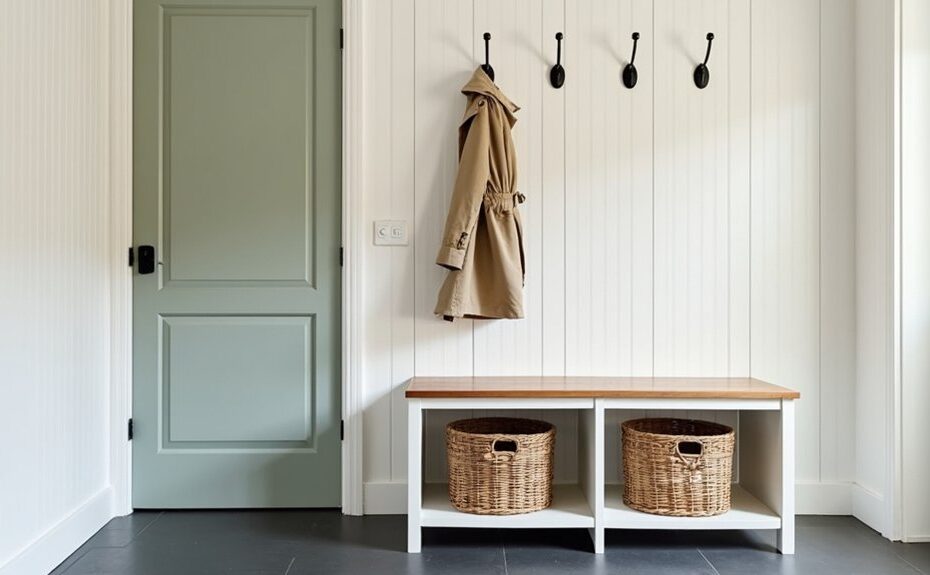
You don’t have to settle for dark, gloomy paint just to keep a mud room looking clean. You can use neutral, muted hues—think soft greige, warm taupe, dusty olive, or muted slate—that disguise scuffs and splash marks while still feeling intentional and calm. Pair them with an eggshell or satin finish, and your walls wipe down without flashing every fingerprint. The key is choosing the right undertone for your light and flooring, because one small shift changes everything…
Key Takeaways
- Choose mid-tone neutrals like greige, warm taupe, mushroom, or muted slate to camouflage splatter, salt haze, and dust.
- Use light, warm off-whites with creamy or sandy undertones for brightness that still hides scuffs better than stark white.
- Try muted blue-greens (dusty sage, eucalyptus, softened denim) to visually break up water marks while keeping a calm, tidy look.
- Keep undertones consistent with floors and tile—cool greige with gray stone, warm taupe with terracotta—to avoid dirty-looking mismatches.
- Pick washable eggshell or low-sheen satin on walls and semi-gloss on trim and doors to wipe messes easily without highlighting flaws.
How to Choose Mud Room Paint Colours (Light, Traffic, Undertones)

Because mud rooms sit at the intersection of outdoors and everyday life, you’ll want paint colours that respond to your light, stand up visually to heavy traffic, and read true once undertones come into play. Start by testing swatches on multiple walls; morning and evening shifts can flip a colour from crisp to dull.
Use Color psychology to support function: cool, airy hues keep the room feeling open, while grounded midtones add order and calm.
Next, evaluate undertones against fixed finishes—tile, stone, wood, and metal—so the paint doesn’t skew pink, green, or muddy.
Finally, prioritize paint durability: choose a scrubbable, moisture-tolerant formula and a satin or pearl sheen that balances cleanability with a refined look.
Mud Room Paint Colours That Hide Dirt the Best
When your mud room has to absorb wet boots, paw prints, and daily scuffs, the colours that perform best sit in the mid-range—think soft greige, warm taupe, mushroom, dusty olive, or muted slate. These tones mask dried splatter, salt haze, and dust without reading heavy, and they stay consistent under mixed daylight and artificial bulbs.
Use Mudroom colour psychology to steer your pick: greige and taupe feel calm and orderly, olive reads grounded and outdoorsy, and slate looks tailored and modern.
Prioritize paint colour durability by choosing a scrubbable, stain-resistant finish (pearl or satin) and a high-quality washable formula. Keep the sheen consistent across trim and walls to reduce scuff “flashing,” and touch-ups will disappear more easily.
Light Mud Room Colours That Aren’t Stark White
If you want a bright mud room without the harshness of stark white, reach for soft greige and beige to keep the space light while adding subtle depth. These tones balance warmth and practicality, so scuffs and dust don’t stand out as quickly as they do on pure white.
For an even cleaner look, choose warm off-white neutrals with creamy or sandy undertones that coordinate smoothly with wood, tile, and black hardware.
Soft Greige And Beige
To keep a mud room feeling bright without the starkness of pure white, reach for soft greige and beige tones that add warmth while still reflecting plenty of light. These balanced neutrals sit between cool and warm, so they hide dust, splash marks, and scuffs better than high-contrast whites.
Use Color psychology to your advantage: greige reads calm and organized, while beige feels welcoming and grounded—ideal when you’re transitioning from outdoors to indoors. Pair them with matte or eggshell on walls to soften glare, then use a satin finish on trim for wipeable durability.
For clean results, follow smart paint application techniques: cut in with an angled brush, roll in a “W” pattern, and keep a wet edge to prevent lap lines.
Warm Off-White Neutrals
Although crisp white can look fresh on a swatch, warm off-white neutrals give your mud room the same airy lift with a softer, more forgiving finish. Choose tones with creamy, beige, or subtle mushroom undertones to mask scuffs, salt spray, and dust without reading yellow.
Use Mud room colour psychology to your advantage: warm off-whites feel welcoming and calm, so the space stays composed even when it’s busy. Pair them with matte or eggshell paint for better touch-ups, and ground the palette with black hardware, stained wood, or charcoal floors for contrast that still looks clean. Keep trim a half-step lighter to sharpen edges.
Consider Cultural colour preferences, too—some households read warm whites as cozy and traditional, while others prefer cooler “porcelain” off-whites for a sleeker, modern mood.
Mid-Tone Greige and Taupe Mud Room Colours for Scuffs
When your mud room takes daily hits from shoes, bags, and paws, mid-tone greige and taupe paints give you the sweet spot between style and practicality. These balanced neutrals camouflage scuffs and dust better than bright whites, while still reflecting enough light to keep the room crisp.
Choose a washable eggshell or satin finish so you can wipe marks without burnishing.
Build intentional color contrast with bright trim, matte black hooks, or warm brass hardware to sharpen edges and hide fingerprints.
For furniture pairing, greige supports oak benches, rattan baskets, and light stone-look flooring; taupe flatters walnut cubbies, leather pulls, and charcoal runners.
Keep undertones consistent—cool greige with gray tile, warmer taupe with terracotta—to prevent a muddy, mismatched look.
Soft Blue and Green Mud Room Colours That Still Hide Mess
Soft blue and green paints give you the same low-maintenance benefits as mid-tone greige and taupe, but with a fresher, more lived-in character.
In a mud room, choose muted, gray-leaning hues like dusty sage, eucalyptus, or softened denim; they visually break up dirt and water marks without looking dark.
From a color psychology standpoint, these tones signal calm and order, so the space feels cleaner even on busy weeks.
Keep undertones consistent with your flooring: warmer greens flatter terracotta tile, while cooler blues pair with concrete and slate.
For paint application tips, cut in crisply around trim, then roll in a tight “W” pattern to avoid lap lines.
If you’ve got heavy traffic, paint lockers and wainscoting in the deeper shade for contrast.
Best Paint Finishes for Mud Rooms (Washable, Low-Sheen)
Because a mud room sees constant scuffs, splashes, and grabby hands, your paint finish matters as much as the colour. Choose a washable eggshell or low-sheen satin for walls; they resist marks yet don’t spotlight drywall flaws like gloss does.
Reserve semi-gloss for trim, lockers, and doors where you’ll wipe grime daily. If you’re painting beadboard or paneling, match the sheen to keep the surface reading calm and cohesive.
For durability, use quality primers and follow smart paint application techniques: degloss, patch, caulk, then roll with a microfiber sleeve and back-brush corners.
Add Decorative accent ideas with a tougher finish: a darker satin on the lower third, or semi-gloss on hooks and bench fronts for easy cleaning.
Frequently Asked Questions
How Do I Remove Mud Stains From Painted Walls Without Damaging the Finish?
After your kids track in mud, you’ll lift stains safely: let it dry, brush off, then sponge with warm water and mild soap. For Mud stain removal and Painted wall care, test first, rinse, and blot dry gently.
What Wall Materials Work Best Behind Hooks and Benches in a Mud Room?
You’ll get the best performance with tile, beadboard/PVC wainscoting, or sealed plywood panels behind hooks and benches. Prioritize Durability considerations like scrub resistance and impact protection, while balancing Aesthetic options: warm wood, crisp white, or stone.
Do I Need Mold-Resistant Paint in a Mud Room With Wet Boots?
You don’t strictly need mold-resistant paint, but you should use it if wet boots raise moisture. Pair it with Mold prevention and humidity control: exhaust fan, dehumidifier, washable semi-gloss, sealed trim, and durable primers.
How Can I Improve Mud Room Lighting to Make Colours Look Cleaner?
Improve lighting by layering bright ceiling fixtures with task sconces for Lighting enhancement. Choose 3500–4000K LEDs, high CRI (90+), and matte reflectors; you’ll boost Colour clarity, reduce shadows, and make finishes appear cleaner.
Should Mud Room Trim Match the Wall Colour or Contrast It?
You’ll get the cleanest look by choosing trim contrast for definition or a wall match for seamlessness. Use contrast with bright whites and darker walls; match when walls are midtone and scuff-prone.