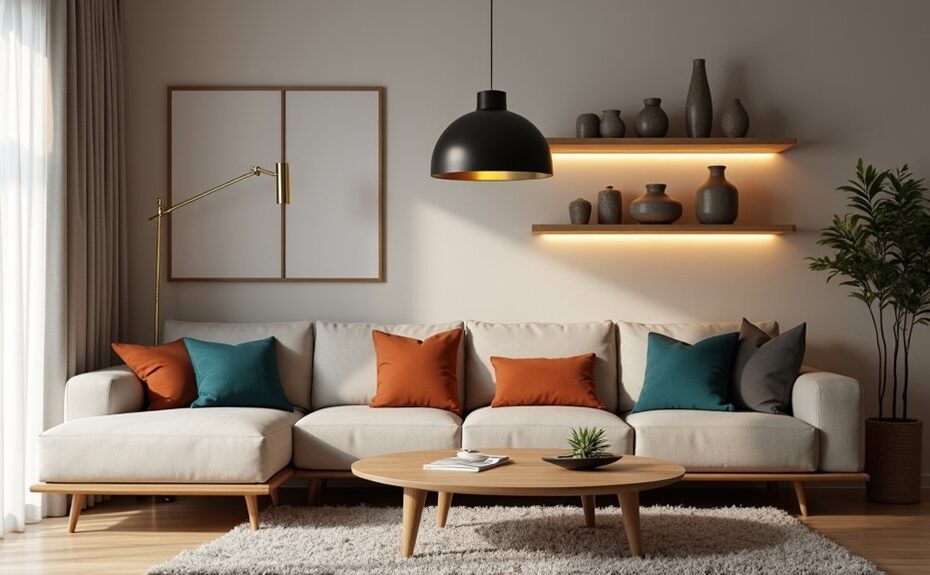
You probably don’t know that your wall colour can change how bright your bulbs seem, even before you touch a dimmer. Start with a modern base like warm greige or soft beige, then add one confident accent—navy, terracotta, or olive—to sharpen the room without making it busy. Pair matte walls with satin trim and a few metal details, then layer smart ambient, task, and accent lighting… because the real transformation happens after that.
Key Takeaways
- Choose a modern palette using the 70/20/10 rule: neutral base, midtone support, and a bold accent for a balanced refresh.
- Match wall colours to sofa and floor undertones, and use texture contrast to keep the space cohesive and contemporary.
- Use matte paint on main walls and satin/eggshell on trim; add one textured feature wall for depth without visual clutter.
- Layer lighting with ambient, task, and accent sources, and keep bulb colour temperature consistent to avoid mismatched tones.
- Add dimmers and smart bulbs, then program scenes like “Movie Night” and “Entertain” to control brightness and warmth instantly.
Choose a Modern Living Room Colour Palette
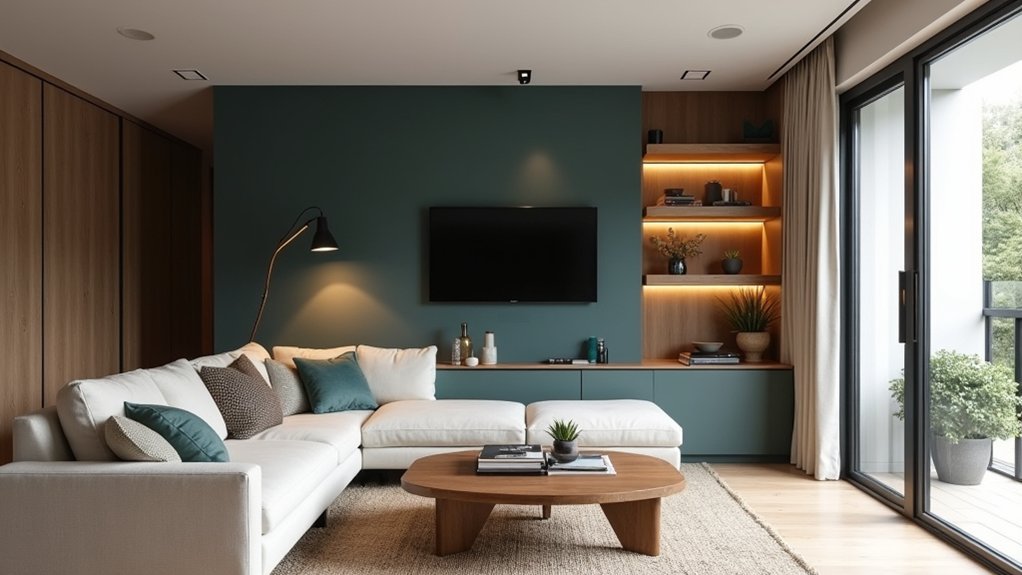
If you want your living room to feel current without turning over every piece of furniture, start by locking in a modern colour palette that fits how you actually live.
Use Color psychology to set the mood: warm off-whites and sandy beiges keep things welcoming, while cool greige and soft stone read calm and tailored.
Build a tight trio: a main neutral (about 70%), a supporting midtone (20%), and a punchy accent (10%).
Right now, Trending shades include clay terracotta, muted olive, inky navy, and deep aubergine—choose one based on how bold you want the room to feel.
Test large swatches in morning and evening light, and commit to consistent undertones so everything looks intentionally updated.
Match Modern Living Room Colours to Sofa and Floors
Because your sofa and floors take up the most visual real estate, you’ll get a more polished “modern refresh” by matching wall and accent colours to their undertones, not just their shade. Start with Color theory: identify whether your sofa reads warm (camel, rust, olive) or cool (charcoal, navy, true grey), then echo that temperature on walls for cohesion.
Next, check flooring: honey oak prefers creamy whites and muted sages; espresso wood pairs cleanly with soft greiges and inky blues; cool-toned laminate likes crisp whites and blue-greys.
Use Texture contrast to keep it current—pair a nubby bouclé sofa with smoother, streamlined colours, or balance sleek leather with warmer, slightly dusty tones.
If you’ve got mixed woods, anchor with one dominant undertone.
Pick Paint Finishes and Accents for More Depth
While colour sets the mood, the finish you choose controls how “modern” the room actually reads—so treat sheen like a design tool, not a technical detail. Go matte on main walls for a soft, gallery-clean backdrop that flatters art and hides minor flaws.
Add a satin or eggshell on trim to outline architecture with crisp contrast, especially in open-plan spaces. For a current, boutique look, try Textured finishes on one feature wall—limewash, micro-cement, or a subtle sand paint—to create depth without adding clutter.
Then edit in Metallic accents sparingly: brushed brass on a narrow frame, blackened steel on hardware, or a champagne-gold side table. Keep metals consistent, and you’ll get intentional, high-end cohesion.
Layer Living Room Lighting (Ambient, Task, Accent)
Once you’ve nailed your colour and finishes, layered lighting is what makes the room feel modern, flexible, and intentionally styled from morning to midnight.
Start with ambient light: a low-profile ceiling fixture, flush mount, or softly diffused pendant that fills the space evenly without glare.
Add task lighting where you actually live—an adjustable floor lamp by the sofa, a focused table lamp on a side table, or a swing-arm at a reading nook.
Finish with accent lighting to create that editorial, gallery feel: picture lights over Wall art, slim uplights behind plants, or a discreet LED strip along shelving to spotlight Decorative accessories.
Keep bulb temperatures consistent so the room reads cohesive, not patchy.
Place fixtures to avoid harsh shadows on faces.
Control Living Room Lighting With Dimmers and Smart Bulbs
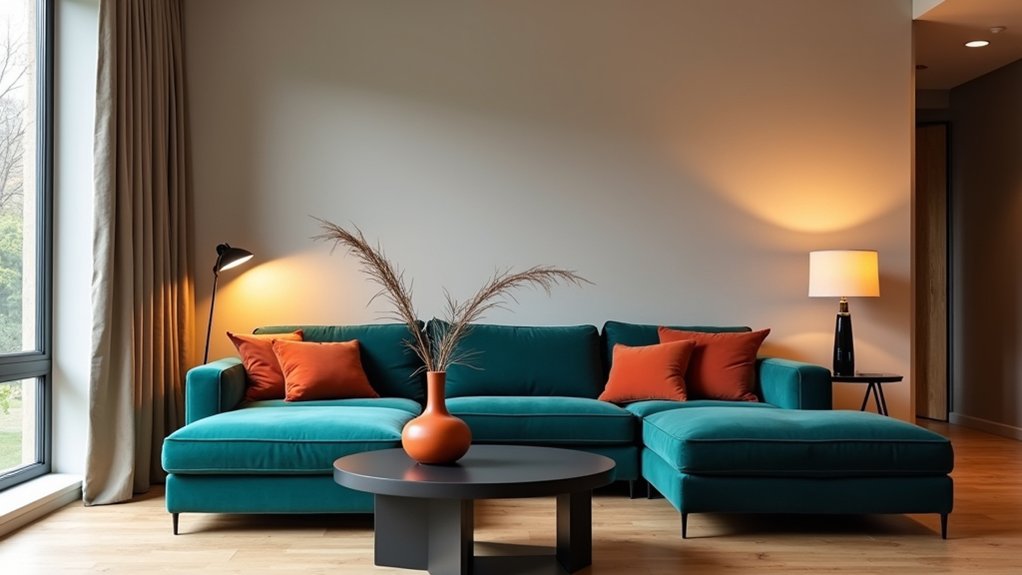
Layered fixtures set the stage, but dimmers and smart bulbs give you the control that makes the room feel truly modern. You’ll shift from bright, energized mornings to warm, low-glow evenings without changing a single lamp.
Start with dimmer switch installation on your main overhead circuit, then keep table and floor lamps flexible with app-controlled bulbs. Check smart bulb compatibility before you buy: match base type, wattage limits, and whether your system needs Zigbee, Wi-Fi, or a hub.
For the cleanest look, set scenes—“Movie Night,” “Entertain,” “Read”—and automate them by time or sunset. Tune colour temperature to your paint: cooler whites sharpen modern neutrals, while soft ambers flatter earthy tones and skin tones.
Frequently Asked Questions
How Much Does a Living Room Refresh With Paint and Smart Lighting Cost?
You’re looking at $600–$2,500 for paint and smart upgrades, even if you’re worried it’ll blow your budget. Choose a modern color palette, update lighting fixtures, and you’ll boost ambiance and value fast.
Can I Update Modern Colours and Lighting in a Rental Without Permanent Changes?
Yes—you can refresh a rental without permanent changes. Use Temporary decor like peel-and-stick wallpaper, removable hooks, and modern textiles. Swap to Portable lighting: smart bulbs, plug-in sconces, and rechargeable lamps for layered, on-trend glow.
How Long Should I Wait Before Putting Furniture Back After Painting?
Wait 24 hours before you move furniture back; wait 48–72 hours for heavy pieces. Like letting a new playlist settle, Painting prep and smart Furniture placement keep scuffs, dents, and odor off your fresh walls.
Will Modern Paint Colours Look Different Under Natural Versus LED Lighting?
Yes—modern paint colours will shift between natural light and LEDs. You’ll notice undertones change with color temperature, and your paint finish alters sheen and depth. Test swatches morning-to-night, and match bulbs to your vibe.
What’s the Best Way to Test Paint Colours and Bulbs Before Committing?
You’ll test best by painting large sample boards, moving them room-to-room, and running a bulb comparison at night. For example, a client’s greige shifted green until Color swatch testing paired with 3000K LEDs.