
Listed status protects your building’s historic character as a whole, not just the façade, so interiors, fixed features, curtilage items, and setting can all be controlled. You’ll need Listed Building Consent for alterations, extensions, demolition, or removals that affect significance, and unauthorised work can trigger enforcement and prosecution. You can usually handle like-for-like repairs using matching, breathable materials, but window, roof, chimney, and gutter changes often need approval. Ahead, you’ll see what’s acceptable and what traps moisture.
Key Takeaways
- Listed status protects the whole building’s character, including interiors, fixed features, curtilage structures, and setting elements like boundaries and key views.
- Listed Building Consent is needed for alterations, extensions, demolition, or removals that affect character, even for internal changes.
- Like-for-like maintenance usually doesn’t need consent if materials and detailing match, such as lime plaster repairs, refixing boards, and clearing gutters.
- Repairs are preferred over replacement; replacing windows, doors, roofs, or gutters typically needs consent if profiles, glazing, materials, or appearance change.
- Unauthorized works can trigger enforcement and prosecution, so consult the conservation officer early and submit drawings and a heritage impact statement when required.
What Does Listed Status Protect?

What, exactly, does listed status protect? It safeguards a building’s special architectural or historic interest, prioritising Heritage preservation over convenience. You’re not just protecting the façade: control typically extends to interior plan form, staircases, fireplaces, joinery, plasterwork, floors, and historic finishes.
It can also cover later alterations that have acquired significance, plus features fixed to the building and objects within its curtilage that pre-date relevant cut-off dates. Setting matters too: views, boundaries, and landscape elements can be material to significance.
You must treat character as a whole system, not a single feature. Expect legal restrictions to apply even where work seems minor, because small changes can erode evidential, aesthetic, and communal value.
Listed Building Consent: When You Need It (and Penalties)
Listed status protects the whole historic asset, so most works that would affect its character require Listed Building Consent (LBC) before you start. You’ll need LBC for alterations, extensions, demolition, or removal of features where those actions impact significance, fabric, plan form, or setting.
This includes internal works, not just the exterior, and can apply to attached or curtilage structures. You should submit drawings, a heritage impact statement, and method details that demonstrate Historic preservation and Architectural conservation principles, including repair-first logic and compatible materials.
If you proceed without consent, you risk enforcement, criminal prosecution, unlimited fines, and a requirement to reinstate the building at your expense. Mortgage, insurance, and future saleability can also be affected.
Work That Often Doesn’t Need Consent (With Caveats)
Although consent rules feel all‑encompassing, you can usually carry out genuinely minor, like‑for‑like maintenance that doesn’t alter historic fabric or affect significance—think small repairs using matching materials and details—without applying for Listed Building Consent.
You can often redecorate in breathable paints, repair plaster with compatible lime mixes, refix loose floorboards, patch roofing with matching slates, and clear gutters or drains.
Routine servicing of boilers, alarms, or wiring is typically fine where you don’t chase out original masonry, disturb Historic interiors, or introduce visible new routes.
You can add reversible Modern amenities—like freestanding appliances or clip‑on secondary services—if you avoid fixings into carved stone, panelling, or decorative joinery.
Still, check your listing description and agree scope with the conservation officer before you start.
Listed Building Windows and Doors: Repairs vs Replacement
Minor like‑for‑like maintenance can often proceed without consent, but windows and doors rarely sit in that “low‑risk” category because they carry high heritage value and their fabric is easy to lose through over‑zealous upgrade work.
You should assume Listed Building Consent is needed if you alter glazing patterns, opening methods, timber profiles, mouldings, ironmongery, or replace historic glass.
Prioritise repair: splice rotten sections, overhaul sash cords, ease sticking frames, draught‑proof with reversible systems, and retain wavy panes where safe.
Replacement becomes defensible only when decay is beyond economic repair and you can evidence it with a condition survey.
If you must replace, match species, section sizes, joinery, sightlines, and finish, and justify any thermal upgrade as minimal harm to Architectural significance and Historic preservation outcomes.
Listed Building Roofs, Chimneys, Gutters: What’s Acceptable
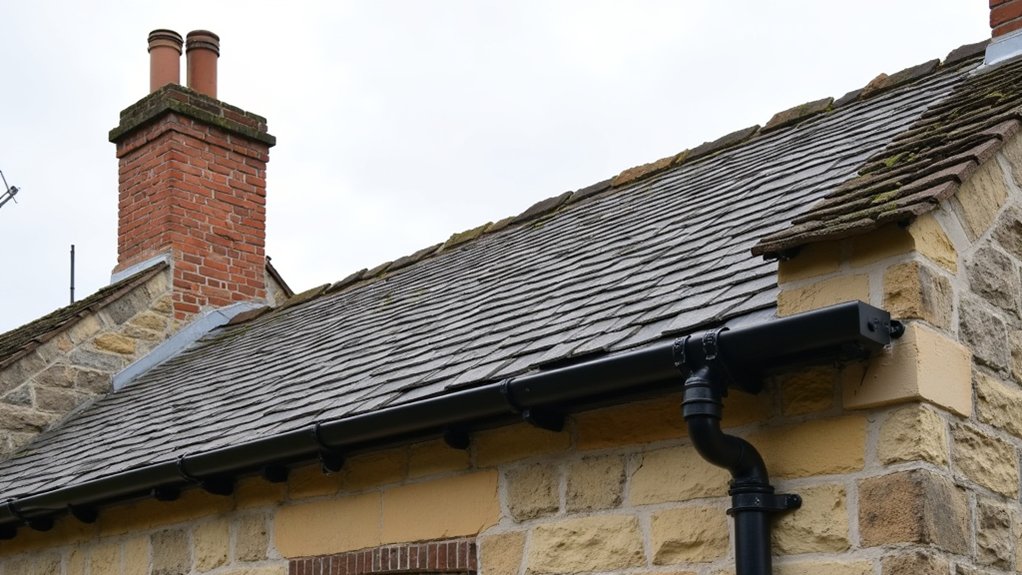
When you work on a listed building’s roof, chimney, or gutters, you must treat them as protected fabric and check whether the scope counts as like-for-like repair or listed building consent works.
You can usually carry out minor roof repairs using matching materials and details, but changes to coverings, structure, flashings, or rooflines typically trigger consent and tighter specification.
You also need to follow chimney and rainwater goods rules by retaining original forms, keeping ventilation and water-shedding performance, and selecting repair methods that meet conservation standards and local authority requirements.
Permitted Roof Repairs
Because a listed roofline often carries as much historic significance as the walls beneath it, you can’t treat roof repairs, chimney works, or gutter replacements as routine maintenance without checking the heritage impact.
For permitted roof repairs, you’ll usually stay within “like-for-like” renewal: re-fixing slipped slates or tiles, replacing isolated broken units with matching material, size, and finish, and renewing battens or felt only where failed. You should retain original detailing—ridge profiles, hips, verges, lead flashings, and mortar fillets—so Historical preservation and Architectural integrity aren’t undermined.
Keep repairs minimal, reversible where possible, and based on evidence from what’s there, not modern equivalents. If you propose altering coverings, introducing insulation changes, or modifying roof geometry, you’ll likely need listed building consent.
Document condition, methods, and sources before you start.
Chimney And Gutter Rules
Roof repairs rarely stand alone on a listed building, since chimneys, rainwater goods, and their junctions with the covering often drive both water ingress and heritage risk. You should assume that altering stack height, pot type, flashings, or mortar will trigger Listed Building Consent, especially if you swap lime for cement or change profiles.
For Chimney restoration, you’ll usually need like-for-like brick or stone, lime mortar, and discreet leadwork details. Repoint, rebed, and retain historic pots where viable. Keep flues ventilated to prevent salt and condensate damage.
For Gutter maintenance, you can typically clear, reline, and repair sections in matching material without changing capacity or appearance. Replacing cast iron with plastic, resizing, rerouting downpipes, or adding overflows often needs consent; justify changes with decay evidence and drawings.
Damp in Listed Buildings: Safe Fixes and Common Mistakes
When you tackle damp in a listed building, you should prioritise breathable materials and traditional methods—like lime plaster, limewash, and vapour-permeable insulation—so moisture can migrate without trapping salts or decay.
You’ll usually need to evidence the cause (rainwater ingress, condensation, ground moisture) and choose minimal, reversible repairs that align with listed building consent requirements.
You must avoid “quick fixes” such as cement renders, injected chemical DPCs, and impermeable tanking paints, because they often seal in moisture and can trigger fabric damage and compliance issues.
Breathable Materials And Methods
How do you tackle damp in a listed building without trapping more moisture in the fabric? You start by keeping the wall build-up vapour-permeable so moisture can migrate and evaporate.
Specify lime plaster, limewash, and breathable mineral paints rather than film-forming coatings. Use woodfibre or cork insulation with vapour-open details where upgrades are justified.
Repair masonry with lime mortar, not hard cement, and match aggregate and strength to the original for Historical preservation.
Improve ventilation discreetly: reopen blocked chimneys, maintain subfloor air bricks, and fit humidity-controlled extract where it won’t harm significance.
Manage rainwater first—gutters, downpipes, and ground levels—so you reduce wetting loads.
Document choices for consent and record Modern adaptations for the conservation file.
Damp Fixes To Avoid
Breathable build-ups only work if you don’t undo them with incompatible “quick fixes” that trap moisture and push decay into timber, masonry, and finishes.
Avoid cement renders, gypsum plasters, and waterproof tanking on solid walls; they block evaporation and can trigger salt spalling.
Don’t inject chemical DPCs or apply bitumen paints without confirming the original moisture pathway and substrate; you may violate Historic preservation principles and need Listed Building Consent.
Skip vinyl wallpapers, acrylic emulsions, and non-breathable primers during interior decoration; they create interstitial condensation behind finishes.
Don’t over-seal floors with impermeable membranes unless you’ve specified edge ventilation and moisture management.
Finally, don’t rely on dehumidifiers as a substitute for fixing rainwater goods, ground levels, and ventilation.
Listed Building Extensions and Internal Alterations: What’s Feasible
Although listed status tightens the regulatory net, you can often extend a listed building or rework its interior if you can demonstrate that the proposal preserves its special architectural or historic interest. Start with a heritage impact assessment that explains the building’s historical significance and how you’ll protect its architectural integrity.
You’ll usually need Listed Building Consent, and sometimes planning permission, even for internal works affecting fabric, plan form, or features of interest. Prefer reversible interventions: retain staircases, fireplaces, plasterwork, joinery, and historic layouts where they contribute to significance.
For extensions, keep them subservient in scale, set them back, and use compatible materials without pastiche. Clearly differentiate new from old while respecting massing and sightlines. Expect conditions on detailing, method statements, and recorded surveys.
Engage conservation officers early.
Frequently Asked Questions
Does Listed Status Affect My Home Insurance Premiums or Policy Terms?
Yes—like a tighter corset, listed status can reshape your cover. You’ll face Insurance adjustments, Premium variations, stricter rebuild specifications, heritage-material requirements, and compliance clauses, so you should disclose status and obtain specialist valuation and endorsements.
Can I Install Solar Panels or Heat Pumps on a Listed Building?
Yes, you can, but you’ll need Planning permissions and usually listed building consent. You must show minimal visual impact, protect Historical authenticity, and use reversible fixings. Choose discreet locations, consult conservation officers early, document materials.
Are There Grants or Tax Relief Available for Listed Building Repairs?
Yes—you can access Conservation grants and occasional tax relief for listed-building repairs, even if you assume it’s impossible. You’ll need Historic preservation justification, listed consent alignment, eligible invoices, and you should check local authority schemes.
How Does Listed Status Affect Selling, Mortgages, or Home Valuations?
Listed status can narrow your buyer pool, add lender scrutiny, and shift valuations; you’ll face Historical significance premiums and Preservation restrictions risks. You should expect slower conveyancing, specialist surveys, higher insurance, and bespoke mortgage terms.
Who Is Responsible for Shared Listed Features in Leasehold or Flats?
You’ll usually share responsibility: the freeholder/managing agent maintains structure and communal listed fabric, while you meet Leaseholder obligations for your demised parts. Check the lease, service charge clauses, and listed consent duties.