
Start by auditing your interior finishes and shapes, then echo them outdoors with reclaimed brick, limestone, gravel, or slim steel edging that matches your hardware. Pull two to three hues from rugs or curtains and repeat them in pots, climbers, and perennials. Re-cut bed lines into clean arcs, soften joints with thyme, and layer planting for season-long bloom and texture. Add a focal point on a key window view and warm, low lighting—there’s more to refine next.
Key Takeaways
- Audit interior materials and finishes, then mirror them outdoors with coordinated stone, timber, metal edging, and pot styles.
- Pull 2–3 accent hues from indoor textiles and repeat them in flowers, foliage, paint, and furniture for cohesion.
- Rework paths and borders to echo interior lines, using clean curves or tailored angles with crisp, durable edging.
- Build layered planting with repeated textures and seasonal bloom phases, mixing structure, scent, and wildlife-friendly species.
- Place focal points and warm lighting along key window sightlines, aligning silhouettes and hardware finishes with the renovated interior.
Start With a Quick Interior-to-Garden Style Audit
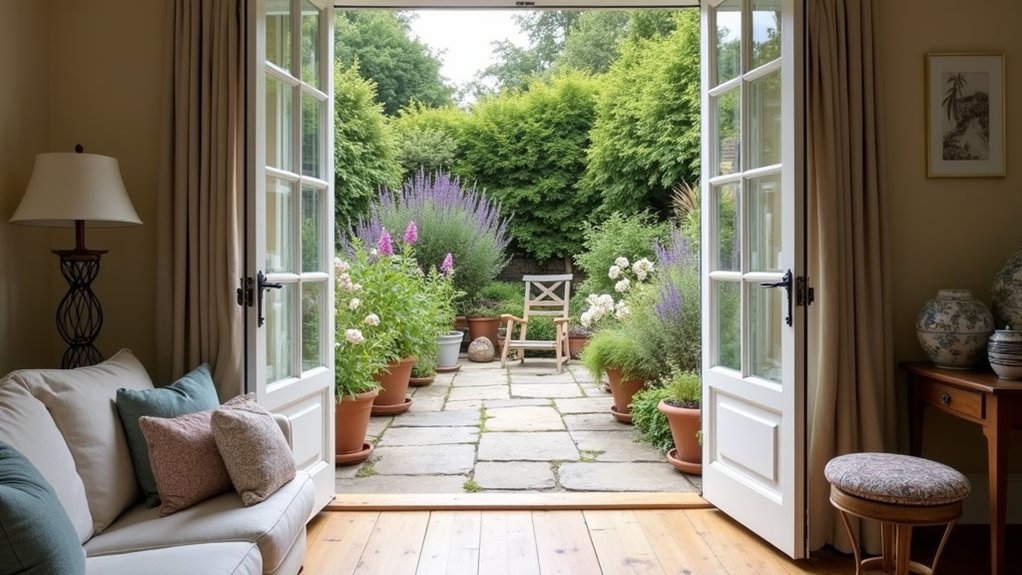
Before you buy a single plant, take ten minutes to audit how your cottage looks and feels from the inside out, then mirror those cues in the garden.
Note your dominant materials (limewash, oak, painted pine), metal finishes, and whether your rooms read crisp or patinated. Translate that into hardscape choices: brick edging for warmth, gravel for a cleaner line, or mossy stone for age. Match shapes, too—curved borders echo round tables; clipped paths suit tailored cabinetry.
Place garden furniture where it frames key views from windows, and choose finishes that repeat indoor tones.
Then assess light, wind, and drainage so plant forms fit: airy umbels, compact mounds, or vertical spires.
Add wildlife habitat discreetly with layered shrubs and nectar-rich perennials.
Choose a Cottage Garden Color Palette From Indoors
Start your cottage garden palette indoors by pulling two or three key hues from your textiles—think ticking stripes, quilts, and rug borders—then translate them into bloom and foliage choices.
Match your exterior paint, trim, and metal finishes to the undertones you’re already living with so the house and planting read as one composition.
Repeat those accent tones outdoors in tight intervals—pots, edging, climbers, and seasonal perennials—so the color story stays cohesive from sofa to gate.
Pull Colors From Textiles
Although the cottage garden lives outdoors, you’ll get a more cohesive palette by borrowing it from the textiles you already love—curtains, rugs, throw pillows, and table linens.
Study the Textile patterns and list two dominant hues, one secondary hue, and one “stitch” accent pulled from piping or fringe; that’s your Color coordination blueprint.
Translate big background colors into structural plants: repeat a deep blue in catmint and salvia, or a warm cream in yarrow and Shasta daisies.
Use the secondary hue in midseason fillers like foxglove, campanula, or phlox, then sprinkle the accent with small pops—snapdragon throats, scabiosa, or annual alyssum.
Keep foliage as your neutral: silvery artemisia, chartreuse lady’s mantle, or dark heuchera to anchor everything.
Match Paint And Finishes
Since your cottage garden frames the house as much as it fills the beds, match your paint and finishes to lock in a palette that feels intentional. Start with your interior wall color or trim tone, then echo it on exterior elements you control: door, window frames, fascia, and shed.
Keep Color harmony by choosing one dominant hue, one lighter tint, and one grounded neutral that bridges indoors to out—think warm white, putty, or soft slate.
Prioritize Finish consistency: if your interior reads matte and chalky, skip high-gloss outside and choose eggshell or satin for a relaxed cottage look.
Let metals align too—blackened iron, aged brass, or galvanized zinc—so pots, trellises, and hardware feel curated, not mixed.
Repeat Accent Tones Outdoors
Once you’ve pulled a tight trio of indoor colors, repeat the smaller accent tone outside in short, deliberate hits so it reads like a signature rather than a theme. Choose one high-chroma note—cobalt, oxblood, marigold—and place it at intervals: a painted bistro chair, a glazed pot near the step, a ribbon on a trellis tie.
Echo it in plants, too: salvias for blue, geums for red, coreopsis for yellow, then let foliage do the heavy lifting between. Keep the “accent” at 10–15% of what you see, so cottage abundance stays calm.
Use garden furniture as your anchor, then punctuate with outdoor sculpture in the same tone, tucked into a border so it feels discovered, not staged.
Update Cottage Garden Paths to Match Finishes
When you bring new finishes into a cottage garden—painted gates, aged timber edging, or a re-pointed patio—your paths should echo those tones and textures so the whole space feels intentional. Choose Garden pathway materials that pick up your interior’s cues: warm limestone to mirror honed counters, reclaimed brick to suit oiled oak, or compacted gravel to complement limewash and linen neutrals.
Match outdoor surface textures to how you live. Tumbled pavers read soft and timeworn under climbing roses; sawn stone feels crisp beside clipped herbs and contemporary lighting. Keep joints narrow for a tailored look, or widen them and infill with thyme or chamomile for fragrance and pollinator value.
Finish with edging that repeats metal, timber, or stone details already used elsewhere.
Sharpen Bed Lines and Borders for a Cleaner Look
After you’ve updated the paths, you’ll make the whole cottage garden read sharper by defining crisp bed edges that frame your planting like a border on a drawing.
Cut clean lines with a half-moon edger or spade, then refresh the curve so perennials don’t slump into the lawn and mulch stays put.
Finish with a tidy border material—steel, brick, or stone—set level and tight to the grade so it looks intentional and disappears behind the plants.
Define Crisp Bed Edges
Although cottage gardens celebrate abundance and soft, billowy planting, you’ll make the whole scene look intentional by defining crisp bed edges that read like clean brushstrokes against the lawn, gravel, or path. Treat garden edging as a design line, not an afterthought, and aim for consistent border definition that echoes your updated interior’s clean trim and corners.
Start by marking curves with a hose or sand, then step back and refine: avoid fussy wiggles, favor long arcs and purposeful angles.
Cut a sharp edge with a spade, keeping depth even, and remove turf cleanly so plants don’t blur into the walkway. Maintain a slight “shadow trench” to visually separate growth from hardscape and to catch mulch.
Recut edges monthly in peak season for polish.
Install Clean Border Materials
Crisp spade-cut edges give you the line; clean border materials make it hold. Choose a profile that echoes your updated interior: slim steel for modern, brick soldier course for classic, or cut stone for quiet luxury. Keep thickness consistent so the eye reads one continuous frame.
Match garden border styles to plant behavior. Use taller edging where mint, daylilies, or spreading geraniums push outward; go low where you want spillover from nepeta or lady’s mantle. Set edging 1–2 inches proud of grade to stop mulch creep, then tuck dripline just inside the border to keep hard lines dry.
Prioritize border material durability: galvanized steel, dense pavers, and frost-rated stone resist heave and won’t fray your geometry.
Pick Cottage Garden Plants That Echo Indoor Textures
When you treat the garden like an extension of your rooms, plant textures become your bridge from indoors to out. If your interior leans linen and boucle, echo it with airy grasses, catmint, and soft lamb’s ear edging paths.
For a home with smooth plaster, stone, and modern cabinetry, choose broad-leaved hosts, glossy hellebores, and clipped box or yew for quiet structure.
Tie in woven accents with seedheads and umbels: astrantia, fennel, and ornamental alliums read like sculptural hardware. Use Wildflower mixes sparingly, corralled behind crisp borders so they feel intentional.
Thread Aromatic herbs—thyme between pavers, rosemary by the door, mint in pots—so you’ll brush past texture and scent on every pass.
Plan Bloom Layers by Season (and Repeat Key Colors)
Texture sets the mood, but bloom timing makes a cottage garden feel composed instead of chaotic. Map your border in three layers: early bulbs and primroses for spring lift, midseason perennials like catmint, peonies, and salvias for body, then late performers—asters, Japanese anemones, sedums—for a clean finish.
Stagger heights so tall stems rise through mounding fillers, and underplant gaps to avoid bare soil.
Repeat two or three interior-inspired colors every season to read as intentional: maybe soft white, inky purple, and a brassy yellow accent. Echo them in foliage, too—variegates, bronze heuchera, blue-green herbs.
Tuck simple garden art between clumps, and mix nectar plants with seed heads so the whole scheme doubles as wildlife habitat.
Add a Focal Point Visible From the House
Even if you love the “found” look of a cottage border, you’ll need one deliberate focal point you can see from the house to keep the whole scene feeling designed. Pick a target that aligns with a main interior sightline—kitchen sink, sofa, or stair landing—and place it where paths naturally converge.
Anchor it with garden furniture you’ll actually use, like a slim bistro set tucked into a gravel pad, or a single painted bench framed by rosemary and nepeta. If seating isn’t right, use outdoor sculptures with clear silhouette—an obelisk, urn, or birdbath—so it reads through foliage.
Then edit plants around it: lower growers in front, taller spires behind, and one repeating accent color to pull your eye straight there. Prune nearby stems so the view stays crisp year-round.
Match Cottage Garden Lighting and Outdoor Materials
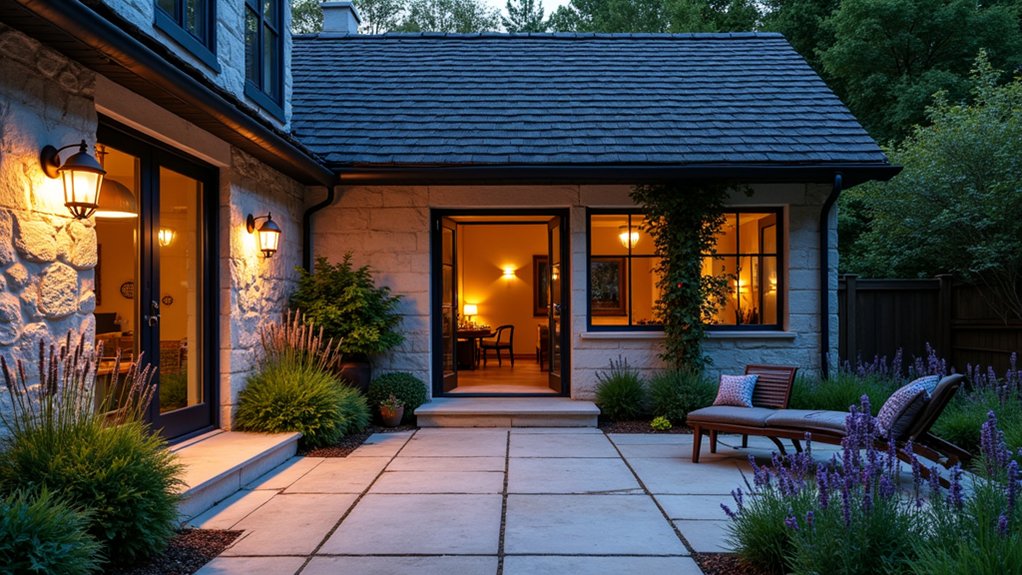
Where does your garden glow after dusk—along the path, around the seating, or at the gate? Plan garden lighting like you’d layer interior lamps: ambient, task, and accent. Use warm 2200–2700K LEDs to flatter roses, foxgloves, and silvery artemisia, and aim beams low to graze textures rather than blast blooms.
Tuck discreet path lights into planting gaps, then add a single statement lantern near the door to echo your updated interior hardware finish.
Match outdoor materials to what you’ve renovated inside. If you chose oak and matte black, repeat with charcoal gravel, blackened steel edging, and weathered timber benches. For a softer palette, pair limestone pavers with terracotta pots and aged brass fixtures.
Keep joints tight, surfaces slip-resistant, and metals corrosion-rated.
Frequently Asked Questions
What’s the Best Renovation Order to Minimize Disruption to Existing Plants?
Start with Soil preparation in phases, working bed by bed, then set hardscape edges, adjust irrigation, and finish with Plant arrangement. You’ll lift and heel-in only what’s necessary, replanting quickly to preserve roots.
How Can I Renovate a Cottage Garden on a Tight Budget?
You renovate cheaply by working like a thrifty painter: I refreshed a border for $50 using divisions. Prioritize Plant selection—swap, seed, propagate. Reuse edging, add mulch, and upcycle Garden furniture with paint for cohesion.
Do I Need Permits for Garden Paths, Lighting, or Outdoor Structures?
You might need Garden permits—check local codes. Paths often don’t, but grading, drainage, or retaining walls can. Outdoor lighting may require electrical permits. Sheds, pergolas, and decks usually do, especially near property lines.
How Do I Manage Drainage Issues When Reworking Beds and Hardscaping?
Regrade beds to shed water, and install French drains or permeable pavers as drainage solutions. You’ll boost soil improvement with compost and grit, raise planting areas, and edge hardscape to direct runoff.
How Long Will the Garden Take to Look Established After Renovation?
You’ll “finish” it in 2–3 years—overnight, right? Your garden layout reads established in season one; plant selection fills gaps by year two; by year three, perennials knit, shrubs bulk up, and edges soften.