
You can’t choose between thatch, slate, clay tile, metal, or composites until you’ve checked roof pitch, rafter depth and spacing, chimneys, valleys, and local wind/snow loads, since dead load and uplift will rule options out fast. You’ll also need planning or heritage consent, sound sarking and battens, breathable underlay, proper eaves and valley flashings, and fire separation at stacks. Match the covering to pitch tables, fixings, insulation, and ventilation, and you’ll see what suits next.
Key Takeaways
- Assess roof pitch, rafter capacity, chimneys, valleys, and wind/snow loads before choosing any traditional or modern covering.
- Confirm heritage or planning restrictions early, as they can limit visible changes, profiles, and acceptable materials.
- Compare material weight and weather performance: thatch, slate, and clay look authentic but may need stronger structure and detailing.
- Consider modern alternatives—composite slate, standing-seam metal, synthetic thatch—for lighter loads, improved fire ratings, and easier compliance.
- Balance cost, lifespan, and maintenance: slate lasts longest, thatch needs frequent care, and metal/composites offer midrange durability with low upkeep.
Cottage Roof Choices: What Limits You First
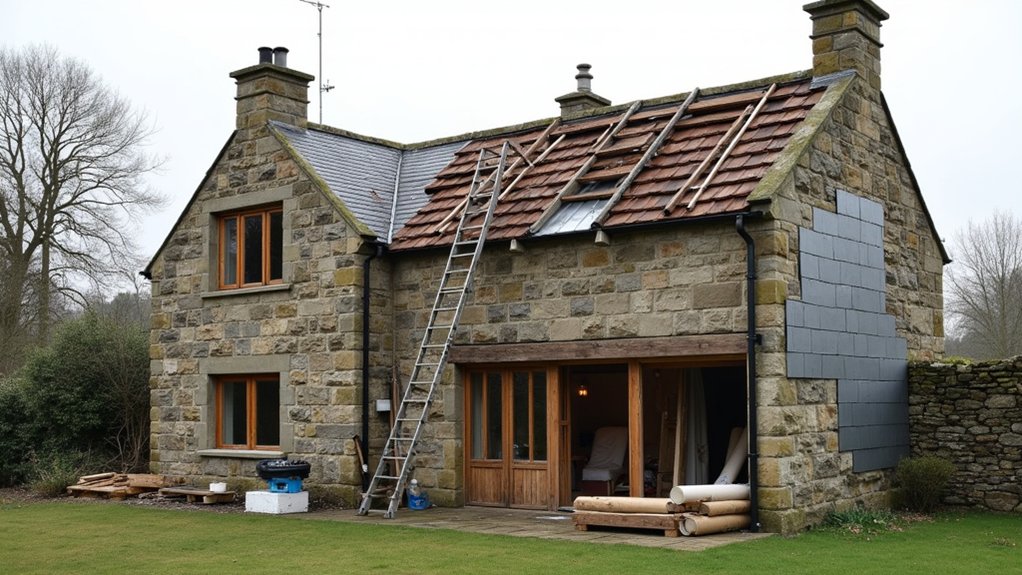
Before you fall for slate, cedar, or a fancy standing-seam profile, let the cottage itself set your boundaries: start with the roof’s pitch and framing, then check the chimney and valley layout, local wind and snow loads, and any heritage or planning restrictions that govern what you’re allowed to change.
Measure rafter depth, spacing, and bearing points so you don’t exceed dead load limits. Inspect sarking, battens, and existing underlay; codes may require upgraded membranes, drip edges, and ventilation paths.
Confirm fire separation around chimneys and step-flashing details at abutments. If you’re in a conservation area, match ridge lines, eaves depth, and visible fixings to preserve Historical authenticity.
Also account for Environmental impact: waste handling, salvage potential, and transport limits.
How to Pick the Best Cottage Roof Material
Although the roof sets your structural limits, you’ll choose the best cottage roof material by balancing weight, water-shedding at your pitch, durability in your local wind/snow exposure, and what your planning authority will actually approve.
Start with your survey: confirm rafter sizes, spacing, and any spread at the walls, then match a covering whose dead load stays within engineer’s limits.
Next, check pitch tables and fixing schedules so the covering meets current wind uplift and driven-rain requirements.
Detail eaves, valleys, and flashings in lead or approved equivalents, and specify breathable underlay where required.
Don’t neglect Roof insulation: set U-values, vapour control, and ventilation to avoid rot.
Finally, weigh Environmental impact—service life, repairability, transport, and recyclability—before you order.
Traditional Cottage Roofs: Thatch vs Slate vs Clay
If you’re restoring a traditional cottage, you’ll usually weigh thatch, natural slate, and plain clay tile not just for looks but for structural load, minimum pitch, fire and moisture risk, and what conservation officers will sign off.
Thatch suits low eaves and soft profiles, but you’ll need tight detailing at chimneys, fire barriers where required, sound ventilation, and regular ridging to keep water out; its Environmental impact can be low when locally sourced.
Slate gives crisp lines and long service life on steeper pitches, yet you must check rafter capacity and fix to battens with correct nail spec.
Plain clay tile delivers warm colour and proven weathering, but demands adequate pitch, underlay, and verges for wind uplift, preserving Historical authenticity.
Modern Cottage Roofs: Composites, Metal, Synthetic Thatch
When planning a cottage roof that must read traditional yet perform to modern standards, you can specify lightweight composites, standing-seam metal, or synthetic thatch to hit current wind, fire, and moisture requirements without overloading older rafters.
Specify Class A fire ratings where required, and pair assemblies with a ventilated underlayment and ice-and-water barriers at eaves and valleys.
Choose composite slate or shake to mimic shadow lines while meeting uplift fastening schedules and avoiding brittle breakage.
Use metal with muted finishes and appropriate seam spacing, and add snow guards where codes call for controlled shedding.
For synthetic thatch, demand tested flame spread, secure ridge detailing, and concealed mechanical fixings.
For Historic preservation approvals, submit samples and profile drawings.
Weigh environmental impact via recycled content and low-toxicity coatings.
Cottage Roof Cost, Lifespan, and Maintenance Compared

Before you commit to a roof that looks suitably cottage-like, compare each material’s installed cost, expected service life, and maintenance load against your local code requirements for fire rating, wind uplift, and ice protection.
Cedar shakes cost more up front, last 25–40 years with vigilant cleaning, moss control, and periodic treatment. You’ll also need a listed fire-retardant assembly where required.
Slate carries the highest initial cost, yet it can serve 75–150 years. You’ll budget for occasional broken tiles and sound flashing.
Clay and concrete tile sit mid-to-high, run 50–75 years, and demand robust underlayment and snow-guard detailing.
Standing-seam metal often prices midrange, lasts 40–70 years, sheds ice, and boosts Energy efficiency with cool coatings while preserving aesthetic appeal.
Frequently Asked Questions
Can I Add Solar Panels Without Ruining a Cottage’s Historic Character?
Yes, you can, if you site panels discreetly and follow local codes. Choose low-profile, matte-black arrays, hide conduits, and favor rear slopes; you’ll keep Historic authenticity and Aesthetic preservation intact, with approvals.
Do I Need Planning Permission for Changing Roof Materials on a Listed Cottage?
Yes—you’ll likely need Planning permission and Listed building consent if you change roof materials on a listed cottage. You must match historic slates, clay tiles, lead flashings, and comply with local conservation officer requirements.
How Can I Improve Roof Insulation Without Affecting Internal Ceiling Heights?
You can improve roof insulation without losing ceiling clearance by using insulation techniques like high‑performance boards over rafters, aerogel blankets, or thin foil‑faced boards between rafters. Keep ventilation, vapour control, and meet listed‑building and fire codes.
What Ventilation Upgrades Prevent Condensation in Older Cottage Roof Structures?
Still air breeds damp; moving air keeps timbers sound. You’ll add continuous eaves intakes and a ridge outlet for Roof ventilation, fit breathable underlay, clear rafter bays, and meet code for Condensation prevention.
Will Roof Changes Affect My Home Insurance, Premiums, or Coverage Terms?
Yes, roof changes can affect your policy: you’ll face Insurance implications and possible coverage adjustments. You must notify your insurer, provide permits, meet code, and document slate, lead, or timber workmanship to avoid exclusions.